The Tunguska Explosion of 1908: Did Tesla's Secret Weapon Cause Earth's Biggest Mystery?
Did Tesla's Wardenclyffe Tower cause the 1908 Tunguska explosion? Explore the science, the theory, and the silence. Read the full story.
The morning of June 30, 1908 started like any other in the remote Siberian region of Tunguska. Reindeer herders were going about their day. Birds were singing. And then, without warning, the sky split open.
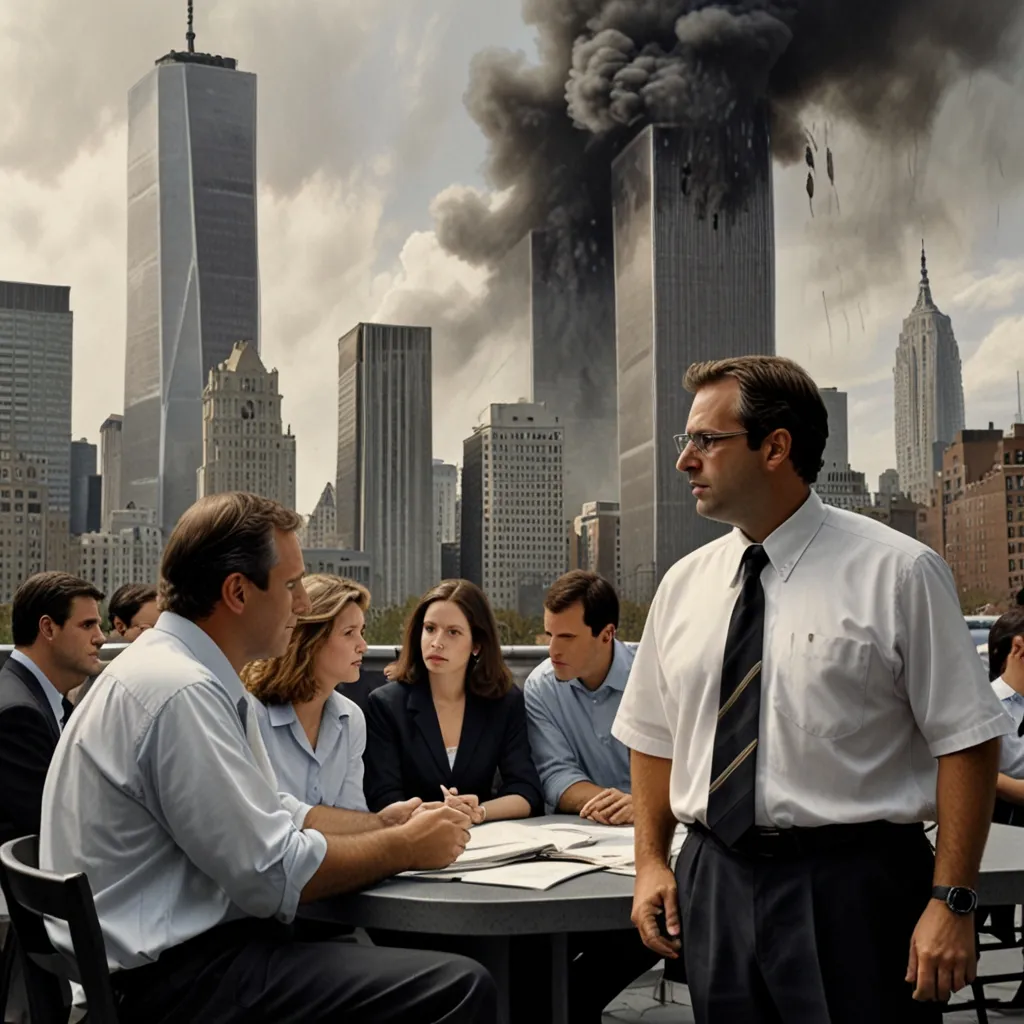
A flash brighter than the sun. A wall of heat so intense it knocked people off their feet 40 miles away. Windows shattered 150 miles out. The shockwave circled the Earth twice. And when the dust settled, 800 square miles of forest — roughly the size of Tokyo — had been completely flattened, with 80 million trees lying on their sides like matchsticks pointing away from a central point.
No crater. No fragments. Nothing.
So what exactly happened in Tunguska that summer morning?
The official answer from mainstream science is that a stony asteroid or comet, roughly 50 to 80 meters wide, entered Earth’s atmosphere at high speed, compressed the air beneath it until it exploded mid-air. An “airburst,” they call it. The energy released is estimated at 10 to 15 megatons — roughly 1,000 times the power of the atomic bomb dropped on Hiroshima.
That explanation is logical. It makes sense. But here’s the thing — science doesn’t always close every door completely. And in this case, one door has remained stubbornly open for over a century, creaking on its hinges every time someone mentions one name.
Nikola Tesla.
“The day science begins to study non-physical phenomena, it will make more progress in one decade than in all the previous centuries of its existence.” — Nikola Tesla
Let’s talk about Tesla for a moment, because if you only know him as the guy on the $100 bill that isn’t on the $100 bill — that’s Benjamin Franklin — you’re missing one of history’s most fascinating and tragic figures. Tesla was a Serbian-American inventor who, by 1908, had already given the world alternating current electricity, the radio, the induction motor, and ideas so far ahead of his time that we’re still catching up.
By 1901, Tesla had begun construction on what he called Wardenclyffe Tower on Long Island, New York. The idea was breathtaking in its ambition. He wanted to transmit electrical energy wirelessly through the Earth itself — no wires, no cables, just free power for anyone on the planet who wanted it. His financier, J.P. Morgan, had initially backed the project, but when it became clear that free energy meant no way to meter it, and no way to meter it meant no way to charge for it, Morgan pulled the funding.
Tesla was devastated. He was also, by 1908, broke, desperate, and watching his greatest dream fall apart brick by brick.
Now here’s where things get interesting. Ask yourself this — what do you do when you’re a genius sitting on a half-built tower that can theoretically shoot energy anywhere on the planet, and your funding has just been cut?
Tesla had spoken openly in newspaper interviews about a system he was developing that could transmit concentrated energy to any point on Earth with pinpoint accuracy. He described it in ways that, reading between the lines, sound less like a power grid and more like a weapon. In a 1915 interview, he claimed to have developed a method of sending “a beam of particles” that could “bring down a fleet of 10,000 enemy airplanes at a distance of 200 miles.”
This is the device that would later be called, somewhat dramatically, Tesla’s “Death Ray” — though Tesla himself referred to it as a “teleforce” device.
“If you want to find the secrets of the universe, think in terms of energy, frequency and vibration.” — Nikola Tesla
Here’s where the Tunguska theory takes shape. Some researchers have drawn a line — literally — from Wardenclyffe Tower on Long Island directly to the Tunguska blast site in Siberia. The line passes almost perfectly over the North Pole, which tracks with the direction a transmitted energy beam would travel if aimed at that location.
The timing also lines up. Wardenclyffe was still standing in 1908, though barely operational. Tesla had previously announced that he would send a detectable signal to accompany Robert Peary’s expedition to the North Pole, as a kind of dramatic demonstration of his tower’s range. Peary’s expedition was active that year. Some researchers speculate Tesla may have aimed his transmitter toward the Arctic region as a test — and miscalculated.
There’s also an eyewitness account worth considering. A man named Semenov, living near the blast zone, reported seeing a “pillar of bluish light, as bright as the sun” shooting upward from the ground before the explosion. Not downward. Upward. That detail has always sat awkwardly with the standard asteroid theory, which would produce a fireball descending from above.
Could the witness have been confused? Absolutely. Trauma does strange things to memory. But the detail is odd enough to notice.
What makes the Tesla theory feel less like conspiracy territory and more like genuine open-ended speculation is the gap in the physical evidence. With most asteroid or comet impacts, even airbursts, you find something — isotopic traces in ice cores, microscopic mineral fragments, tektites. Early Soviet expeditions to Tunguska in the 1920s and 1930s found almost nothing. Later expeditions found some magnetite spherules and microscopic silicate particles that could support the asteroid theory, but the evidence remains surprisingly thin for an event of this magnitude.
Does that absence of evidence prove Tesla was involved? No. But it keeps the question alive.
“I don’t care that they stole my idea. I care that they don’t have any of their own.” — Nikola Tesla
Think about the political dimension for a moment. If Tesla had accidentally detonated a massive explosion in the middle of Siberia — then under the rule of Czar Nicholas II — what would have happened? Tesla was already struggling financially. The last thing he needed was an international incident. He was known to keep detailed logs of his experiments, but many of those records vanished after his death in 1943, when the U.S. Office of Alien Property seized all of his papers. Some were eventually returned or released, but significant portions remain classified or simply missing.
The FBI held onto Tesla’s files for decades. When they were finally released under the Freedom of Information Act, researchers found that many documents had been redacted or removed entirely. What exactly was in those files that required that level of secrecy?
We don’t know. And that gap — that silence — is exactly where theories breed.
One counterargument worth taking seriously is the sheer energy involved. The Tunguska event released the equivalent of 10 to 15 megatons of TNT. Tesla’s Wardenclyffe Tower, even at peak theoretical function, was not designed to produce that kind of power output. The tower ran on relatively modest electrical input. For it to have caused Tunguska, Tesla would have needed a mechanism for amplifying that energy by several orders of magnitude — something that, even by his visionary standards, seems implausible.
Unless, of course, he had found a way to trigger a resonant reaction within the atmosphere or the Earth’s own electromagnetic field. Tesla believed deeply in resonance — he famously claimed he could destroy the Brooklyn Bridge with a small oscillator if he tuned it to the right frequency. The idea that he could trigger a chain reaction, rather than simply project a fixed amount of energy, is not entirely outside the realm of his own stated theories.
“The present is theirs; the future, for which I really worked, is mine.” — Nikola Tesla
What you’re left with, stripped of the sensationalism, is a genuinely unsolved event and a man who was genuinely working on technology that could, in theory, have contributed to it. The honest answer is that we don’t know what caused Tunguska with complete certainty. The asteroid airburst theory is the most supported. But it is not airtight.
Tesla died alone in a New York hotel room in 1943, largely forgotten by the mainstream public, his greatest ambitions unrealized. He never spoke publicly about Tunguska. He never claimed credit and never denied involvement.
Maybe that silence means nothing. Or maybe a man who once said “Let the future tell the truth, and evaluate each one according to his work and accomplishments” knew exactly when to say nothing at all.
The forest in Tunguska has grown back now. The trees stand tall again over whatever secret is buried beneath them. And every few years, a new researcher picks up the thread, looks at the timeline, traces the geometry from Long Island to Siberia, and wonders.
Some questions don’t get answered. They just get more interesting with age.