5 Eucharistic Miracles That Stumped Scientists: Real Lab Results Nobody Can Explain
Discover 5 Eucharistic miracles examined by secular scientists — with shocking lab results involving living cardiac tissue. The evidence defies biology. Read the full findings.
There is a category of events in religious history that does not fit neatly into any scientific box. Not because science has failed to look — in several cases, it looked very carefully — but because what it found raised more questions than it answered. These are not stories of visions or voices. They are stories about physical matter behaving in ways that contradict known biology, chemistry, and physics. The subject is Eucharistic miracles, and the five cases below are among the most documented, most studied, and most stubbornly unexplained phenomena in recorded history.
Before you roll your eyes, consider this: several of these events have been examined by secular scientists, forensic pathologists, and university laboratories with no religious affiliation. The results were not vague. They were specific, measurable, and deeply strange.
The Host of Lanciano — A Piece of Living Heart
Around the 8th century, in the small Italian town of Lanciano, a Basilian monk was celebrating Mass while privately struggling with doubts about the Real Presence — the Catholic teaching that the bread and wine actually become the body and blood of Christ. According to the historical record, the bread transformed visibly into flesh and the wine into blood during consecration.
That alone would be easy to dismiss. What makes this case different is what happened in 1970, when the relics were submitted to rigorous scientific analysis. Professor Odoardo Linoli, a professor of anatomy and pathological histology, examined them. What he found was not symbolic or metaphorical.
The flesh was identified as human cardiac muscle tissue — specifically from the myocardium, the muscular wall of the heart. It was not dried, fossilized, or degraded. It showed the characteristics of living tissue. The blood was typed as AB — the same blood type found on the Shroud of Turin, which is a separate and equally strange rabbit hole.
“The heart, in its infinite complexity, remains the last organ we fully understand and the first one we reach for in metaphor.” — Paul Pearsall, The Heart’s Code
What makes this physically baffling is not just the transformation. It is the preservation. Cardiac muscle tissue, when removed from a living body, begins to decompose rapidly — within hours without refrigeration or chemical preservation. This sample has been studied for over fifty years since the 1970 examination, and it continues to show no signs of decay. No preservative agents have been found. No explanation for its structural integrity has been offered.
Ask yourself honestly: how does meat last twelve centuries without rotting?
The Bleeding Host of Bolsena — Blood That Stayed
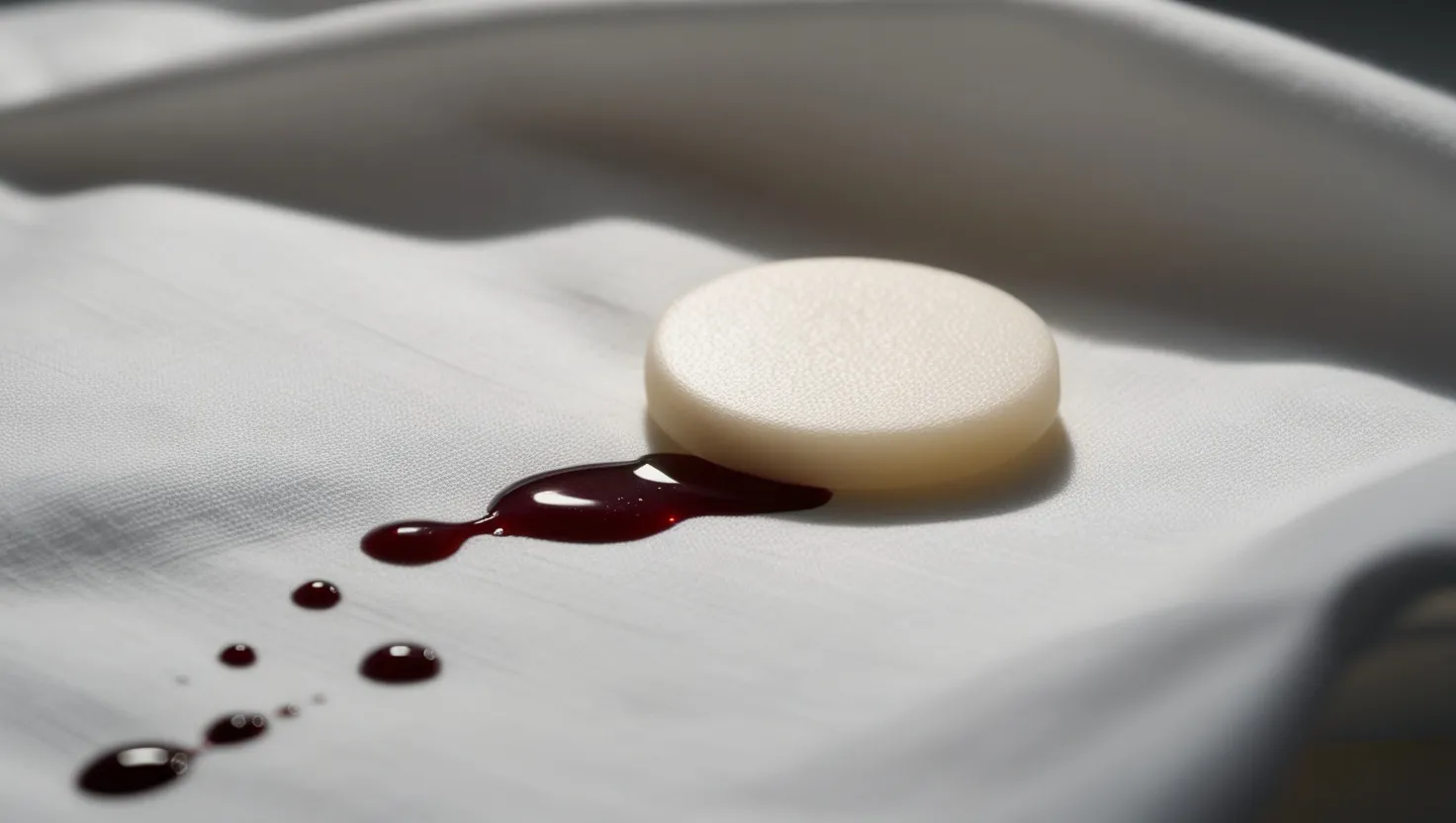
In 1263, a German priest named Peter of Prague was making a pilgrimage to Rome. He stopped to celebrate Mass at the Church of Santa Cristina in Bolsena, and during the consecration, the Host began to bleed. The blood dripped onto the corporal — the white linen cloth placed beneath the chalice during Mass.
The stained corporal was taken to Pope Urban IV, who at the time was staying in the nearby town of Orvieto. The event so moved him that he commissioned the building of the Orvieto Cathedral to house the relic, and he asked Thomas Aquinas to write the liturgical hymns for the Feast of Corpus Christi, which was formally established the following year.
The stained linen still exists. It is housed in the Cathedral of Orvieto and has been examined multiple times. The stains have been analyzed and confirmed as human blood. What is unusual is that the blood pattern on the linen forms what appears to be a face — a fact that has been noted by researchers studying the cloth, though no official claim of intentional image-formation has been made.
The blood has not faded in the way that blood stains typically do over centuries. Anyone who has dealt with old bloodstains on fabric knows they turn brown, then yellow, then essentially disappear. These have not followed that process. The chemistry of blood degradation does not account for what is on that cloth.
The Miracle of Betania — A Chalice Fills in Public
Most Eucharistic miracles are historical — they happened centuries ago, and we work with whatever evidence survived. The events at Betania, Venezuela, are different. They began in the 1980s and continued into the 1990s, observed by multiple priests and laypeople in real time.
During Mass celebrated at a Marian apparition site in Betania, priests reported witnessing the consecrated Host begin to bleed visibly. On several occasions, witnesses described the chalice appearing to fill with a substance identified as blood when no additional wine had been poured. These events were witnessed not by one person in private, but by groups during liturgical celebrations.
Bishop Pio Bello Ricardo of the Diocese of Los Teques investigated the events and declared them worthy of belief in 1987 — one of the faster official ecclesiastical recognitions on record. Samples were reportedly taken and analyzed, though full independent scientific documentation of the Betania events is less comprehensive than in other cases.
“What we observe is not nature itself but nature exposed to our method of questioning.” — Werner Heisenberg, Physics and Philosophy
What makes Betania worth including is not the level of scientific documentation, but the sheer number of witnesses and the contemporary nature of the events. This was not the Middle Ages. These were modern people, some with scientific training, watching something happen that had no business happening.
The Buenos Aires Host — The One That Got Tested Twice
In 1992, a dropped Host was placed in water to dissolve — standard Catholic practice when a consecrated wafer cannot be consumed properly. Instead of dissolving, it transformed into what appeared to be a bloody substance. It was refrigerated and examined in 1999 by Dr. Ricardo Castañón Gómez, a neurologist and scientist who identified himself as agnostic at the time of the investigation.
The sample was sent to a laboratory in New York without identification — the scientists were not told what they were analyzing or where it came from. The result: human cardiac muscle tissue, severely inflamed, with white blood cells still active within it. White blood cells require a living host to survive. They begin to die almost immediately when removed from a living body.
The sample was then sent, again without identification, to Dr. Frederick Zugibe, a forensic pathologist and expert in cardiac tissue at Columbia University. His analysis confirmed it was human heart muscle, severely traumatized, from the left ventricle. When told what the sample actually was, Zugibe reportedly had no scientific explanation for what he had found.
The Buenos Aires sample has since been connected by blood typing and tissue analysis to samples from Lanciano and from the Shroud of Turin — all testing as AB blood type, all showing the same tissue characteristics. The probability of three unrelated samples from three different centuries and countries sharing identical tissue characteristics by coincidence is not something any statistician would want to calculate.
The Sokolka Host — A Medical School Gets Involved
In 2008, in the Polish town of Sokolka, a Host fell during distribution of communion. Following protocol, the parish priest placed it in water. A week later, the water had evaporated, and a red stain remained on the Host. It was photographed and reported to the diocese.
What followed was unusually rigorous even by the standards of this field. The Archbishop of Bialystok ordered a scientific examination by two professors from the Medical University of Bialystok — Dr. Maria Sobaniec-Lotowska and Dr. Stanislaw Sulkowski, both specialists in pathological anatomy. Neither was selected by a religious organization. They were specialists doing a medical analysis.
Their findings matched Lanciano and Buenos Aires almost exactly: human myocardial tissue, specifically from the heart muscle, in a state of agony — showing the cellular changes associated with extreme trauma, similar to what is seen in a heart at the moment of death. The tissue was found to be intertwined with the bread — not placed on top of it, not contaminating it from outside, but structurally integrated.
“The most beautiful thing we can experience is the mysterious. It is the source of all true art and science.” — Albert Einstein
Two board-certified pathologists with no theological agenda found living heart tissue inside a communion wafer. The report was submitted to the Vatican and the Church formally approved the miracle in 2012.
What connects all five of these cases is not faith. It is data. Tissue typing, cellular analysis, blood grouping, preservation anomalies — these are not categories that belong to theology. They belong to laboratory science. And in each of these cases, the laboratory either could not explain what it found or found something that had no right to exist in the physical state it was in.
You do not have to be Catholic to find this strange. You do not have to believe anything at all. You simply have to be willing to sit with the fact that peer-reviewed pathologists, working under standard scientific conditions, repeatedly found human cardiac tissue in communion wafers — tissue that was alive, or showed characteristics of life, in circumstances where life had no mechanism to persist.
The question is not really about religion. The question is simpler and harder than that: what do you do with evidence that does not fit any existing model of how matter behaves?