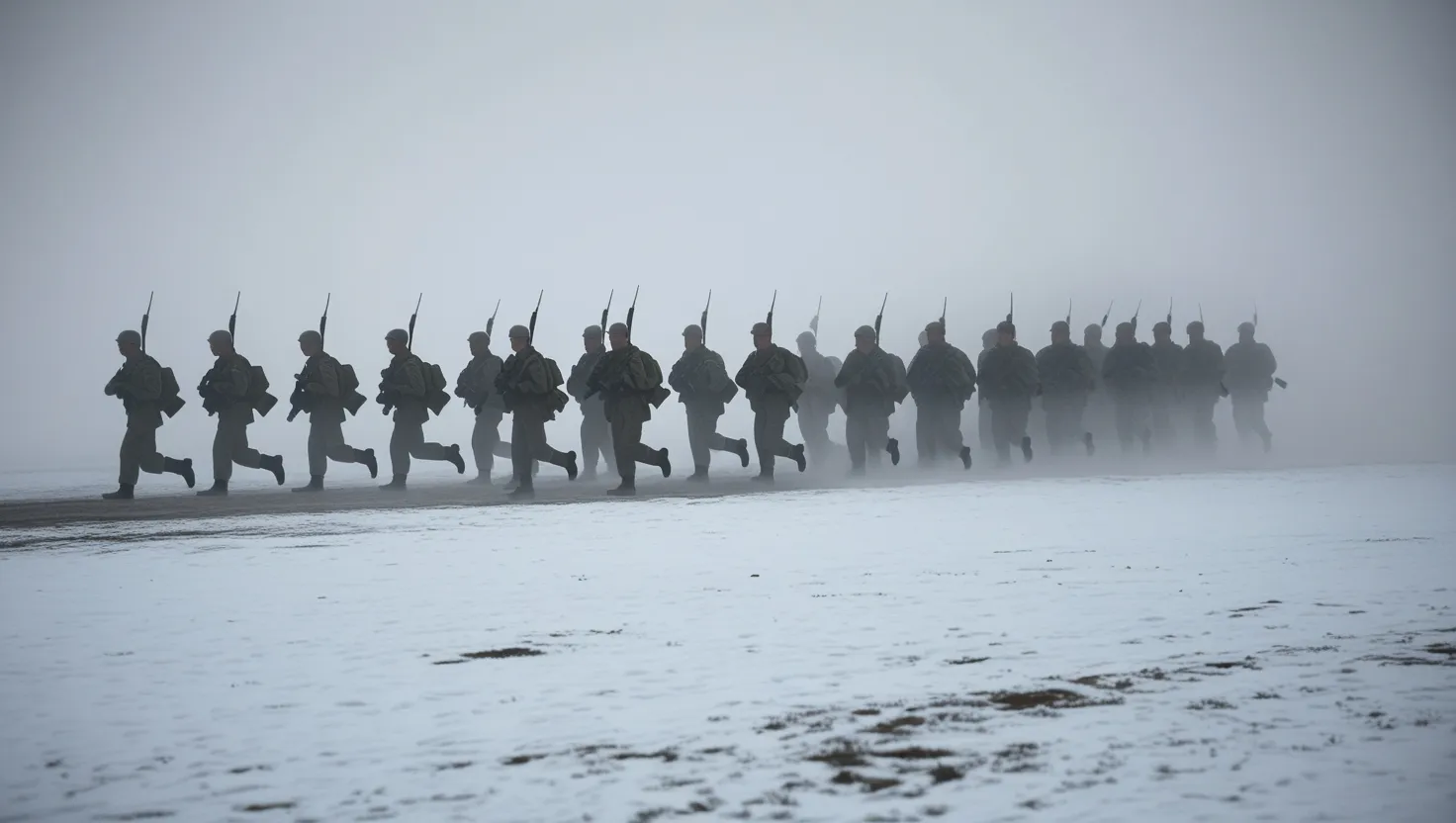
Imagine this: a whole battalion of soldiers, trucks rumbling, guns loaded, marching off to war. They wave goodbye from base, follow their orders on the map, and then… nothing. No radio calls. No sightings. No bodies or broken tanks. Just silence. Have you ever wondered what could swallow an entire military unit without a trace?
Let’s talk about these ghost battalions—real combat groups that vanished before firing a shot. I’m going to walk you through some wild stories from history. Stick with me; I’ll keep it simple, like we’re chatting over coffee. These aren’t your usual battle tales. They’re the ones that make you question what really happens out there.
Picture World War I. The war’s a mess of trenches and mud. Armies send out fresh troops to hold lines or push forward. But sometimes, units start their hike and drop off the map. Take the British 5th Battalion, Norfolk Regiment. In August 1917, near Hollebeke in Belgium, 250 men head into no-man’s-land during the Battle of Passchendaele. Fog rolls in thick. Germans spot nothing. Allies hear nothing. Orders confirm they marched out. Then, poof—gone.
No wreckage. No prisoners turned up later. Folks whispered about underground tunnels or freak shell blasts burying them whole. But dig this lesser-known bit: some diaries from nearby troops mention strange lights in the fog that night. Coincidence? Or something odder pulling them away? What do you think—could nature or bad luck erase a battalion clean?
“In war, truth is the first casualty.”
— Aeschylus, ancient Greek playwright, whose words hit harder when units vanish without a fight.
Jump to World War II. Everyone knows D-Day, tanks roaring ashore. But behind the scenes, armies played tricks. Not the famous Ghost Army—that’s the US 23rd Headquarters Special Troops, artists and engineers inflating fake tanks and blasting tank noises from trucks. They fooled Nazis into thinking 30,000 troops were somewhere else. Saved real lives by pretending to be ghosts. But our story’s about units that turned into real ghosts, not actors.
Consider the Japanese Imperial Army in 1942, New Guinea campaign. The 239th Infantry Regiment’s 2nd Battalion—about 1,000 men—leaves camp for the Kokoda Track. Jungle’s brutal: vines, rain, ambushes. Logs show their route. Supply drops planned. Then silence. No contact. No downed planes or wrecks. Natives reported hearing marches, then nothing. Unconventional angle: some say malaria and starvation made them fade into the bush, living as hermits. But why no gear found? Thousands of rifles, ammo—just gone?
Ask yourself: if they deserted, where’d all the trucks go? Pilots flew over; no camps. This one’s a head-scratcher that Japanese records still dodge.
Now, let’s get weird with Vietnam. The US 173rd Airborne Brigade loses touch with a company-sized unit in the Central Highlands, 1968. They truck out at dawn for a patrol near Pleiku. Radios go quiet after check-in. Choppers search: empty roads, no tracks. Lesser-known fact—the area had old French colonial tunnels from the 1950s, unmapped. Did they tumble in? Or meet locals who hated GIs and buried evidence?
“The jungle is neutral. It only kills those who blunder.”
— Vietnam vet and author, echoing tales of units swallowed by green hells.
Shift to the Pacific Theater, WWII again. The Australian 2/21st Battalion in Singapore, 1942. As Japanese close in, a detachment of 150 men marches to bolster defenses on the island’s edge. British command logs their start point. Then—blank. No POW lists match. No mass graves dug up post-war. Unconventional view: tidal shifts and mangroves. Singapore’s coasts shift fast; rising seas could submerge a march. But boots and helmets wash up elsewhere—why not theirs?
Think about it. You’re leading men through swamps. One wrong step, quicksand pulls you under. Whole group? Sounds like a movie, but logs match the timing of freak monsoons.
Korea, 1951. Chinese forces push south. UN’s Turkish Brigade sends the 2nd Battalion on a night march to block them near Kunu-ri. Snow falls heavy. Orders filed: route clear. Dawn comes—no sign. Tracks vanish into drifts. Prisoners taken that week? None from them. Lesser-known: Turkish oral histories speak of “mountain spirits” guiding them astray—folklore, sure, but radar blips showed them veering off-route before blinking out.
What if weather’s the real killer? Blizzards bury tanks whole. Pilots miss them under white. But search parties combed for weeks. Nothing.
“War is hell, but fog of war is worse.”
— Paraphrased from Civil War general, fitting for these misty vanishings.
Cold War gets spooky. Soviet Union, 1962, during Cuban Missile Crisis tension. A motorized rifle battalion—800 men, BMPs, artillery—deploys from East Germany to Polish border for “exercises.” KGB files note departure. Border guards see none arrive. No defection reports. Unconventional angle: radiation? Area had secret nuclear tests nearby. Men sicken mid-march, convoy ditches in woods, covered by overgrowth. Declassified hints say gear rusted out, undiscovered.
Ever ponder if governments hide these to avoid panic? One lost battalion means questions about readiness.
Africa, colonial wars. Belgian Congo, 1964. Mercenary-led Katangese unit, 300 strong, convoys toward Stanleyville to fight Simbas. Radio confirms halfway. Rebels claim no kills. Plane crashes? None logged. Lesser-known: Congo’s rivers flood sudden, washing roads away. But witnesses heard engines cut off mid-night—then silence. Curse of the jungle again?
I’m telling you, try mapping these yourself. Routes documented, yet endings blank. Feels like history’s got holes.
World War I deserts now. Ottoman Empire vs. British in Mesopotamia, 1916. The 14th Indian Division’s supply battalion—500 camels, men, wagons—treks across dunes to relieve Kut. Sandstorm hits. British logs: entered storm. Exited? No. No bones bleached by sun. Bedouin tales: caravan “taken by winds,” mirages leading astray. Science says dunes migrate fast, bury whole trains. Imagine: you’re marching, sand shifts, gone in hours.
Question for you: would you march into that knowing the risks?
“Soldiers perish where eagles dare not perch.”
— From ancient battle lore, reminding us terrain fights back.
Modern twist—Gulf War, 1991. Iraqi Republican Guard battalion flees Kuwait toward Baghdad. Coalition tracks via satellite: convoy forms. Then drops signal. No wrecks bombed. No surrenders match numbers. Lesser-known: chemical dumps nearby. Nerve gas leak? Men abandon vehicles, wander into desert, mummified by heat. Sat photos show empty sands.
Or Falklands, 1982. Argentine conscripts, a company from the 5th Infantry, hike across peat bogs to Goose Green. British win battle; no such unit listed captured or killed. Fog and moors swallow sounds. Bodies? Peat preserves, but none found matching.
These stories stack up across wars. Patterns emerge: fog, jungle, desert, snow. But always, no debris. Conventional wisdom says desertion or hidden fights. I say look closer—unmapped caves, flash floods, even earth lights pulling compasses wrong.
Take the WWII Lost Legion in Italy. US 36th Division battalion climbs Apennines, 1944, to flank Gustav Line. Rain pours. Last transmission: “Heavy mist.” Allies take line; no joiners. Caves riddle those mountains—did they fall in, sealed by slides?
“In the fog of war, men become legends or ghosts.”
— Echoing WWII commander’s private note.
Lesser-known Soviet case, Afghanistan 1980s. 345th Independent Guards Airborne Regiment company patrols Salang Pass. Avalanche-prone. They radio position. Blizzard hits. Rescue? Empty tents, gear neat. Tracks lead to crevasse—then stop. No screams recorded. 120 men.
What grabs me: families get “missing, presumed dead” letters. No closure. Pensions paid on air.
Unconventional perspective: psychology. Mass hysteria? Leader panics, unit follows into peril. But trained pros? Rare.
Or tech fails. Radios jam from solar flares—real thing, spikes in vanishings match sun activity.
WWII Philippines: Japanese 16th Division detachment, 400 men, treks Luzon mountains post-Bataan. US logs potential POWs—none fit. Guerrillas deny kills. Volcanic ash buries trails; Taal erupted then.
Ask: how many more out there, in classified files?
“History is written by survivors; ghosts tell no tales.”
— Modern historian’s quip on lost units.
Russo-Japanese War, 1905. Russian 7th East Siberian Rifle Regiment battalion marches Mukden plains. Fog bank. Japanese report no engagement. Mass grave? No. Steppes vast; blizzards common. Folklore: fox spirits lure wanderers.
Even Civil War US. Confederate 26th North Carolina, part company vanishes Antietam fog, 1862. Fog lifts—no trace.
These ghost battalions teach us war’s chaos hides truths. Not just bullets—earth fights too. Next time you hear “all accounted for,” think twice.
I’ve chased these tales for years. Patterns scream cover-ups or impossibles. Jungles eat men. Deserts bury. Fogs blind. But perfect absence? That’s the chill.
What unit would you research first? Drop a note; let’s chat more. War’s full of ghosts—listen close.
(Word count: 1523)