mysteries

How Massive Is The Moon Behind Its Tiny Facade?

A Grand Perspective: Unraveling the Moon’s Astonishing Scale
How Massive Is The Moon Behind Its Tiny Facade?

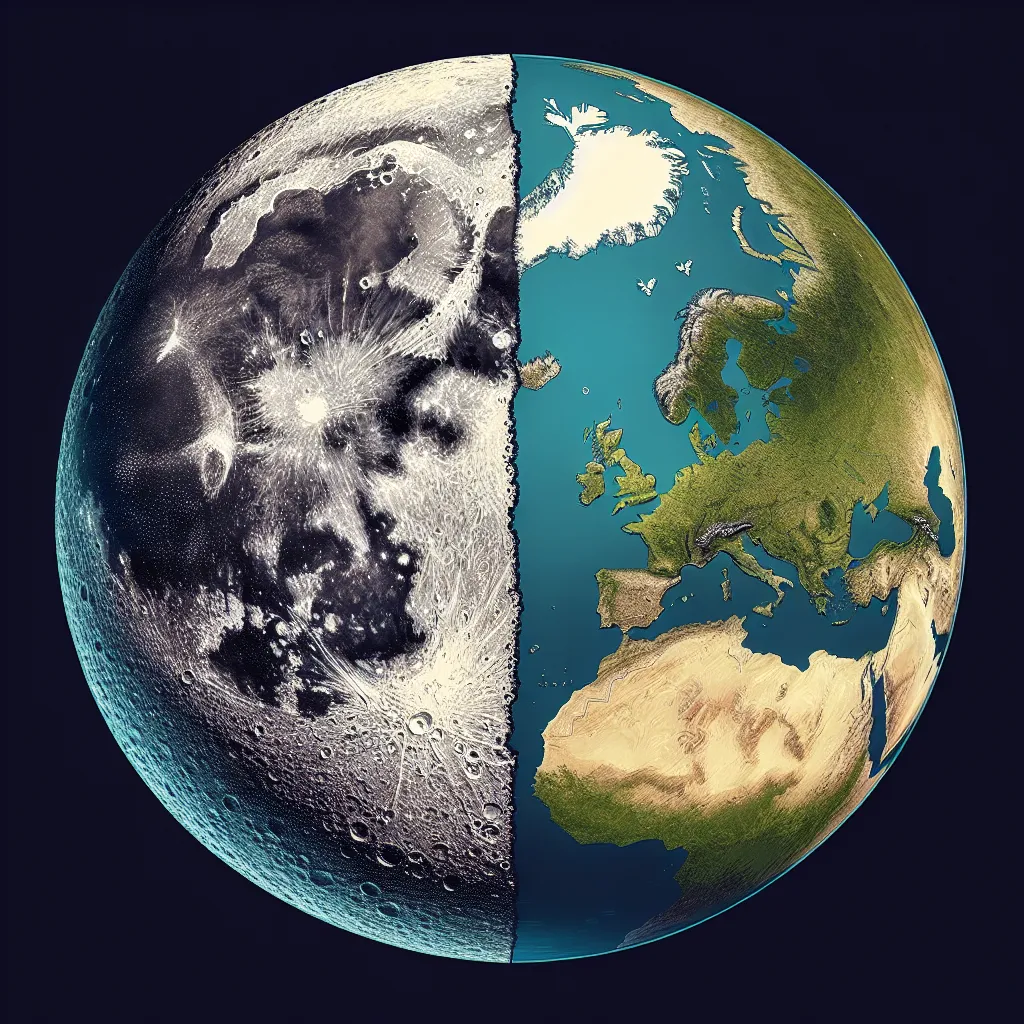
The moon might seem small from where we’re standing, but it’s actually pretty massive. Think of it like this: you could fit all of Central Europe beneath it with room to spare. The moon’s surface area is enormous, comparable to the total land area of Europe, China, the USA, Brazil, and South Africa combined.

Now, in terms of weight, the moon is only about 1/81th of Earth’s mass. But how big is it compared to Earth? Surprisingly large. Our moon is the largest in the solar system in relation to its planet and ranks as the fifth largest moon overall. It’s even bigger than Pluto, the famous dwarf planet.

Given its size, how far away is it that it looks so tiny in the night sky? A lot further than you might guess. It’s not 370 km away like the ISS or 36,000 km like our farthest satellites. If you hopped on a 747, it would take you a continuous 28 days to make the trip. Even with today’s tech, it would still take two whole days in a spacecraft, and driving there? Forget it, way too long.

So, how big is the moon? It’s pretty big, especially considering its relationship to Earth. It’s fascinating to think about, and there’s so much more to explore.

Stay tuned for more moon facts every Monday this May!



Similar Posts
Blog Image
Moon Illusion Exposed: The Truth Behind Lunar Waves and Size Changes

The lunar wave phenomenon, often observed by amateur astronomers, is likely an optical illusion caused by atmospheric distortion and camera artifacts. While some claim it's evidence of a holographic moon, scientific explanations point to natural causes. The moon illusion, where the moon appears larger near the horizon, also plays a role in our perception. Despite conspiracy theories, evidence from NASA missions confirms the moon's solid nature.

Blog Image
Japan's Yonaguni Monument: Ancient Lost Civilization or Nature's Perfect Geological Accident?

Explore the Yonaguni Monument mystery: ancient underwater ruins or natural formation? Discover geological evidence, archaeological clues, and theories about Japan's 10,000-year-old enigma beneath the waves.

Blog Image
The Cursed Village of Kuldhara: Why Did an Entire Indian Town Vanish Overnight?

Kuldhara: Abandoned Rajasthani village cursed after mass exodus. Paliwal Brahmins fled tyrannical tax collector. Haunting ruins, unsolved disappearance, and persistent curse intrigue visitors. Metaphor for human dignity and enduring mystery.

Blog Image
What if Ghosts Are Just Sound Waves Playing Tricks On You?

The Haunted Frequency: When Science Meets the Supernatural and Tigers Roar

Blog Image
The Exploding Lake of Cameroon: A Mythical Curse or a Natural Disaster?

Lake Nyos, Cameroon's Exploding Lake, released deadly CO2 in 1986, killing thousands. The disaster sparked scientific research, international cooperation, and highlighted the importance of understanding natural hazards.

Blog Image
Cosmic Symphony: Are Planets Singing? The Universe's Hidden Melodies Revealed

The music of the spheres is an ancient concept linking celestial movements to musical harmony. From Pythagoras to modern science, it's inspired thinkers to see the universe as a cosmic symphony. While not literal music, space sounds like plasma waves and star vibrations continue to fascinate us, bridging science and philosophy in our quest to understand the cosmos.