The Bloop: The Loudest Unexplained Ocean Sound Ever Recorded
Discover The Bloop — the loudest, most mysterious ocean sound ever recorded. Science still can't explain it. Read the full story and judge for yourself.
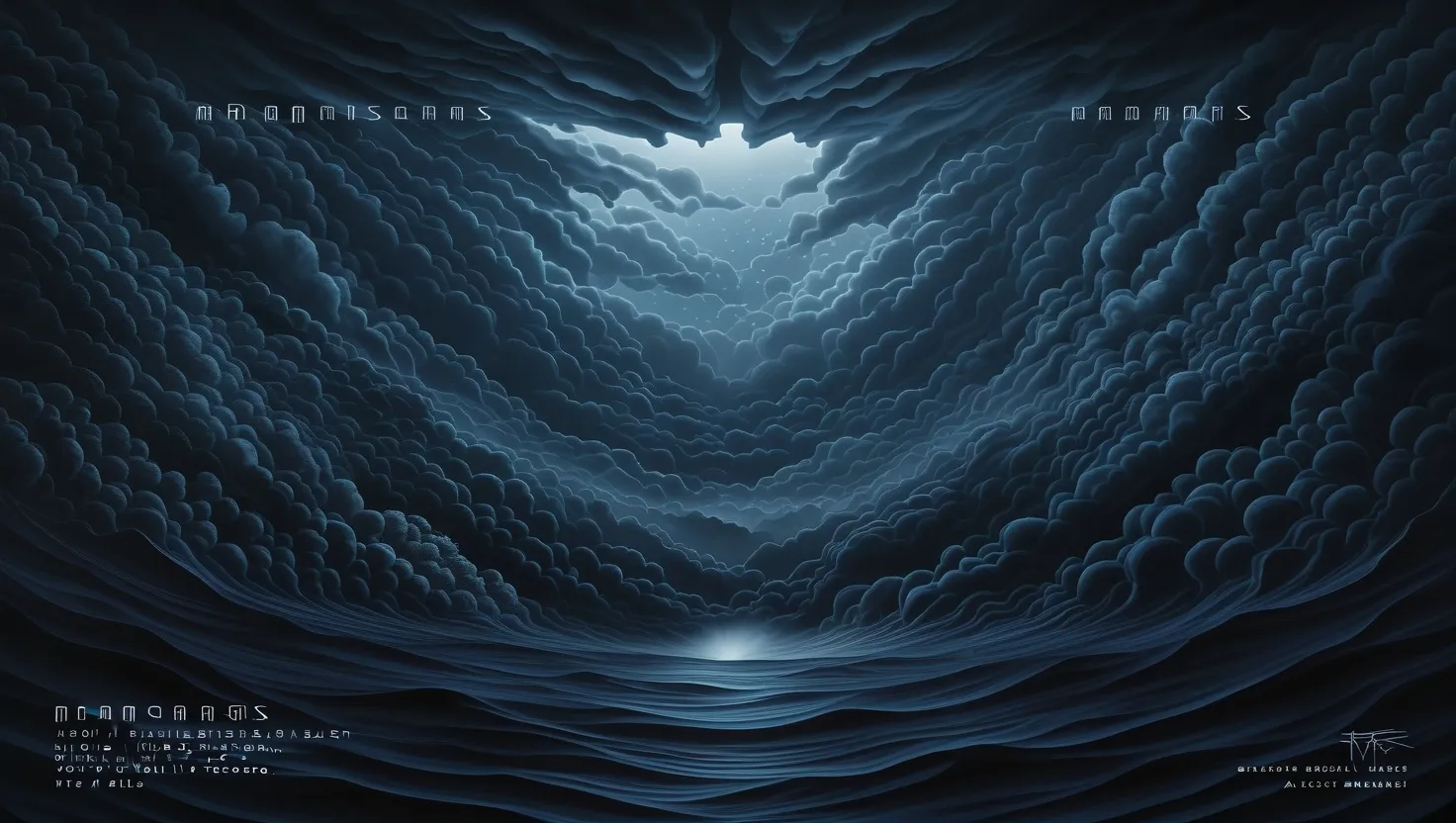
There is a sound sitting in a government archive right now. It was recorded once, in the summer of 1997, and never heard again. Scientists have no definitive explanation for it. The ocean made a noise so loud it was picked up by sensors spread across 5,000 kilometers of open water, and to this day, nobody can tell you exactly what made it.
That sound has a name. They called it The Bloop.
Think about that for a second. The most powerful ocean sound ever recorded — louder than any animal we know of, louder than most underwater geological events — happened once, was captured by instruments originally built to spy on Soviet submarines, and then went completely silent. If that does not make the back of your neck prickle, I do not know what will.
“The sea, once it casts its spell, holds one in its net of wonder forever.” — Jacques Cousteau
To understand why The Bloop is such a big deal, you need to understand what the ocean actually sounds like. Most people picture the deep sea as silent. It is not. The ocean is loud in ways that would genuinely disturb you if you could hear it all at once. There are whale calls that travel thousands of miles. There are the groans of tectonic plates shifting. There is the hiss of underwater volcanoes and the sharp crack of icebergs breaking apart. Scientists who study ocean acoustics spend their careers cataloging all of these sounds, building a kind of reference library for what the deep produces.
The Bloop did not match anything in that library.
The U.S. National Oceanic and Atmospheric Administration, known as NOAA, was running a network called SOSUS — Sound Surveillance System — originally installed during the Cold War to track enemy submarines. By 1997 it had been repurposed for scientific listening, monitoring earthquakes, whale migrations, and general ocean activity. The hydrophones in this network are extraordinarily sensitive. They can pick up a sound from almost anywhere in the Pacific.
On a specific day in summer 1997, multiple hydrophone stations spread across the Pacific simultaneously picked up the same ultra-low frequency signal. When analysts traced the origin point, it led them to a spot in the southern Pacific, somewhere near the Drake Passage, off the coast of South America. They ran the signal through their identification process. Nothing matched. They sped it up so human ears could hear it — the sound is too low in its raw form — and what came out was a distinctive rising and falling pulse. Strange. Organic-sounding. Unsettling.
They called it The Bloop because of the shape of its frequency pattern on a spectrogram. That name might sound almost comical, but the thing itself is anything but.
Have you ever wondered why we know more about the surface of Mars than about the bottom of our own ocean?
Here is the part most casual articles skip. The size calculation is staggering. Scientists estimated the biological source that could produce a sound of that amplitude would need to be vastly larger than any creature currently known to science. The blue whale is the loudest animal on Earth — its call can reach 188 decibels and travel for hundreds of miles. The Bloop was significantly louder and covered a far greater distance. If an animal made it, we are talking about something that would make a blue whale look modest in comparison.
The giant squid angle got popular quickly. The ocean has a history of creatures once dismissed as myth turning out to be real. The giant squid, Architeuthis, was considered sea-monster folklore until actual specimens washed ashore. A deep-sea creature large enough to produce The Bloop would need to be something with no living relative we have ever found — not a larger squid, not a new whale species, but something genuinely outside our current biological framework.
That thought sits uncomfortably, and deliberately so.
“The most beautiful thing we can experience is the mysterious. It is the source of all true art and science.” — Albert Einstein
The geological explanation has supporters too, and it deserves honest attention. Some researchers point to a process called an icequake — essentially a massive fracturing event within an iceberg or ice shelf. The southern Pacific near Antarctica is full of ice dynamics, and some icequake signatures can produce sounds that are cleaner and more coherent than standard ice-calving noise. NOAA itself, in a later statement, attributed The Bloop to exactly this: a large icequake somewhere in the Antarctic region.
But here is where it gets complicated. The acoustic signature of The Bloop does not cleanly match the known patterns of icequakes. Researchers who have studied the spectrogram in detail point out that the frequency sweep and coherence of the signal differ in specific, measurable ways from typical glacial acoustic events. It is not a clean dismissal. It is a genuine technical disagreement among people who understand the data.
The icequake explanation is the current official position. It is not the only defensible position.
What would you do if you heard a sound and could not identify it, knowing the closest thing it resembles is alive?
There is a broader point worth sitting with here. The ocean covers more than 70 percent of the Earth’s surface. The deepest point, the Challenger Deep in the Mariana Trench, sits nearly 11 kilometers below sea level. Less than 20 percent of the ocean floor has been mapped in any meaningful detail. We have better maps of Venus. Think about that seriously — a planet tens of millions of miles away has been mapped more thoroughly than the water we swim in.
The creatures living in the deep ocean are only beginning to be cataloged. New species are still being discovered regularly — not tiny microbes, but animals with eyes and fins and behaviors. The deep sea has conditions so extreme — pressure that would crush a submarine, total absence of sunlight, temperatures near freezing — that life there evolved along completely different lines than anything near the surface. Bioluminescence, extreme gigantism, transparency, alien feeding strategies. The rules are different down there.
So when someone suggests that a massive, unidentified creature could be producing an unidentified sound in one of the least-explored regions of that ocean, the correct response is not immediate dismissal. The correct response is: possibly.
“We know more about the movement of celestial bodies than about the soil underfoot.” — Leonardo da Vinci
The Bloop was not the only strange sound NOAA’s hydrophone network has captured. There is one called Slow Down, recorded in 1997, that descends in frequency over about seven minutes and has never been explained. There is Train, a continuous low rumble first detected in 1997 as well, apparently originating from a fixed location in the Antarctic. There is Julia, a sound lasting about 15 seconds that was loud enough to be heard across the entire equatorial Pacific array.
All of these sit in the archive. Most have tentative geological explanations. None has been definitively closed. The ocean keeps making noises science is still catching up to.
What makes The Bloop specifically memorable is the combination of its sheer volume, its unusual acoustic signature, its complete isolation as a one-time event, and the honest fact that its location — a remote, little-studied corner of the deep Pacific — is exactly the kind of place where something large and unknown could theoretically exist without ever being found.
The ocean does not owe us answers.
“In every walk with nature, one receives far more than one seeks.” — John Muir
I want to leave you with something practical, because all of this has a real-world implication beyond the mystery itself. The technology that recorded The Bloop in 1997 has since been upgraded significantly. Modern hydrophone networks are more sensitive, more distributed, and process data in near real-time. If The Bloop happened today, we would have a much better shot at triangulating its source precisely and cross-referencing it with satellite data on ice movements, seismic activity, and even biological migration patterns.
And yet, no equivalent signal has appeared. Whatever produced The Bloop — ice, geology, or something else entirely — did so once, in a single summer, and has been quiet ever since. The ocean floor near the original source point has not been surveyed with the kind of equipment that might reveal physical evidence. The Drake Passage is one of the most hostile maritime regions on Earth, and deep-sea exploration there is expensive, dangerous, and rare.
So the file stays open. The spectrogram sits in a database. Scientists revisit it occasionally, apply new analytical tools, write papers that reach different conclusions. The sound itself, when you listen to the sped-up recording for the first time, produces a feeling that is hard to name — something between awe and unease, the specific sensation of realizing that the world you live on still has secrets it has not shared with you.
The ocean made a sound once. Nobody knows why. And somewhere, 5,000 meters down where the water is black and the pressure is crushing and no light has ever reached, something — or nothing — remains perfectly silent.