The Kyshtym disaster is one of those events that sits awkwardly between “well known” and “barely understood.” We know it happened. We know it was huge. But when we look for exact numbers, clean charts, and neat answers, everything starts to blur. That blur is what I want to walk you through, slowly and clearly, like we are figuring out a puzzle with several missing pieces.
In 1957, at the Mayak nuclear complex in the Soviet Union, a tank of highly radioactive liquid waste lost its cooling. For more than a year, the waste inside slowly heated up until it dried out and finally blew apart in a chemical explosion. A massive cloud of radioactive material spread across what is now known as the East Urals Radioactive Trace. Hundreds of thousands of people lived in the path of that cloud. Many of them had no idea what they were walking through, breathing in, eating from, and raising children in.
This is all the “simple” part of the story. Tank. Failure. Explosion. Fallout. But the real problem is everything we still do not know, and may never know, about what really went into the air, into the soil, into bodies, and into the DNA of plants, animals, and people.
Here is where the “unfinished equation” idea comes in. Think of a physics formula where half the numbers are covered with tape. You can see the structure of the problem, and you can guess some values, but you can never be totally sure of the final answer. That is Kyshtym.
The first big missing piece is the exact mix of radioactive isotopes that escaped. We know the waste tank contained fission products from weapons production. We know some of the usual suspects were present: cesium-137, strontium-90, and others that like to lodge in bones, muscles, and soils for decades. But we do not have the precise recipe. The Soviet state locked early monitoring data away, and some of it was never collected in the first place. This was not just secrecy; it was also a style of work where the main goal was to keep production running, not to create a detailed environmental log for future scientists.
So, how do researchers work when the original measurements are missing? They go into the field decades later and read nature like a damaged archive. They dig into soil layers. They examine tree rings. They study long-lived lichens. They look at river sediments as if they are pages in a slow-moving diary. This is called environmental reconstruction. But it will always be reconstruction, not direct observation. That means every number comes with a range, a margin, a “probably” attached to it.
Have you ever tried to figure out what someone cooked for dinner last week just by smelling the trash bin? That is roughly what scientists are doing with the Kyshtym plume, except the “trash” is spread over thousands of square kilometers and 60+ years.
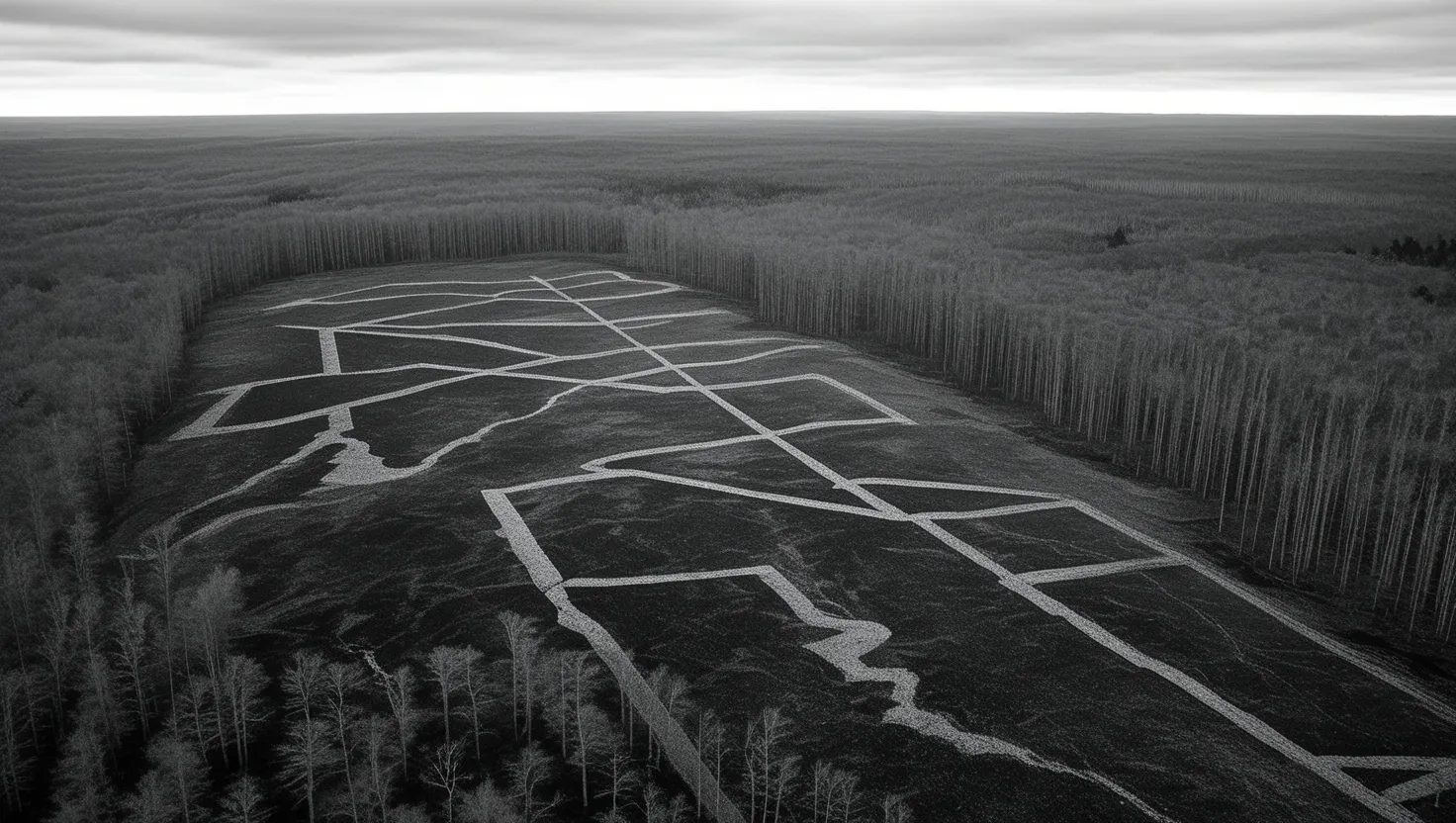
One of the strangest parts of Kyshtym is that we have a very clear physical mark on the land—the East Urals Radioactive Trace—yet we lack a full story of how radiation moved through that landscape over time. Radiation does not just sit there. It migrates. It washes into rivers, sticks to clay, moves up into plants, down into roots, into animals that eat those plants, and then into people who eat both. Some isotopes get taken up by mushrooms more than by grass. Some go more easily into milk than into meat. Without full early data, we are left to reconstruct that long chain from what is still there today.
Let me ask you directly: when you think of radiation, do you imagine it as something static, like a stain on the ground, or as something that keeps traveling through soil, water, and bodies? This difference matters a lot for understanding why Kyshtym’s gaps still affect science.
Another hidden part of the story lies in human health. The affected region had hundreds of thousands of residents. Many stayed in contaminated zones for years. Some were evacuated quickly, others slowly, others not at all. Health records were altered, lost, or never clearly labeled as “radiation-related.” People who got sick were often told they had other conditions. Doctors were told not to use words that would hint at radiation.
So, decades later, when epidemiologists try to link exposure levels to real health outcomes—cancers, birth defects, genetic changes—they are not starting from a clean spreadsheet. They are starting from scattered, incomplete, sometimes deliberately blurred notes. That makes Kyshtym not just a radiation event, but a data disaster.
Here is where the event becomes important beyond its own geography. Nuclear science depends heavily on long-term datasets from accidents and test sites. These real-world cases help scientists check and improve their models. How far does cesium travel in a temperate forest over 50 years? How much strontium ends up in milk? How do low but chronic doses influence cancer risk across generations? The more accurate the data, the better the models.
Chernobyl and Fukushima, despite their horrors, produced a huge amount of data. Measurements started relatively quickly and were shared more openly over time. Kyshtym, by contrast, is a large gap. We know it released a lot of activity. We know it affected many people. But the detailed inputs for models are often rough ranges rather than carefully measured values. That missing precision becomes a problem for anyone trying to predict long-term contamination after any nuclear incident, anywhere.
This is why some researchers think of Kyshtym as a “hole” in the global nuclear record. There is a big dot on the map with fuzzy edges and half-missing numbers attached to it. When you add up all of nuclear history—tests, accidents, releases—this hole distorts the overall picture.
There is another unusual angle: Kyshtym is one of the earliest major accidents of the nuclear age. That means the environment around Mayak has had longer than almost any other site to “live with” its contamination. This makes it a kind of accidental laboratory for 60–70 years of radioactive aging in soil, rivers, and communities. It could have been an extraordinary source of insight into slow ecological and genetic effects. Instead, much of that potential was thrown away by silence and fear.
Think about it this way: imagine you have one of the longest-running “experiments” in radiation ecology on Earth, but nobody properly wrote down the starting conditions, and for decades, almost no one was allowed to publish what they saw. How much knowledge did humanity lose from that?
In between these hard facts, it helps to remember that this is not only a story of isotopes and models. It is also a story of people living under a system where secrecy was routine. Villages were evacuated quietly. Some were simply removed from maps. Residents sometimes found out something was wrong not from officials, but from wilted crops, sick animals, or strange rules about not touching the riverbank.
It is easy to talk about “uncertainty” as a scientific problem. But for the people involved, uncertainty was a daily reality: not knowing why relatives were ill, not knowing why officials told them to move, not knowing why familiar roads suddenly had strange warning signs.
One of the rare things Kyshtym shows us is how political decisions shape scientific facts. Not by changing the laws of physics, of course, but by changing what gets measured, kept, and shared. If no one measures a dose, that dose still affects people’s bodies. It just never makes it into a chart. If no one is allowed to record a diagnosis accurately, the cancer still grows. It just never becomes a point in a statistical study.
Let me ask you something simple: when we say “science knows X,” do you imagine that as a pure process, separate from politics and power, or do you see how often measurements depend on what authorities allow or forbid? Kyshtym is a sharp reminder that scientific truth is not just about clever methods. It is also about whether you are allowed to write things down and keep them.
A lesser-known detail is that early Western analysts were unsure what had even happened. Some suspected a weapons test gone wrong instead of a waste-tank explosion. Intelligence agencies had information but sat on it. Part of the reason was Cold War secrecy. Another part was fear: acknowledging a serious accident in the Soviet nuclear program might cause the public to question the safety of their own country’s reactors and waste systems. Silence was not just on one side.
Here is a famous line that feels strangely fitting here:
“The first principle is that you must not fool yourself—and you are the easiest person to fool.”
— Richard Feynman
In the context of Kyshtym, there were many layers of self-deception: a state telling itself it could hide contamination, officials convincing themselves that limited data was “good enough,” other governments choosing not to make noise about what they knew. All of that created the unfinished equation we still struggle with.
There is also a moral question hidden inside the scientific one: when you erase data about people’s exposures, you are not just making life harder for researchers. You are erasing parts of those people’s history. Diseases that might have been linked to radiation become “random.” Communities that bore the cost of a national program disappear from the story of that program’s successes.
Another quote fits here, not as decoration, but as a direct comment on this erasure:
“The most dangerous man to any government is the man who is able to think things out for himself.”
— H. L. Mencken
In the Kyshtym case, people who tried to think for themselves—scientists, doctors, local observers—were often silenced or ignored. The result was not just political control. It was a permanent loss of clarity about what truly happened.
From the point of view of modern nuclear safety, Kyshtym also challenges a comforting idea: that every accident can, in time, be fully understood and quantified. We like to imagine that if something terrible happens, we will at least know exactly how bad it was. Kyshtym shows that this is not guaranteed. If measurements are poor, if records are hidden, if politics trump openness, then some disasters remain partly opaque forever.
Let me put this to you in very plain terms: are you comfortable with the idea that humanity’s record of its own most dangerous technologies has blind spots that can never be fully fixed?
The “unfinished equation” is not just about missing numbers; it is about what those missing numbers do to our ability to model long-term contamination and recovery. For example, when engineers and ecologists plan how to clean a contaminated region, they rely on dose–response relationships built from past events. If one of the largest early accidents has fuzzy inputs and blurry outcomes, then those relationships have a built-in uncertainty. It is like building a bridge with one important measurement scribbled in pencil instead of carved in stone.
There is one more subtle angle. In some contaminated areas around Mayak, nature has partly adapted, at least on the surface. Forests regrew. Animals returned. People continued to fish, farm, and hunt. To a casual visitor, parts of the East Urals Radioactive Trace might look “normal.” This can create a strange illusion that time alone is enough to solve anything.
But long-lived isotopes remain. Some genetic damage does not show in obvious ways. A landscape can look fine and still carry a hidden burden. Without detailed, long-term biological studies—from microbes in the soil to multi-generation human health tracking—we are only guessing at how heavy that burden really is.
There is a calm, almost quiet quote that captures the weight of that kind of silence:
“What is not documented is not done.”
— often used in science and engineering
In Kyshtym, much was “done” to the environment and to people’s bodies, but a large part of it was never documented. That does not mean it did not happen. It just means future generations inherited a puzzle with too many missing pieces.
So where does that leave us? I think of Kyshtym as a warning written in invisible ink. You know it is there because you can see its outline in satellite maps, in scattered studies, in personal stories from the region. But when you try to read every line clearly, half the words fade.
For you and me, the lesson is very simple even if the science is complex: when a technology can contaminate whole regions for centuries, the right to measure, record, and share information about it is not a luxury. It is part of safety itself. Secrecy does not just hide shame. It damages knowledge.
If we want the “equations” of our technological age to be solvable, we have to protect the boring, unglamorous work of careful monitoring and honest reporting. Without that, we risk repeating Kyshtym in other forms—events that we know happened, but whose true size and long shadow we can only guess at.