Unveiling the Deadly Elegance: India's Ancient Weapons and Their Modern Marvels
Ancient Indian weapons like the chakram and Talwar showcase innovative design and historical significance, now revived in modern strength and sharpness tests.
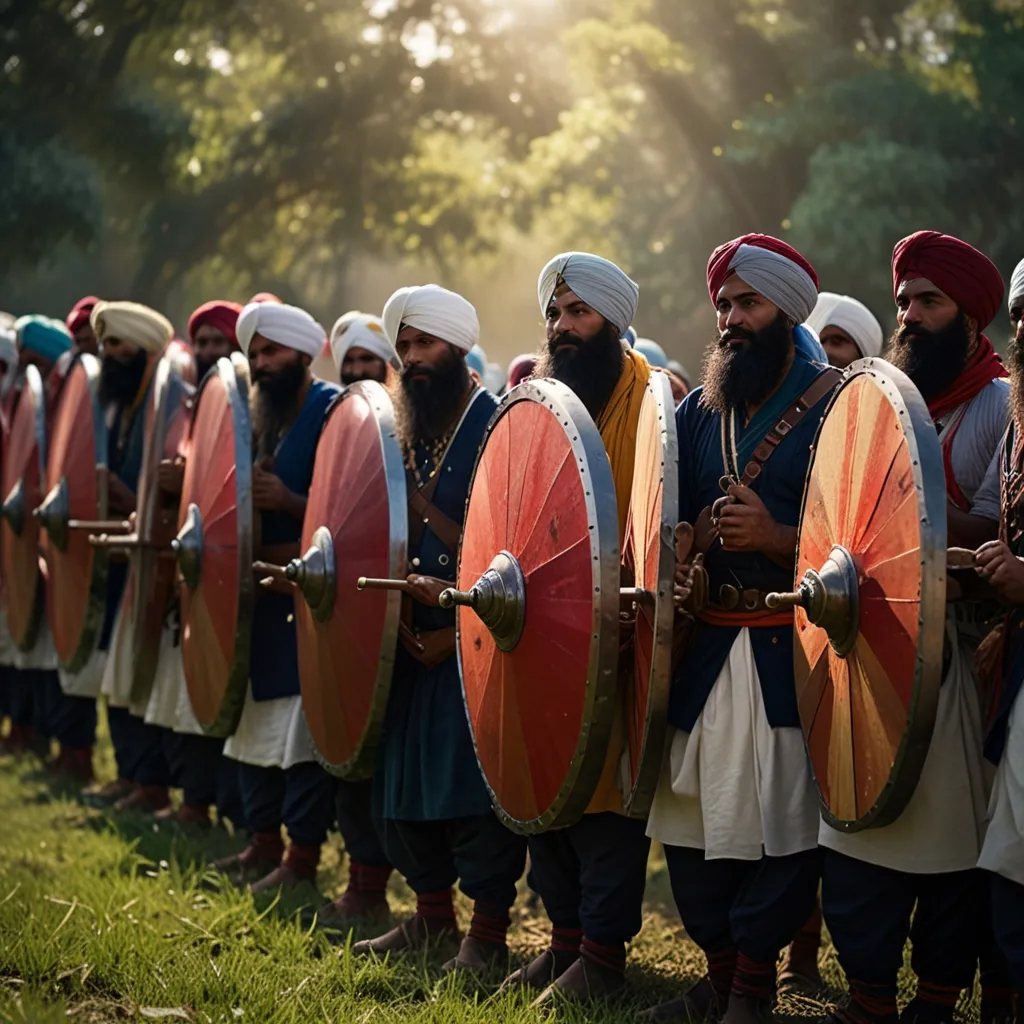
Picture this: centuries ago, warriors of India, particularly the Sikhs, wielded a rather unusual and intriguing weapon called the chakram. This wasn’t your typical sword or spear. Shaped like a circular disc and thrown like a frisbee, it was as lethal as it was deceptive. Imagine twirling it on one finger before hurling it towards the enemy with deadly precision. These warriors wore multiple chakrams stacked across their arms, necks, and even piled atop their heads, ready to strike at a moment’s notice.
The chakram, thanks to its exotic looks, even made its way into pop culture. Remember Oddjob’s lethal hat in the James Bond movie, Goldfinger? Yep, that was a nod to the chakram. Or how about Xena’s weapon in the TV series? The Indians came up with this one long before it hit our screens.
But let’s drift from chakrams for a second and dive into another illustrious piece of Indian heritage—the Talwar. This sword, with its gracefully curved blade, was an absolute game-changer for the Mughal Empire’s fighters. It was dominated by its lethal curve, designed for those flawless, flowing slashes that wouldn’t get stuck in bone. A clever design, it had a sharp spike on the pommel, perfect for close quarters combat. It wasn’t just a weapon—it was a mark of faith and duty, especially among Sikhs, symbolizing the fight for justice.
Each weapon, from the chakram to the Talwar, was a testament to its holder’s skill and valor. Yet, in today’s world, they often become the centerpiece of modern strength and sharpness tests. Imagine launching a chakram using a custom-built mechanical device to see if it could cleanly cut through sugar canes, believed to mimic human limbs. A fascinating picture, right? Visualize it soaring through the air and the satisfying swoosh as it hits its mark.
Moving to another part of India’s historical weaponry arsenal, let’s talk about the Baghnakh—a weapon that could rival Wolverine’s claws. Named after the tiger’s claw, it was an unassuming yet deadly piece often concealed within the hand. With its scorpion-like design, it offered triple threat attacks with its thrust, slash, and claw capabilities. Its legendary use by Emperor Shivaji is etched in the annals of the Murata Empire, where he dispatched his enemy with just this weapon. In modern simulations, weapons like these are put through various tests. They’re tested on logs for strength and on dummies to simulate their deadly effect on humans—the goal being to ensure that their historical lethal glory still holds ground.
In another corner of Indian history lies the Katara, a punch dagger synonymous with the Rajput warriors. With its H-shaped handle, this weapon turned the user’s hand into a lethal instrument of destruction, akin to Marvel’s Wolverine, but real. The dexterity required to wield a katara in battle would demonstrate a warrior’s mastery, moving as fluidly as a part of their own body. However, modern tests of these weapons ensure they measure up to their storied past: can they puncture through chainmail? Will the metal bend under pressure or keep its form and function?
Last but certainly not least, meet the Pata. This wasn’t just any sword. With a gauntlet instead of a conventional guard, the Pata required a battle-hardened veteran for its mastery. While mostly used by mounted warriors, its unique design allowed soldiers on foot to attack with a versatility uncommon in standard fighting. In contemporary trials, the Pata is subjected to a nearly medieval test, stabbed through metal sheets to assess its strength and slice through carcasses to prove its sharpness.
There’s an undeniable allure in these ancient weapons that speak volumes about the craft and sagacity of their makers. Blades with tales of warfare and honor, of them, cutting through the air and into history. Each weapon carried a thousand stories, a testament to the ingenuity and ferocity of those times. They were more than just tools for battle; they were extensions of the human body, perfectly tailored for the combat style of the era and the handler’s proficiency.
The world of ancient weaponry is not just a walk down history lane; it’s an exploration into the human instinct for innovation in the face of survival. Through years and evolution, weapons not only helped in the physical act of battle but became integral parts of culture and identity. It’s fascinating to see these war tools becoming subjects of modern experimentation, proving that legends of steel and sharp edges never really die—they just evolve.