What If We Had to Engineer the Climate to Save Humanity?
Humanity's Desperate Gamble: The High Stakes of Geoengineering in the Climate Crisis
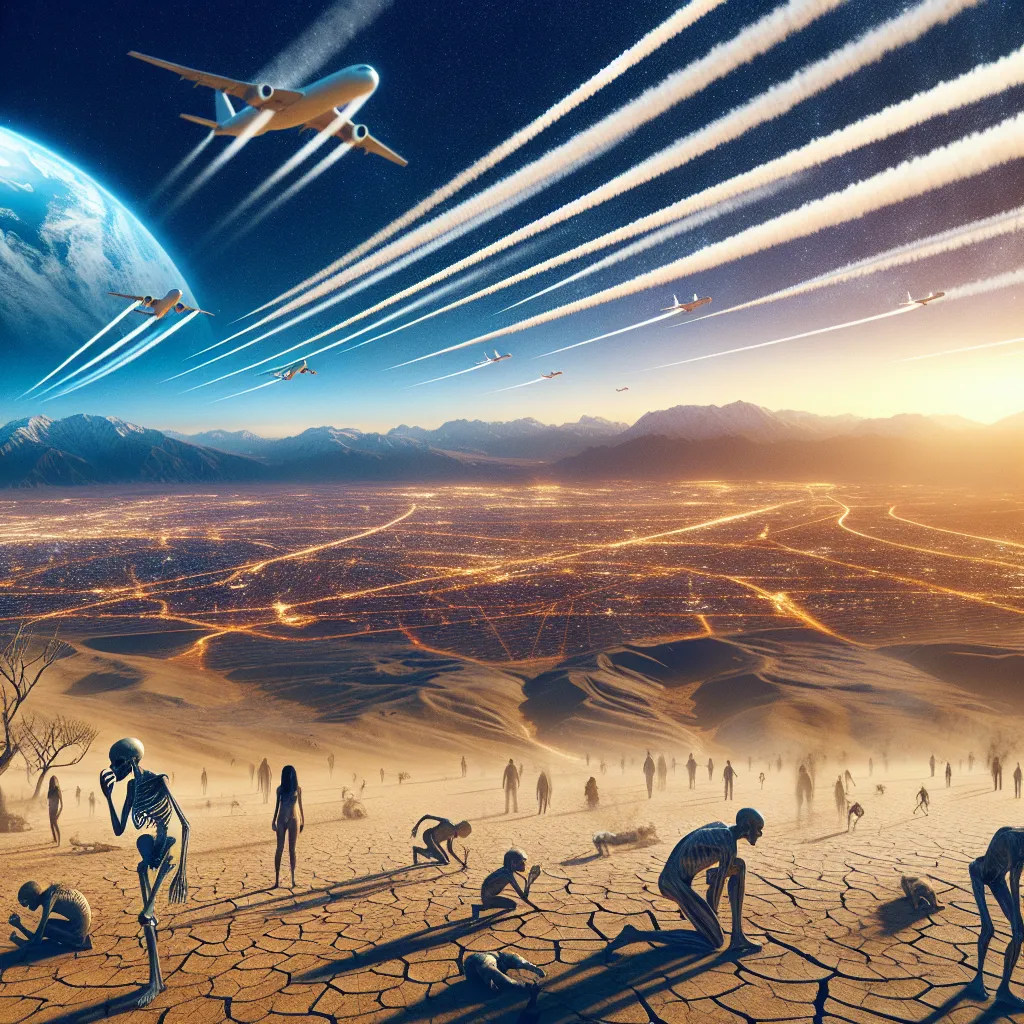
By the end of the 21st century, humanity is facing a crisis. Decades of intense heat waves and droughts have devastated harvests, while warmer oceans yield less fish, especially in tropical zones. Millions are suffering from famines, and resource wars are driving millions more to flee north as conditions worsen. Desperation is leading global governments to consider emergency measures.
It’s uncertain if this grim future will come to pass, but without effective action on climate change, it might. Radical interventions, known as geoengineering, might become necessary to slow the rapid pace of climate change. These methods could potentially reverse centuries of human impact or, conversely, could make things much worse.
Geoengineering comes in many forms, from fantastical ideas like constructing giant light sails in space to more mundane ones like seeding clouds with salt or fertilizing oceans with iron to promote algae growth. A more feasible intervention in our lifetime is stratospheric aerosol injection. This involves spraying particles high in the atmosphere to block some sunlight from reaching Earth.
Here’s the science behind it: CO2 traps heat from the sun’s infrared radiation. Imagine wrapping yourself in a blanket on a cold morning – it’s that layer of air trapping warmth. The goal is to prevent this trapped energy. Nature already reflects about 29% of solar radiation using bright surfaces like ice or clouds. More reflection means less warming.
A key inspiration is the 1991 Mount Pinatubo eruption, which was the second largest eruption of the 20th century. It released millions of tons of sulfur dioxide into the stratosphere, creating veils that reduced sunlight reaching Earth by about 1% and cooled the planet by 0.5°C. This effect lasted three years.
Humans could mimic this by injecting sulfur particles into the stratosphere, potentially a straightforward and cost-effective process. A fleet of planes could distribute aerosols annually along the equator, reflecting enough sunlight to slow global warming and buying us time to reduce fossil fuel dependence.
However, there are side effects. Changes in rainfall patterns could hurt agriculture, leading to famines affecting billions. Post-Pinatubo, the sulfur veils also damaged the ozone layer, making the Antarctic ozone hole the largest recorded. Injecting sulfur for decades could have similar effects, though scientists are exploring less harmful alternatives.
Even if the ozone layer remains intact, there are other concerns. Politicians and industries might use the cooling effect as an excuse to delay transitioning to a carbon-neutral economy. More CO2 means more absorption by oceans, increasing their acidity and harming ecosystems like coral reefs.
Stopping geoengineering suddenly could trigger a “termination shock”—rapidly heating the Earth back up due to accumulated CO2, but in just a decade instead of fifty years. This shock would be catastrophic, causing famines, ecosystem destruction, and making adaptation impossible.
The best-case scenario is that geoengineering buys us time to transition our economies and remove CO2 from the atmosphere. But it’s not a solution and must not delay urgent climate actions. Over the decades, geoengineering has been controversial, stalling necessary research and experiments. Yet, rejection of geoengineering is shortsighted—we are already conducting an uncontrolled experiment by emitting 40 billion tons of CO2 annually. We must prepare for geoengineering as a last resort, lest desperation leads us to disaster.
So, geoengineering is terrifying, not as a solution, but a potential stopgap in our fight against climate change. We need to be ready, having done the science, to avoid pressing the self-destruct button in panic.