Are Super Skyscrapers the Future of Urban Living?
Rising Above: Skyscrapers as Icons of Modern Engineering and Future Living
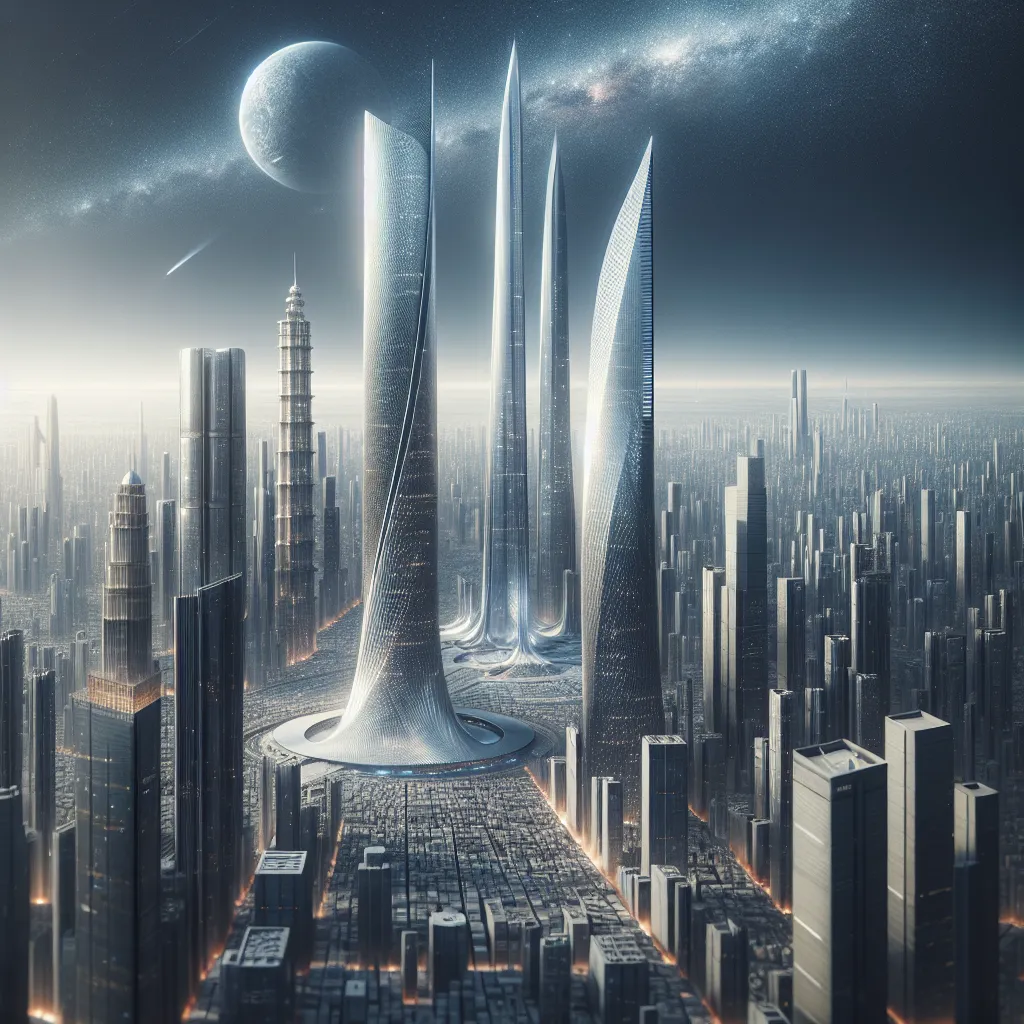
Skyscrapers have completely transformed how we view the world. Nowadays, they’re not just tall, they are super-tall. By 2050, most of us will be living in crowded cities, so buildings are stretching higher and going up faster than ever before. I’m Rob Bell, an engineer zooming up to the 45th floor in just 30 seconds, and I am eager to uncover the secrets behind these towering structures.
One of the most famous among these giants is The Shard in London. It’s the tallest man-made structure in Western Europe, and the view from up top is truly something else. The Shard is part of a growing trend of super skyscrapers over 300 meters tall. Across the globe, more than 300 of these architectural wonders are under construction.
When we think of skyscrapers, we might think of Canary Wharf’s traditional towers or London’s new additions like the Cheese Grater and the Walkie-Talkie. But there’s been a colossal shift in skyscraper design over the past 30 years. Skyscrapers are no longer just office blocks in North America; they’re now mixed-use or residential buildings made primarily of concrete, and they’re popping up in Asia and the Middle East.
Take the Burj Khalifa in Dubai, for example. Initially designed to be 518 meters tall, it evolved during the planning process to an astonishing 828 meters. This means it’s almost three times the height of the Eiffel Tower! It’s not just an office; it boasts almost 200,000 square meters of residential space, rivaling some of the world’s most luxurious buildings.
Building these super skyscrapers poses extraordinary engineering challenges. The Burj Khalifa, for instance, needed the weight of a hundred thousand elephants’ worth of concrete, cooled with ice, and pumped upwards more than 600 meters!
One major engineering challenge lies in the foundations. In cities like London, where historical artifacts and soft clay complicate construction, engineers dig deep. The Shard’s foundations, for instance, go down about 50 meters, roughly the height of a 20-story building.
But digging deeper isn’t just a London problem. The Petronas Towers in Kuala Lumpur had to move their entire site 30 meters to get better foundations due to sloping limestone.
Yet it’s not just about going deep; it’s about precise planning. The Lotte Tower in Seoul needed over 5,000 concrete trucks to build its foundation, illustrating the immense logistical challenge engineers face.
Once the foundation is in place, the focus shifts to overcoming another formidable force – the wind. Wind tunnel testing helps engineers design buildings to withstand powerful gusts while ensuring minimal movement for comfort and safety. An excellent example is the Burj Khalifa, which uses a twisting design to break up wind forces.
Moreover, skyscrapers need to manage solar gain, the greenhouse effect of sun-heated glass buildings. That’s why advanced glass technologies are crucial, featuring multiple layered panes to create air gaps for better insulation.
Looking ahead, the future of skyscrapers seems boundless. New techniques are speeding up construction, with Chinese companies erecting skyscrapers at staggering speeds. Ambitious projects like the Kingdom Tower in Saudi Arabia are pushing heights to unimaginable levels––1,000 meters is the new benchmark.
For now, super skyscrapers not only stand as landmarks but also represent peaks of creativity and engineering excellence, extending the limits of what’s possible. This quest for height and innovation? It’s far from over. The skies are our limit.