science

Can a Russian Fighter Jet Outmaneuver America's Best?

The Sukhoi 37's Leap Beyond Traditional Fighter Agility and Maneuverability
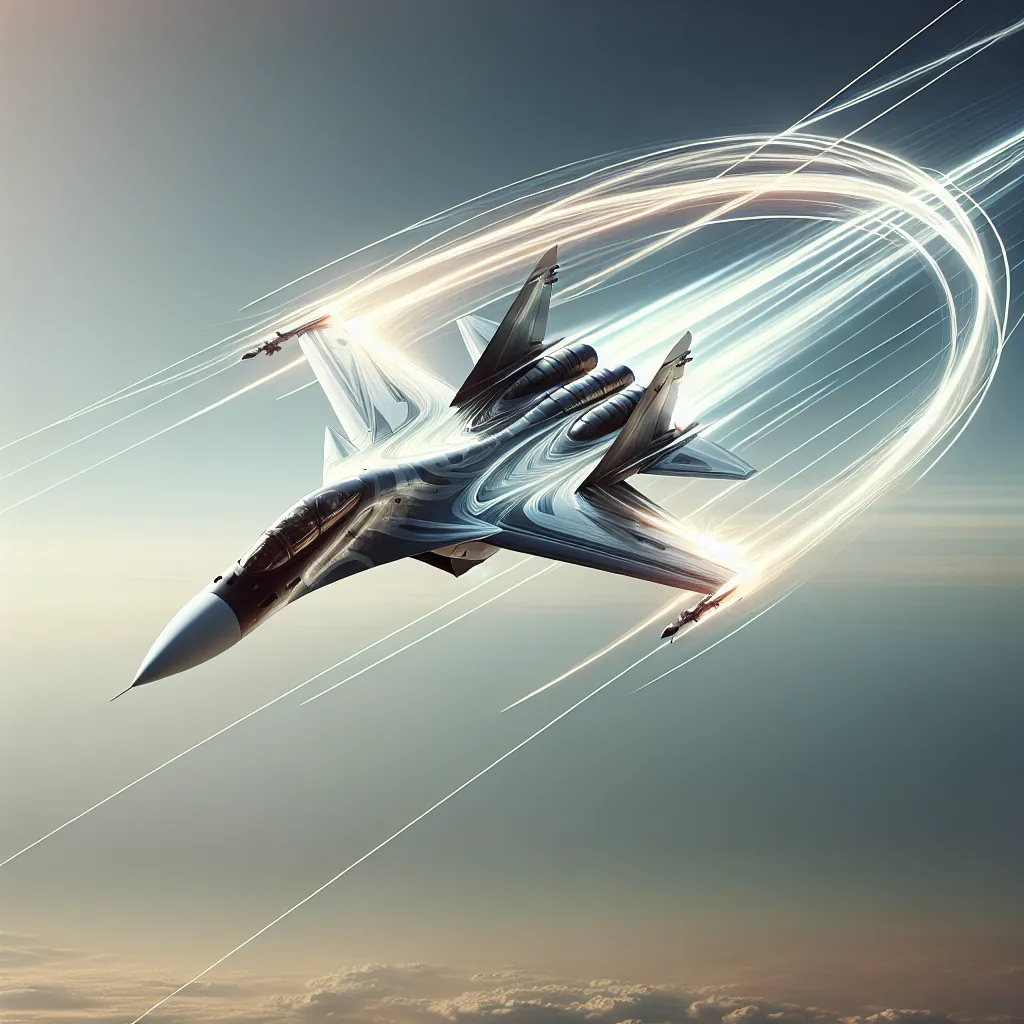
Can a Russian Fighter Jet Outmaneuver America's Best?

The YF-22 showcases the latest in thrust-vectoring technology, which redirects exhaust gases to push the plane’s tail around faster. This tech allows fighters to change direction swiftly and enhances their maneuverability.

Initially, the YF-22 was expected to dominate the skies for two decades. However, a rival has emerged: the Sukhoi 37. This plane is potentially the most advanced fighter ever built. With even more incredible thrust vectoring capabilities, it’s faster and far more agile in close combat compared to the YF-22.

The Sukhoi 37 might look like any other fighter, but it can execute maneuvers that seem impossible. Traditional fighter jets are fast but heavy, making sharp turns challenging. The Sukhoi 37 defies this norm, performing gravity-defying moves thanks to its thrust-vectoring and small canard wings on its nose. These features enable the pilot to maneuver the 20-ton aircraft with the elegance of an aerobatic plane, reversing direction instantly. This superior agility provides a significant combat advantage.

During its first public display, the Sukhoi 37’s pilot boldly challenged anyone to a dogfight, but no one accepted. This moment underscored the aircraft’s dominance in the skies. Despite advancements in fighter jets, pilots are becoming the limiting factor as they strive to keep up with the planes’ growing capabilities.


Similar Posts
Blog Image
Are Aliens Already Among Us, Hiding in Plain Sight?

Close Encounters of the Maybe Kind: Earth’s Evolving Alien Fascination

Blog Image
How Did a Series of Misinterpreted Warnings Lead Titanic into a Deadly Iceberg?

A Dance of Ignored Warnings and Hidden Icebergs in Calm Seas

Blog Image
Quantum Fossils: Ancient Remains Hiding Multiple Timelines?

Fossils might preserve quantum information from multiple historical timelines, challenging our understanding of the fossil record. This theory could explain anomalies like identical trilobite fossils found across distant locations and the abundance of footprints. While speculative, it encourages creative thinking about Earth's history and evolution, potentially offering glimpses into alternate evolutionary paths and parallel universes.

Blog Image
Cellular Memory: Are Your Ancestors' Experiences Hidden in Your DNA?

The Quantum Cellular Memory Theory suggests memories aren't just stored in the brain, but in cells throughout the body. This concept explains organ transplant recipients experiencing donor traits and inherited traumas. Cellular memory may involve quantum effects and chemical tags on DNA. The theory proposes a psychosomatic network where memories are distributed across the body, potentially passing down through generations.

Blog Image
5 Unsolved Sleep Mysteries That Scientists Still Can't Explain in 2024

Discover 5 fascinating sleep mysteries that puzzle scientists today. From dream origins to memory consolidation, explore what happens when you sleep. Learn about the unknown.

Blog Image
Can Any Road Car Rival the McLaren F1's Incredible Speed and Engineering?

Mastering Speed: The Engineering Marvels Behind McLaren’s Dominance in Endurance Racing