What Pushed Humans Beyond Earth: The Thrill of the Space Race or Sheer Curiosity?
Stargazing to Footprints on the Moon: A Cosmic Journey Through Competition and Cooperation
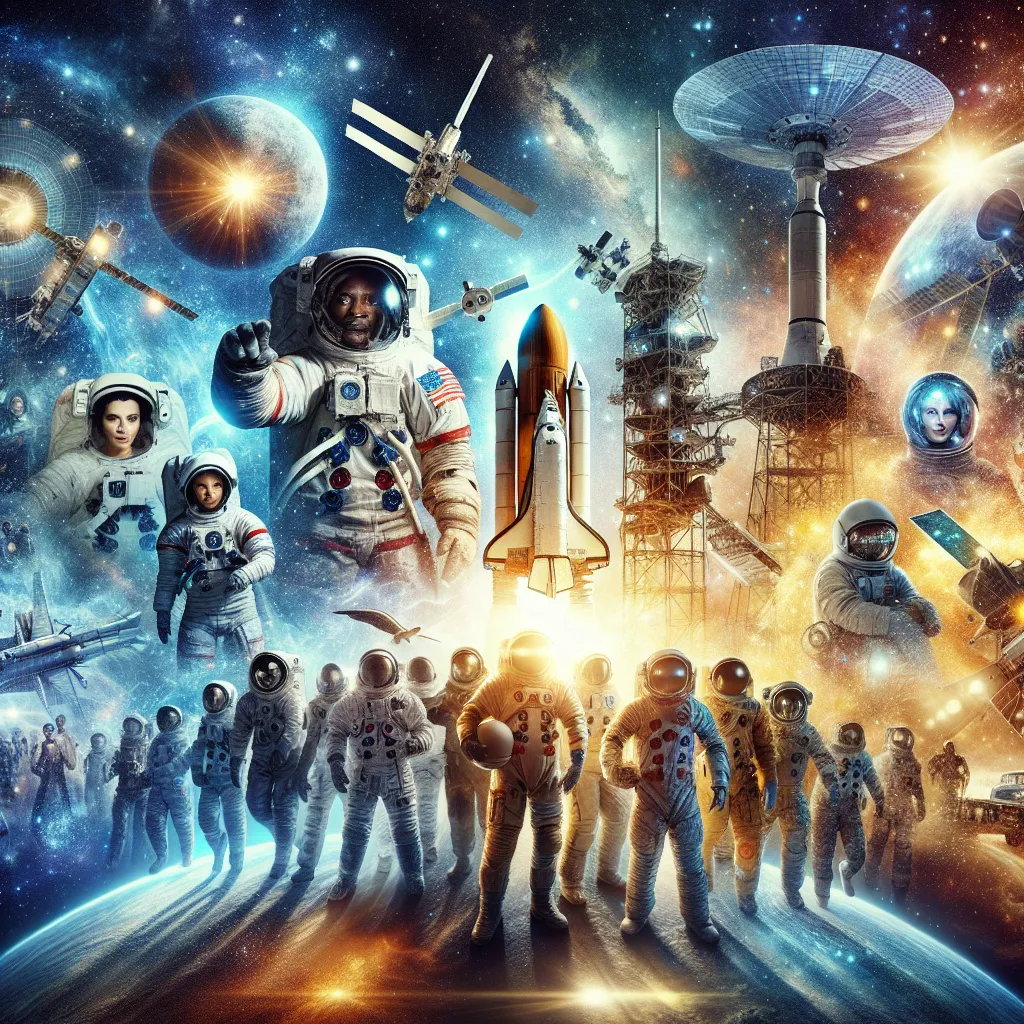
For centuries, humans have gazed at the sky, finding inspiration among the stars. When the first astronomers turned their telescopes skyward, our world expanded infinitely. If we’ve climbed the highest mountains and dived to the deepest oceans, what’s next? Space, the ultimate frontier.
It was during the Cold War that humanity first breached Earth’s atmosphere, venturing into the uncharted domain of space. While space exploration is often presented as a quest for knowledge, it was really the competitive drive between the United States and the Soviet Union that propelled these technological advancements. The Space Race was a struggle not just for space dominion but for scientific supremacy.
The Cold War, a decades-long duel between two superpowers, pushed us to the edge of nuclear annihilation but also ignited decades of scientific marvels. This competition between capitalism and communism saw each side racing to achieve firsts in space, defining goals, and making enormous investments that continue to influence space exploration today.
Though the official Space Race launched in the 1950s, its roots lay in World War II, with the development of nuclear weapons and missile technology. The war’s end saw both the U.S. and Soviet Union eager to exploit German rocket technology for their own space ambitions. The American and Soviet acquisition of German expertise led to rapid advancements in space technology.
The quest to send non-human life into space marked the early days of this rivalry. On November 3, 1957, the Soviet Union launched Sputnik 2 with a dog named Laika aboard, signaling the beginning of life sciences in space. The United States responded with similar experiments, sending chimpanzees to gauge how space travel would affect living organisms.
April 12, 1961, saw the Soviets achieve a historic milestone with Yuri Gagarin becoming the first human to orbit Earth. The United States, under pressure to respond, intensified its efforts, leading to a lunar mission declaration by President Kennedy on May 25, 1961. This announcement spurred Project Mercury, aiming to confirm the capacity of humans to survive and operate in space.
July 20, 1969, remains a watershed moment in human history as Apollo 11 allowed Neil Armstrong and Buzz Aldrin to set foot on the moon, fulfilling Kennedy’s ambitious goal just before the decade ended. The world watched as Armstrong took his giant leap for mankind, forever cementing America’s place in the space race narrative.
Post-Apollo 11, the Soviets shifted focus toward extended space missions, leading to the launch of the world’s first space station, Salyut 1, in 1971. Meanwhile, NASA launched Skylab, repurposing Apollo technology, and achieving significant milestones despite early setbacks.
The Space Race wasn’t just about competition; it also laid the groundwork for cooperation. The Apollo-Soyuz Test Project in 1975 saw American and Soviet spacecraft dock in space, signaling a thaw in Cold War tensions and paving the way for future international collaborations like the International Space Station (ISS).
Today, the ISS serves as a monument to human ingenuity and international cooperation, housing over 15 participating countries. Private companies like SpaceX and Virgin Galactic continue the legacy of the Space Race, pioneering new ventures in mining and tourism.
The technological and ideological triumphs of the Space Race were profound, pushing us to new frontiers and changing how we view our place in the universe. From seeing Earth as a fragile blue marble to developing everyday technologies, the race to space reshaped our world.
The journey into space continues, but it’s more than just a competition now. It’s about collaboration, enduring curiosity, and the limitless imagination that defines the human spirit.