Can You Reassemble a 1959 Lawn Mower from 331 Pieces?
Reassembling Nostalgia: The Revival of a 1959 Suffolk Colt Lawn Mower
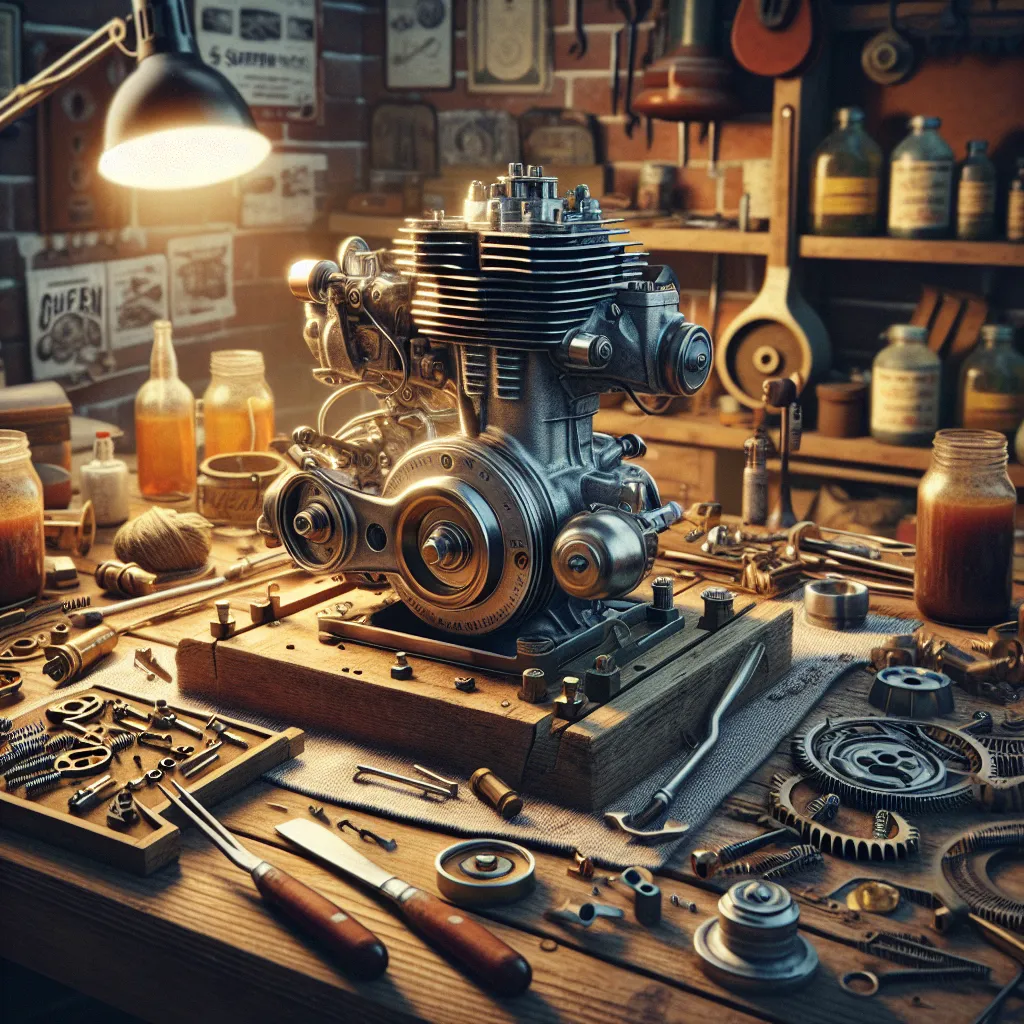
Hello, and welcome to “The Reassembler” with me, James May. This is a show where we take things completely apart and then put them back together to appreciate their intricate workings and the genius behind them. Today, we focus on the 1959 Suffolk Colt 12-inch four-stroke petrol lawn mower—a revolutionary piece of equipment in the lawn care world.
We start with the engine because that’s what makes it a petrol lawnmower. Without the engine, it would simply be a mower. The first components to reassemble are the valves, responsible for controlling the flow of fuel and exhaust gases in and out of the cylinder. Edwin Beard Budding, inspired by a fabric-shearing machine, invented the lawn mower in 1830. People initially thought he was crazy, testing his invention at night to avoid stone-throwing onlookers.
Now, moving on to the camshaft and the camshaft spindle—essential parts that must fit together perfectly. Any slight misalignment could create a bur that stops smooth operation. Unlike a high-performance fighter aircraft engine, this engine doesn’t demand such extreme precision, but it’s still crucial to get it right. With careful tapping and fitting, the camshaft spins cleanly, opening and closing the valves as intended.
Next, we need the crankshaft, a critical part that converts the frantic combustion action into rotary motion. This process is demonstrated through a simple model showing how the piston movement translates into the engine’s power generation. Understanding the relationship between the crankshaft and the camshaft is essential, as timing errors would mean the engine won’t work correctly.
With the camshaft, tappet, and valves assembled over the past hour, it’s time to clean hands and focus on precision engineering. The piston, connecting rod, gudgeon pin, circlips, and piston rings are prepared next. These components must fit perfectly to convert the piston’s linear movement into rotational force at the crankshaft.
German engineering tools make this process more manageable, demonstrating the intricate workings of a four-stroke engine as the piston moves up and down, pulling in the fuel-air mix, compressing it, igniting it, and then expelling the exhaust gases. This delicate dance between the piston and valve must be perfectly timed.
The lawnmower’s design is impressive, much like early automobiles, with every part manufactured in-house, from the engine to the grass box. After finishing with the engine components, the lawn mower has the crankshaft and other tiny precision parts installed.
When I was young, I loved a lawn mower like this one. It lived in the shed, and I mowed the lawn at every opportunity, much to the grass’s frequent trim. Those memories of early mechanical interaction stuck with me.
Returning to the assembly, the oil splasher and other components go together meticulously. The task wouldn’t be complete without relating funny assembly anecdotes—a habit of a true Englishman.
Now at eight hours, the lawn mower is nearly done. With the clutch and handle bits assembled, it’s time to attach the handle and cables, finalizing the build. Adding the finishing touches, we place the cutting blades and prepare for the big moment.
Finally, with a complete reassembly, the historic 1959 Suffolk Colt lawn mower is ready to roar back to life. With a few tugs, the engine purrs, demonstrating the marvel of mid-20th-century ingenuity. What started as 331 tiny pieces scattered on a table has transformed back into a fully functional machine, ready to mow lawns as effectively as it did decades ago.
With the pride of accomplishment, I move on to the next mechanical challenge, content in the simple yet profound joy of reassembling history piece by piece. If you’re still here, I hope you’ve enjoyed the journey as much as I have in bringing this historical gem back to life.