How Can 147 Puzzle Pieces Turn Into the Soul of Rock Music?
Crafting Harmony from Chaos: The Art of Reassembling an Electric Guitar
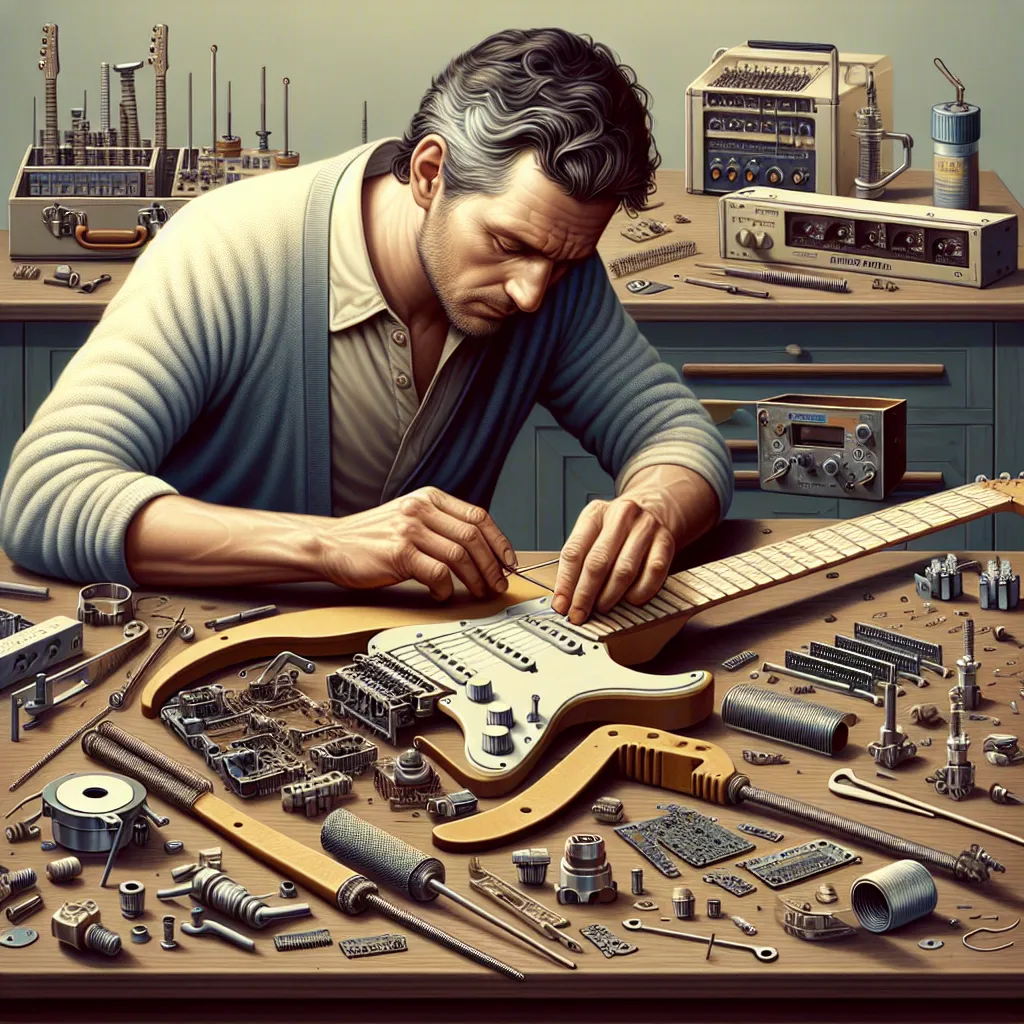
Hello and welcome to “The Reassembler” with me, James May. In this show, we bring things back to life by meticulously piecing them together. Today, we’re tackling an electric guitar, which, when laid out in 147 separate components, really showcases its ingenuity.
You start by appreciating the intricacy of each piece only when you have to put it all back together. It’s like solving a detailed, yet delicate, puzzle. Each part - the bridge plate, the trim block, and the strings, all have their specific place and purpose. Some components, like the Phillips screws from Japan, have unique traits making them distinct from their American counterparts.
Assembling the bridge is a challenge in itself, requiring precision to ensure the strings align correctly over the curved neck. And with the detail-oriented process, such as using the correct Japanese industry standard screwdriver, it avoids chewing up the screws – a common pitfall.
The heart of the electric guitar lies in its pickups, encased in the scratch plate. It’s a clever design involving magnets and copper wire coils that turn string vibrations into electric signals, which then get amplified. The calculation, the physics behind it, and the sheer 2.6 kilometers of wire wrap up into these small but crucial parts.
Each component, right down to how the pickups mount onto the scratch plate with springs, requires careful handling. Even soldering the wires – a task that always seems to need an extra hand – feeds the delicate balance between technology and music.
Once the core components are in place, it’s about bringing the assembly to life with proper alignment and tuning. Everything from soldering the tiny wires to fitting the bridge and string saddles involves meticulous care. The springs on the trem bar, the volume, and tone control knobs – every little detail counts to ensure the guitar functions as it should.
Attaching the neck and the body, it finally starts looking like a guitar. And with strings in place, it’s not just an assembly; it’s an instrument primed to release those iconic rock sounds. Sure, the electric guitar alone won’t make much noise, but plugged into an amplifier, it transforms.
Wrapping up, once the machine heads are in place and the final screws tightened, you have a complete guitar ready to be played. Plugging it into an amplifier, with fingers crossed, we strum the strings hoping to hear the gratifying sound of music.
This journey of reassembly, from 147 individual parts to a fully functional electric guitar, is a testament to how each piece, however small, plays a critical role in creating something beautiful. So, as I strum these strings, it’s not just about reassembly - it’s about breathing life back into a scattered puzzle, piece by piece.