How Did the 'Wobbling Goblin' and Its Successor Redefine Stealth Warfare?
From the 'Wobbling Goblin' to the Insect in the Sky
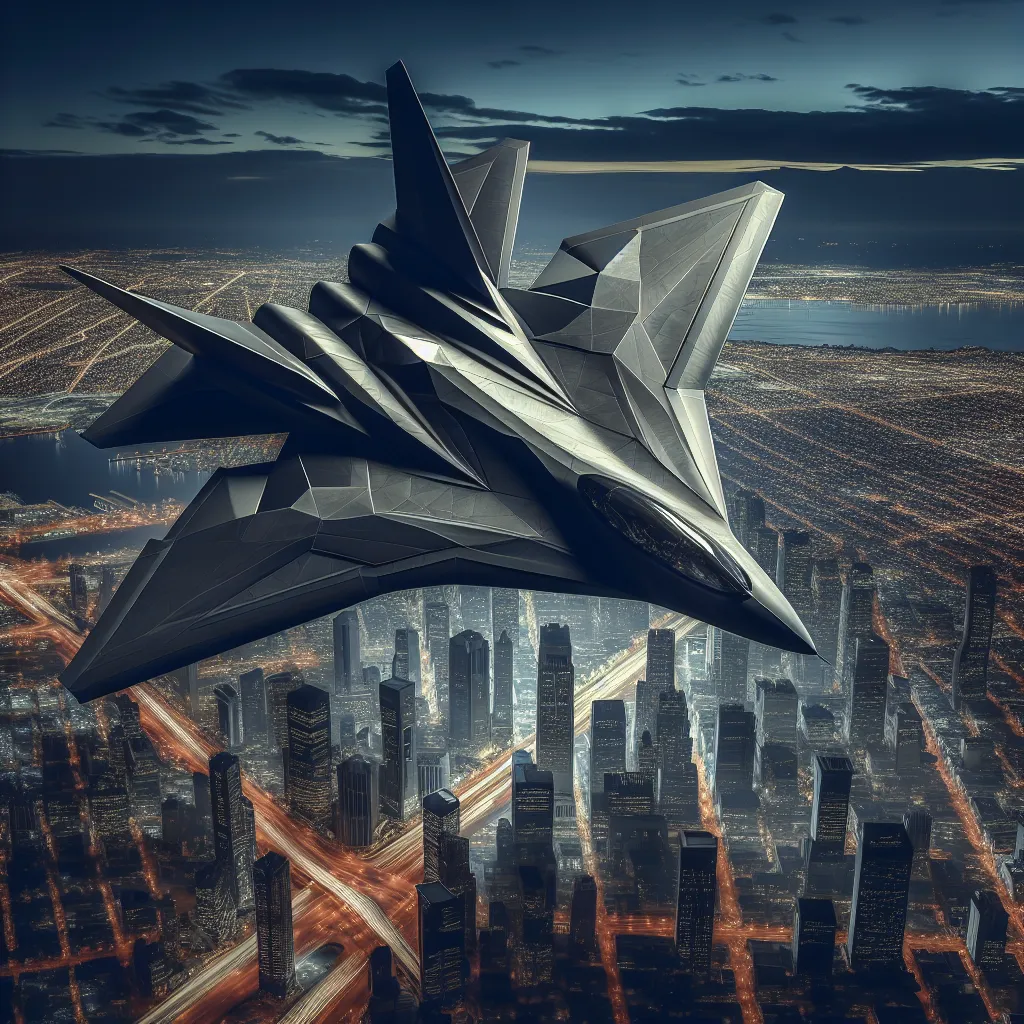
The F-117 Nighthawk, often dubbed the “Wobbling Goblin,” looks like it shouldn’t even fly. But, despite its unconventional appearance, this aircraft emerged as a groundbreaking design by Skunk Works and the legendary Kelly Johnson. These names are synonymous with stealth technology, having also led the design of the SR-71. The Nighthawk was one of Johnson’s last projects, inspired by lessons learned during the Vietnam War, where sophisticated surface-to-air missiles kept downing U.S. heavy bombers.
The most distinctive feature of the Nighthawk is its faceted design, reflecting the most advanced stealth technology of its time. While it’s as big as an F-15, it appears no larger than a bird on radar screens. One of the primary radar reflectors is the engine fan face, which modern stealth designs try to conceal. The F-117 designers tackled this by embedding the engines deep within the airframe and using rotatable louvers to deflect radar signals.
Noise reduction was another key focus. The Nighthawk’s engines, known for a distinctive whine, were silenced to make it eerily quiet. As the first production aircraft optimized for stealth from the ground up, it achieved low radar visibility and minimal infrared signatures.
In the early hours of January 17, 1991, during the Gulf War, a fleet of Nighthawks slipped into Baghdad undetected, hitting 37 targets with precision. Over the following weeks, though Nighthawks represented less than three percent of the American aircraft in the region, they were responsible for 40 percent of strategic targets hit. Out of the 64 Nighthawks made, only one was lost to combat.
However, the F-117 carried a limited payload of two laser-guided bombs, each weighing up to 900 kilograms. The next goal for aircraft designers was to combine stealth with heavier firepower, leading to the creation of the B-2 Spirit.
The B-2 Spirit, with its 52-meter wingspan, is the latest generation of stealth aircraft. When asked about its radar signature, a former head of the U.S. Air Force fittingly described it as being in the “insect category.” Conceived during the Cold War to penetrate the Soviet air defense network, the B-2 was designed to carry nuclear weapons.
The Spirit utilizes a high lift, low drag flying wing design, known to minimize radar signature. Advanced composite materials and sophisticated computer-designed outer skins allow it to deflect radar energy subtly. Its four turbofan engines are internally mounted with an exhaust temperature control system to reduce its thermal signature.
With a payload capacity of 18,000 kilograms, the B-2 can carry various weapons, tackling multiple target types in a single mission. It can also launch air-to-surface missiles from up to 370 kilometers away, allowing it to strike from outside conflict zones. Capable of flying at altitudes above 15,000 meters with a range of 11,000 kilometers unrefueled and over 18,000 kilometers with one refueling, the B-2 Spirit can strike any target globally without detection.