Is Space the Next Battlefield for Future Wars?
Space: The Next Battleground for Human Supremacy
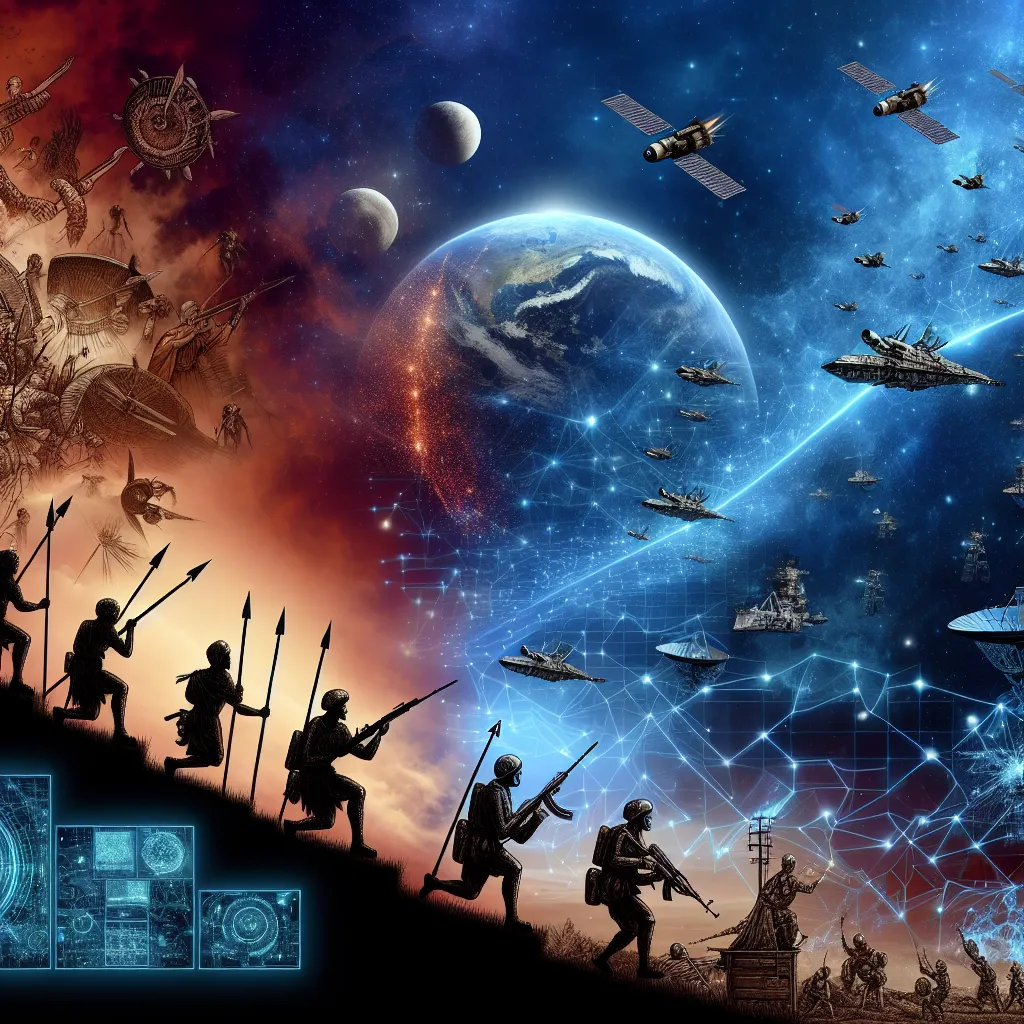
War has always been a part of human history, but the way we fight has drastically changed over time. Nowadays, technology drives the future of warfare, offering new capabilities that redefine decision-making and strategy. Once, a simple spear was a fearsome weapon. Today, cyberattacks dominate the battlefield. Our vast web of technology has transformed operational environments, making familiar domains more complex and driving a race for dominance not just on Earth, but in space.
The speed of conflict has accelerated along with technological advancement. Machines are now at the helm, pushing warfare to unfold faster than ever. Each leap in technology redraws our understanding of battle lines and future tactics. The growing reliance on space assets almost guarantees that future wars will extend far beyond our atmosphere.
Space, once seen as the final frontier, is no longer a distant, empty vacuum. It’s a dynamic environment with terrain made of gravitational fields, radiation, and orbital paths. Our societal operations, from agriculture to navigation, depend heavily on space technology, particularly on GPS signals. The dependence on space systems is so critical that if these networks were disrupted, it would lead to immediate and widespread chaos on Earth.
Humanity’s fascination with space goes back centuries, with early records of zodiac constellations and the use of stars for navigation. Galileo’s telescope gave us our first, more profound glimpse into space, sparking an enduring quest for exploration and conquest.
The military was quick to recognize the strategic importance of space. The race for space began in the aftermath of World War II, with both the U.S. and Soviet Union striving to push the boundaries. This period saw the development of ballistic missiles capable of breaching the Earth’s atmosphere, signaling the start of the Space Race and a quest for supremacy in the new domain.
The launch of Sputnik by the Soviet Union in 1957 was a massive shock to the U.S., marking a pivotal moment in the Space Race. Since then, the competition has only intensified, with countries developing ever-more sophisticated space technologies and military capabilities.
Space is now cluttered with debris from years of exploration and testing, posing significant risks to current operations. This debris ranges from tiny fragments to large defunct satellites, all traveling at extreme speeds, which can cause catastrophic damage upon collision.
Modern anti-satellite weapons, developed by nations like China and India, pose a serious threat, capable of either destroying or disabling satellites. These weapons can be kinetic, involving direct collisions, or non-kinetic, using methods like cyberattacks or electronic jamming to disrupt operations.
Ethical and legal questions loom large as we consider the possibility of space-based warfare. Despite existing treaties aimed at governing space activities, the militarization of space continues. The Outer Space Treaty, one of the key agreements, sets broad principles but still leaves many questions open about the application of the laws of Armed Conflict in space.
As space becomes increasingly contested, both military and commercial interests are driving the rush to establish dominance. Companies like SpaceX are pushing the boundaries of private space exploration and exploitation, raising questions about regulation and governance in this new frontier.
In the future, warfare may not just affect nations but also involve private entities. The integration of advanced technologies like quantum computing and artificial intelligence will further transform space into a critical theater of operations. Adversaries are already developing hypersonic weapons, capable of traveling at unprecedented speeds, presenting new challenges for defense strategies.
Humanity is entering a new era of space exploration and potential conflict. How we navigate this space will profoundly affect our future on Earth, underscoring the need to understand and manage the geopolitical and technological dynamics at play. The sky is no longer the limit; it’s the new battleground.
As we venture beyond our planet, integrating space into our daily lives and strategic military plans, the stakes grow higher. Mastering and defending this new domain will define our ability to maintain and enhance our way of life. How we engage in space will shape the conflicts and resolutions of tomorrow, ensuring that our reach for the stars remains a journey of discovery rather than a path to destruction.