Is The Grand Canyon a Time Machine Created by Tectonic Forces?
Continents Waltz in Eons: Mountains Rise, Oceans Fall, and Canyons Whisper Earth's Timeless Tales
The dance of continents is truly mesmerizing. Imagine Africa and Eurasia moving towards each other, trapping the smaller Iberian plate in between. This collision pushes the Eurasian plate downward into the mantle, chopping off the Iberian plate. As the tectonic forces continue, the seafloor gets pushed northward, ending up thousands of feet in the air, literally putting rocks from the ocean floor at the peaks of the Alps. If you ever stand on the Matterhorn, you’re essentially standing on a piece of Africa!
Fast-forward 100 million years, and the continents are still on the move. New mountain ranges appear worldwide, with the Himalayas being the most formidable. The Indian plate moves two inches per year towards the Eurasian plate, setting up a colossal clash. This interaction creates some of the Earth’s highest mountains, showcasing the immense power of continental drift.
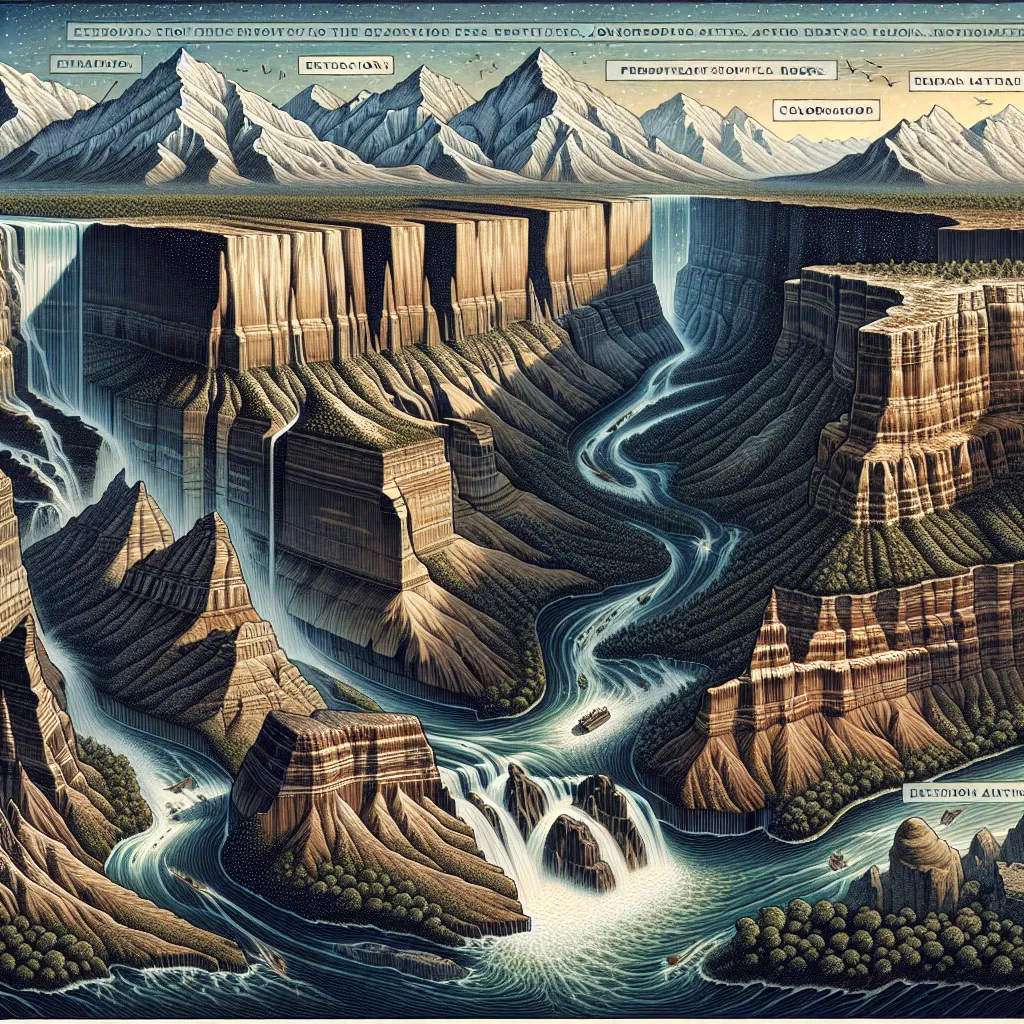
This isn’t just about mountains. These tectonic forces also carve out landmarks like the Grand Canyon in Arizona, one of the most striking gashes on the Earth’s surface. Geologist Ron Blakey has spent over three decades studying the canyon. For him, it’s a profound experience, like flipping through Earth’s history book. Stretching 277 miles long and plunging over a mile deep, the Grand Canyon reveals the North American continent’s layers, each telling a different story, some dating back 2 billion years.
As you move up the canyon walls, it’s like a journey through time. The deeper you go, the older the rocks you encounter. Blakey’s research even unearths ocean fossils at the canyon’s rim, a fascinating discovery that suggests these rocks formed near sea level. Today, they’re 7,000 feet above sea level, hinting at the dramatic uplift of the landscape.
Around 250 million years ago, a monumental event began shaping the canyon. The collision between the Pacific and North American plates pushed the North American plate over two miles upward, converting the ocean bed into a high plateau over 15 million years. This plateau eventually becomes the stage for water erosion.
About 6 million years ago, tectonic movements opened the Gulf of California, allowing streams from the Rocky Mountains to flow into the ocean. These streams merged to form the Colorado River, which carved the Grand Canyon over time. The river’s relentless erosion shaped the canyon we see today, a testament to the incredible power of water and tectonics.
In essence, the Grand Canyon stands as a monumental record of the continents’ ability to shape our world, layer by layer, over eons. Each visit to this natural wonder is like stepping into a time machine, witnessing the Earth’s dynamic and ever-changing history.