The Origin of Life: 5 Unsolved Mysteries Science Has Yet to Explain
Explore 5 unsolved mysteries behind the origin of life — from RNA worlds to first cells. Science's deepest puzzle explained clearly. Read to find out more.
The moment you realize that everything alive today — every tree, every bacterium, every human being reading this sentence — came from the same mysterious starting point billions of years ago, your brain does something funny. It short-circuits a little. Because the question of how life actually began is one of the most honest puzzles science has ever faced. Not “we’re close to solving it.” Not “we have a strong lead.” But genuinely, deeply, wonderfully unsolved.
Let’s walk through five of the biggest mysteries surrounding the origin of life, and I promise to make it as clear as possible without dumbing it down so much that the magic disappears.
The RNA World: A Molecule That Copied Itself
Here’s a question worth sitting with: which came first, the instruction manual or the machine that reads it?
DNA holds the blueprints for life. Proteins do the actual work — they build things, break things, run chemical reactions. But here’s the catch: you need proteins to make DNA, and you need DNA to make proteins. It’s a perfect circle, and circles don’t have starting points.
This is why scientists got excited about RNA.
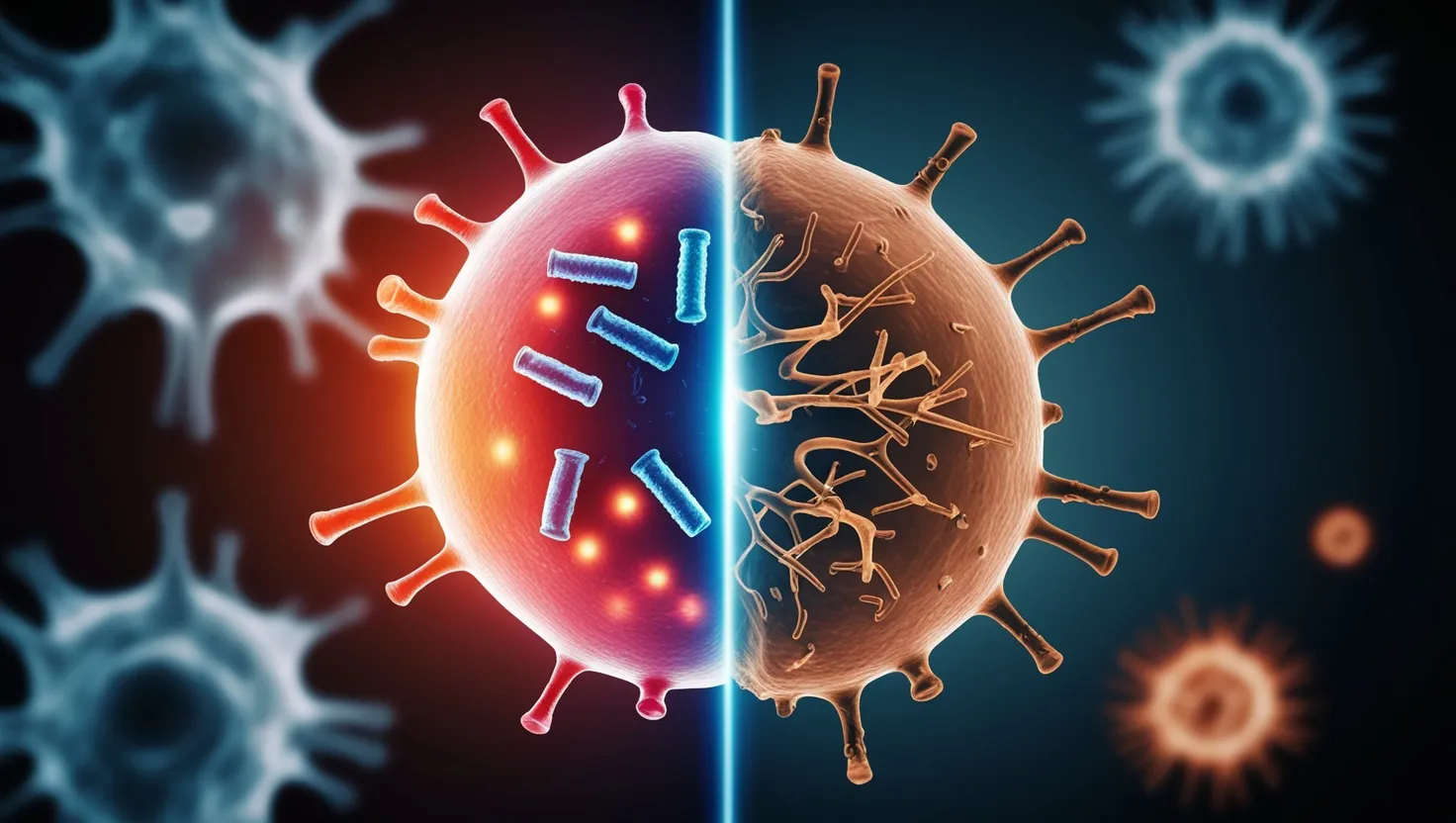
RNA is a middle-ground molecule. It can carry genetic information like DNA does, but it can also act like a protein — performing chemical reactions on its own. When researchers discovered that RNA could actually catalyze its own copying under certain conditions, a theory emerged: maybe RNA came first. Maybe before DNA, before modern proteins, there were just self-copying RNA molecules floating around in ancient pools of water.
“The origin of life is the origin of information.” — Paul Davies
This is called the RNA World Hypothesis, and it sounds neat until you ask the obvious follow-up: where did the first RNA molecule come from? RNA is itself a complex molecule. Building it from scratch, without any biological machinery to help, is like expecting a random explosion in a hardware store to assemble a working laptop. The chemistry is brutal. The conditions required are specific. And nobody has yet shown a clean, convincing pathway from raw chemicals to a self-copying RNA molecule. The hypothesis explains a step in the middle of the story, but the beginning of the story is still missing.
Hydrothermal Vents: Earth’s Original Chemistry Labs
Most people learned about the origin of life through the idea of a “primordial soup” — a warm pond on the surface of early Earth, full of chemicals, struck by lightning, slowly producing the first life. It’s a tidy image. It’s also probably incomplete.
Since the late 1970s, scientists have been paying serious attention to a very different environment: hydrothermal vents on the ocean floor. These are cracks in the seafloor where hot, mineral-rich water pours out into the cold, dark ocean. No sunlight. No lightning. Just chemistry.
There are two types, and the difference matters enormously. Black smokers are superheated, acidic, and violent — probably too harsh for life to get started. Alkaline vents, like the Lost City field discovered in 2000, are gentler. They produce hydrogen-rich water, they’re mildly warm, and their rocky structures are filled with tiny pores and chambers — almost like natural cells.
Here’s the fascinating part: the chemical gradient between the alkaline water inside these vents and the slightly acidic ancient ocean outside could have driven early chemical reactions automatically. No special ingredients needed. Just physics and geology doing what they always do.
Do you see why this is more interesting than lightning hitting a pond? The vent model suggests life didn’t need a lucky accident. It suggests life was almost inevitable given the right geology.
But even this model has problems. Getting from “interesting chemistry happens near a vent” to “a self-replicating system exists” is a gap no one has fully crossed. The chemistry is promising. The story isn’t finished.
The Spark-Discharge Experiment and What It Actually Proved
In 1952, a graduate student named Stanley Miller, working under Harold Urey, put some gases — methane, ammonia, hydrogen, and water vapor — into a flask, sent electrical sparks through it to simulate lightning, and let it run for a week. When he analyzed what was left, he found amino acids. The building blocks of proteins. Made from scratch. From nothing but gas and electricity.
The scientific world erupted. Headlines declared that the mystery of life’s origin was practically solved. It wasn’t.
“We have not succeeded in explaining life’s origin. We have only made the problem more precise.” — Hubert Yockey
What Miller actually showed was that organic chemistry — the chemistry of life’s building blocks — can happen spontaneously under certain conditions. That’s genuinely significant. But amino acids are nowhere close to life. They’re like having a pile of bricks and thinking you’ve built a house.
The bigger issue is that the gases Miller used don’t match what scientists now believe the early Earth’s atmosphere actually contained. More recent experiments with updated atmospheric compositions still produce organic molecules, which keeps the spirit of Miller’s work alive. But the jump from organic molecules to even the simplest living cell requires thousands of additional steps that nobody has mapped out.
Think of it this way. If the origin of life were a 1,000-piece puzzle, Miller showed us that pieces 1 through 4 can appear on their own. We’re still looking for pieces 5 through 1,000.
The Last Universal Common Ancestor: A Single Cell We Can Never Meet
Every living thing on Earth — you, a mushroom, an ancient bacteria stuck in a glacier, the yeast in your bread — shares a common ancestor. Scientists call it LUCA: the Last Universal Common Ancestor.
LUCA was not the first life. It was simply the organism from which all surviving life descends. Think of it like the most recent common ancestor in a family tree, except this family tree includes every single species that has ever existed and still has descendants today.
What’s surprising is how much scientists can infer about LUCA just by comparing the genetics of modern organisms. When two wildly different creatures — say, a heat-loving bacterium and a human cell — share the exact same gene for a particular protein, that gene almost certainly existed in their common ancestor. Using this logic, researchers have reconstructed a rough portrait of LUCA: it lived in a hot environment (probably those alkaline vents again), it used hydrogen gas as an energy source, and it had a surprisingly complex genetic system.
Here’s the twist that most people miss: LUCA was not simple. The biological systems it possessed were already highly sophisticated. Which means that before LUCA, there was a long evolutionary journey of which we have zero fossil record, zero genetic record, and almost no physical evidence at all. Life didn’t go from chemistry to LUCA in a single step. There was a whole invisible history before it, and that history is almost entirely a mystery.
What happened in the gap between the first self-replicating molecules and LUCA? Nobody knows.
The First Cell: Building Walls Without a Construction Crew
Every cell in your body is wrapped in a membrane — a thin, flexible wall made of fatty molecules called phospholipids. This membrane does two things that are absolutely non-negotiable for life: it keeps the inside of the cell together, and it separates the cell from the outside world.
Without a membrane, you don’t have a cell. You just have a collection of molecules wandering around in water, getting diluted, losing each other.
So where did the first cell membrane come from?
This is where things get genuinely strange in a wonderful way. Fatty acids — simpler versions of the molecules used in modern membranes — can actually self-assemble into bubbles in water. You don’t need to engineer them. You just need the right chemistry and they will form a closed sphere on their own. These are called vesicles, and they are essentially the world’s simplest proto-cells.
“Life did not take over the globe by combat, but by networking.” — Lynn Margulis
Experiments have shown that these fatty acid bubbles can grow, absorb neighboring bubbles, and even divide under physical pressure. No biological machinery required. Just physics again.
But here’s the problem no one has cleanly solved: how did the first proto-cell coordinate its membrane with its genetic material? How did the bubble and the RNA molecule inside it “work together” to make sure that when the bubble split, both daughter cells got a copy of the genetic information?
Modern cells do this with extraordinary precision using dozens of specialized proteins. The first proto-cell had none of those. Yet somehow, a system for dividing with fidelity had to emerge. How? The honest answer is that we don’t fully know.
What makes all five of these mysteries so compelling is that they aren’t separate problems. They are all tangled together. The RNA world needs a membrane to contain it. The membrane needs a genetic system to reproduce properly. The hydrothermal vent provides chemicals but not organization. And LUCA sits at the end of a process we cannot trace backward far enough.
The origin of life isn’t one mystery. It’s five mysteries braided into one, and science is pulling at each thread, slowly, carefully, with the same patience that life itself seems to have shown in getting here.