The Cambrian Explosion: 5 Mysteries That Still Baffle Scientists 540 Million Years Later
Explore the Cambrian Explosion's deepest mysteries — from unknown triggers to bizarre extinct creatures. Discover why life transformed so dramatically 540 million years ago.
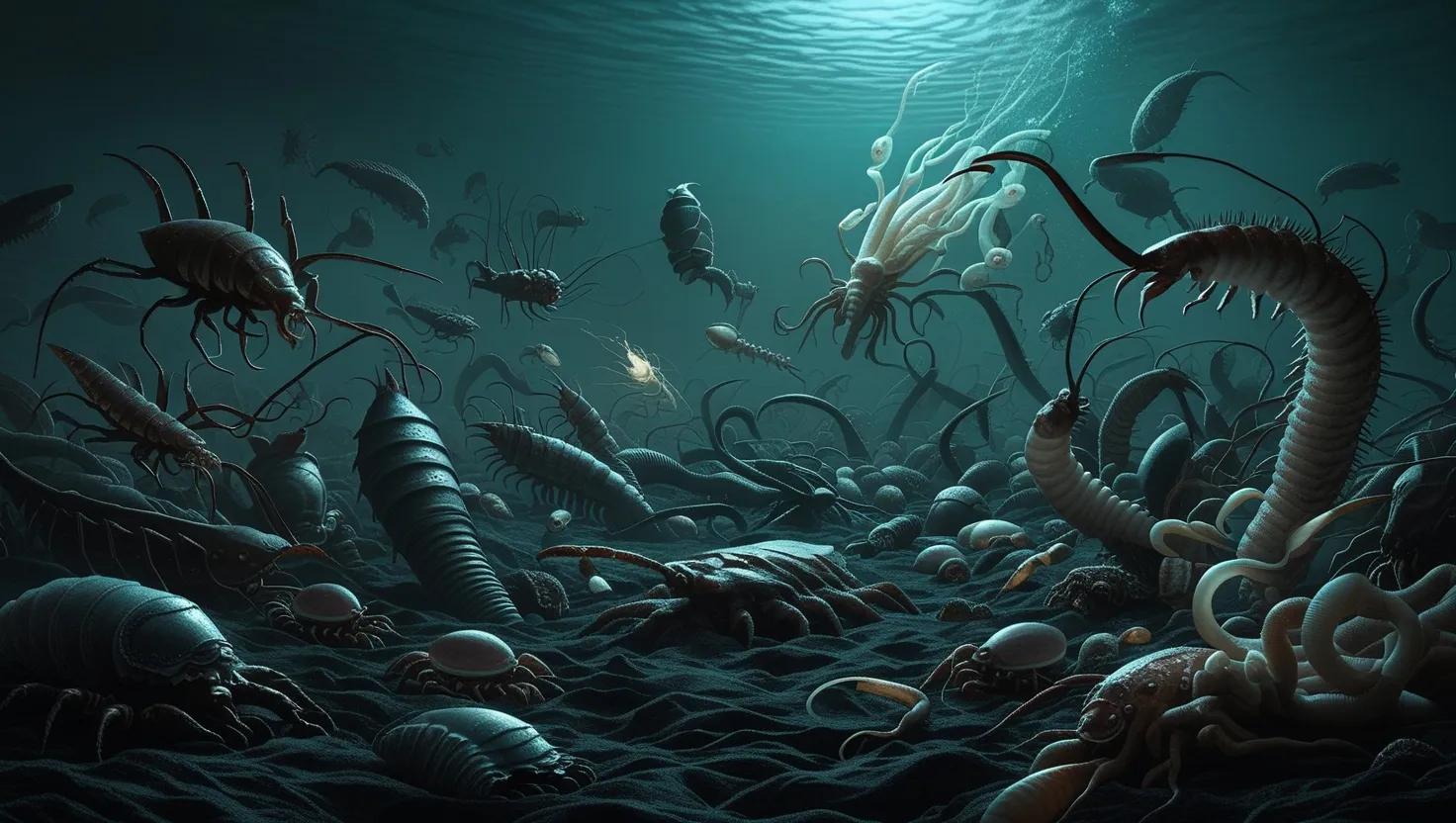
540 million years ago, something happened on Earth that scientists still cannot fully explain. The oceans, which had been home to mostly simple, soft, blob-like creatures for billions of years, suddenly exploded with complex animal life. Eyes, legs, shells, claws, mouths — all of it appeared in what geologists call the blink of an eye. We call this the Cambrian Explosion, and the more you look at it, the stranger it gets.
Think of it like this. Imagine a blank canvas sitting untouched for three billion years. Then, in a single afternoon, someone paints a hundred different masterpieces on it. That is roughly what happened in Earth’s oceans between 540 and 520 million years ago. And nobody completely understands why.
Let me walk you through five of the deepest mysteries buried inside this event.
What Actually Pulled the Trigger?
The most obvious question is also the hardest one. What started it? Life had existed on Earth for roughly three billion years before the Cambrian. Simple single-celled organisms, some basic multicellular creatures, nothing dramatic. Then suddenly — boom. Complex animals everywhere.
Scientists have spent well over a century arguing about the trigger. Some point to a rise in oxygen levels in the oceans. Animals need oxygen to build complex bodies, so if oxygen crossed a certain threshold, maybe that opened the door. Makes sense on paper. But here is the problem: oxygen levels were already climbing for hundreds of millions of years before the Cambrian. Why would the explosion happen then and not earlier?
Others suggest changes in ocean chemistry — particularly calcium and phosphate levels — gave early animals the raw materials to build hard shells and skeletons for the first time. Still others argue that the invention of predation changed everything. Once one creature evolved the ability to eat another creature, a biological arms race began. Prey evolved defenses, predators evolved better weapons, and complexity spiraled outward fast.
“Nothing in biology makes sense except in the light of evolution.” — Theodosius Dobzhansky
The honest answer is that no single trigger has won the argument. Most researchers today suspect it was a combination of factors colliding at once — environmental, chemical, and ecological — like several locked doors opening at the same time. The frustrating part is that we may never know for certain which door opened first.
The Genetic Toolkit That Sat Unused for Millions of Years
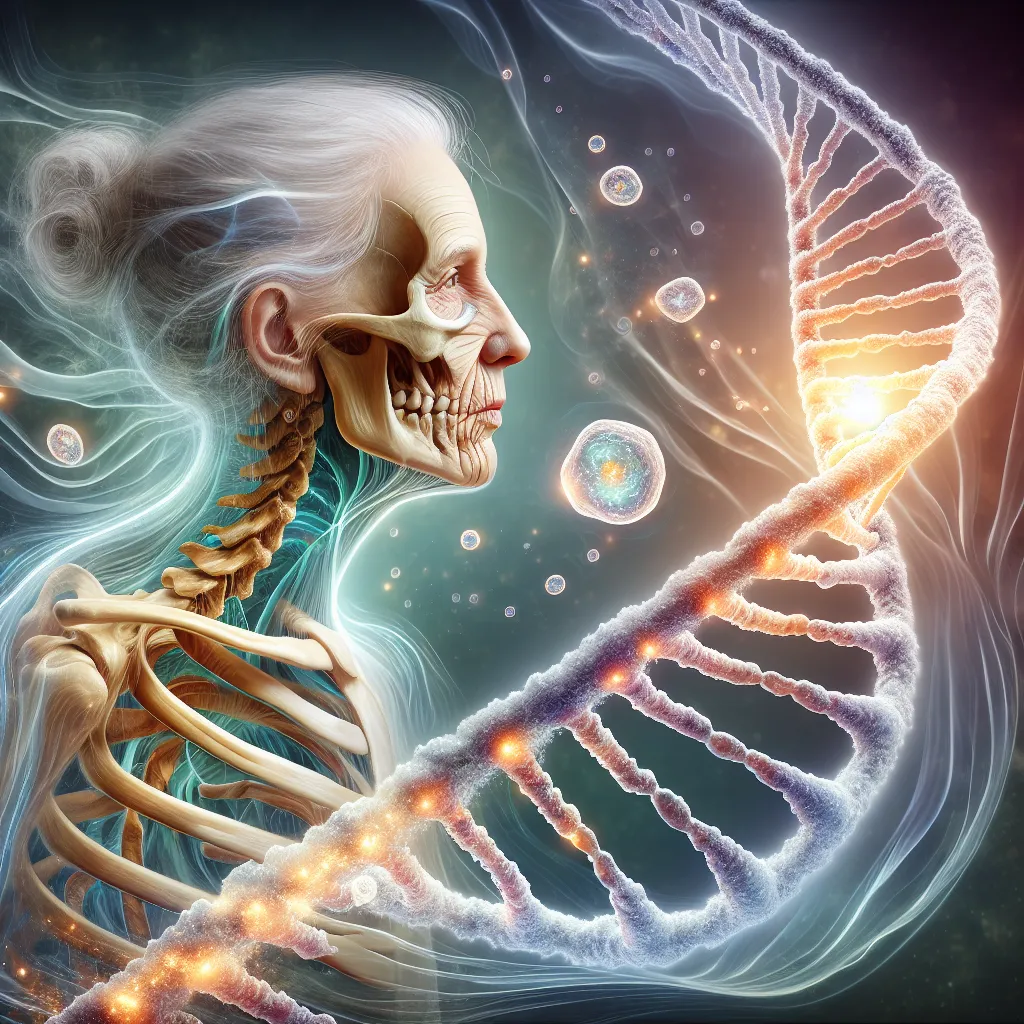
Here is something that genuinely puzzles biologists. The genes responsible for building complex animal bodies — a family called Hox genes — appear to have existed long before the Cambrian Explosion. These genes act like a blueprint, telling a developing embryo where to grow a head, where to grow limbs, how to organize the whole body.
So if the instructions were already there, why did it take so long for complex bodies to appear?
Think of it like owning a fully stocked kitchen for a thousand years without ever cooking a meal. The tools were there. The ingredients existed. But nothing happened until one specific morning when, for reasons still unclear, someone walked in and started making an elaborate five-course dinner.
This gap between having the genetic capacity and actually using it to build wildly diverse body forms is one of the deeper puzzles in evolutionary biology. Some scientists suggest the early environment simply did not reward complexity — there was no reason to evolve elaborate forms when simple ones worked fine. Others think regulatory switches, the parts of DNA that turn genes on and off, needed to evolve before the Hox genes could be used creatively.
What does it mean for evolution that the potential for complexity existed so long before complexity itself appeared? That question alone could fill a library of debate.
The Bizarre Creatures That Evolution Tried and Abandoned
The Burgess Shale in Canada is one of the most extraordinary fossil beds ever found. Discovered in the Canadian Rockies in 1909, it preserved soft-bodied Cambrian creatures in stunning detail — animals that would otherwise have rotted away without a trace. What researchers found inside that rock was, to put it plainly, deeply weird.
Hallucigenia was a worm-like creature covered in spines and tentacles that scientists initially reconstructed upside down because nothing about its body made obvious sense. Opabinia had five eyes and a flexible trunk with a claw at the end. Anomalocaris was a meter-long predator with circular, tooth-lined jaws that looked like something from a science fiction film.
“The most incomprehensible thing about the universe is that it is comprehensible.” — Albert Einstein
Many of these creatures represented body plans that simply do not exist today. They were evolutionary experiments — organisms that lived, thrived briefly, and then disappeared entirely. No descendants. No surviving relatives. Just fossils that whisper about paths evolution started down and then abandoned.
Why did so many experimental body plans arise and then vanish? Was it pure chance — did these creatures just get unlucky during mass extinctions? Or were some body plans genuinely less fit for long-term survival? Did early evolution operate by different rules, throwing out wild variations before settling into the forms that persist today? Nobody has a clean answer.
Why Did the Explosion Stop?
Here is the part that does not get enough attention. The Cambrian Explosion lasted roughly 20 million years — a very long time in human terms, but astonishingly brief in geological ones. During that window, virtually every major animal body plan that has ever existed appeared. After that, the innovation stopped.
No new animal phyla have appeared in the 500 million years since. Think about that seriously. Insects, fish, mammals, birds, octopuses, worms — all of the major structural blueprints for animal life were established during that narrow window and have not been fundamentally reinvented since.
Why? What changed?
One idea is that ecological space filled up quickly. Once animals occupied every available niche in the environment, there was no longer room for radically new body plans to take hold. Another theory suggests that genetic systems became more locked in over time — early animals may have had looser, more flexible developmental programs that allowed dramatic changes, while later animals developed tightly integrated body systems where large mutations were almost always fatal.
“Life is not a problem to be solved, but a reality to be experienced.” — Søren Kierkegaard
Some researchers describe this as a kind of evolutionary ratchet. The early Cambrian was the only moment when the ratchet was loose enough to allow enormous structural innovation. Once it clicked into place, the basic rules of animal architecture became essentially fixed. We have had enormous diversity in species since then, but the fundamental blueprints — your skeleton, a snail’s shell, an insect’s segmented body — trace directly back to that brief window.
The Problem of Time: Was It Really That Fast?
Here is a perspective that complicates everything above. How fast was the Cambrian Explosion actually? The answer depends heavily on what we are measuring and how good the fossil record is in the period just before it.
The Ediacaran period, which came just before the Cambrian, was home to soft-bodied multicellular creatures. For a long time, scientists saw the Cambrian as a hard break — nothing complex before it, then suddenly everything. But more careful analysis of Ediacaran fossils suggests that some animal lineages may have been quietly evolving for tens of millions of years before the Cambrian, leaving almost no fossil evidence because they had no hard parts.
If that is true, then the explosion was not quite as sudden as it first appeared. The fuse may have been burning much longer than we thought, and the Cambrian represents the moment when that smoldering development finally became visible in the fossil record.
Does that make the mystery smaller? Not really. It just shifts the question slightly. Instead of asking what caused the explosion, we start asking what caused the sudden appearance of hard bodies — shells, skeletons, teeth — and why that happened so rapidly across so many different animal groups at roughly the same time.
The Cambrian Explosion remains one of those rare scientific puzzles where every answer generates three more questions. It sits at the intersection of genetics, geology, ecology, and pure chance, and every angle you examine it from reveals something unexpected. Five hundred and forty million years later, the creatures that survived that strange, wild burst of innovation fill every ocean, forest, and field on the planet. And the ones that did not survive exist only as shadows in stone, reminding us that the history of life is full of roads taken and roads abandoned forever.