Unlocking Cosmic Mysteries: The Incredible Dance of Neutron Stars
Neutron stars, remnants of supernovae, are densely fascinating objects defying gravity with quantum mechanics, offering insights into cosmic mysteries and fundamental universal laws.
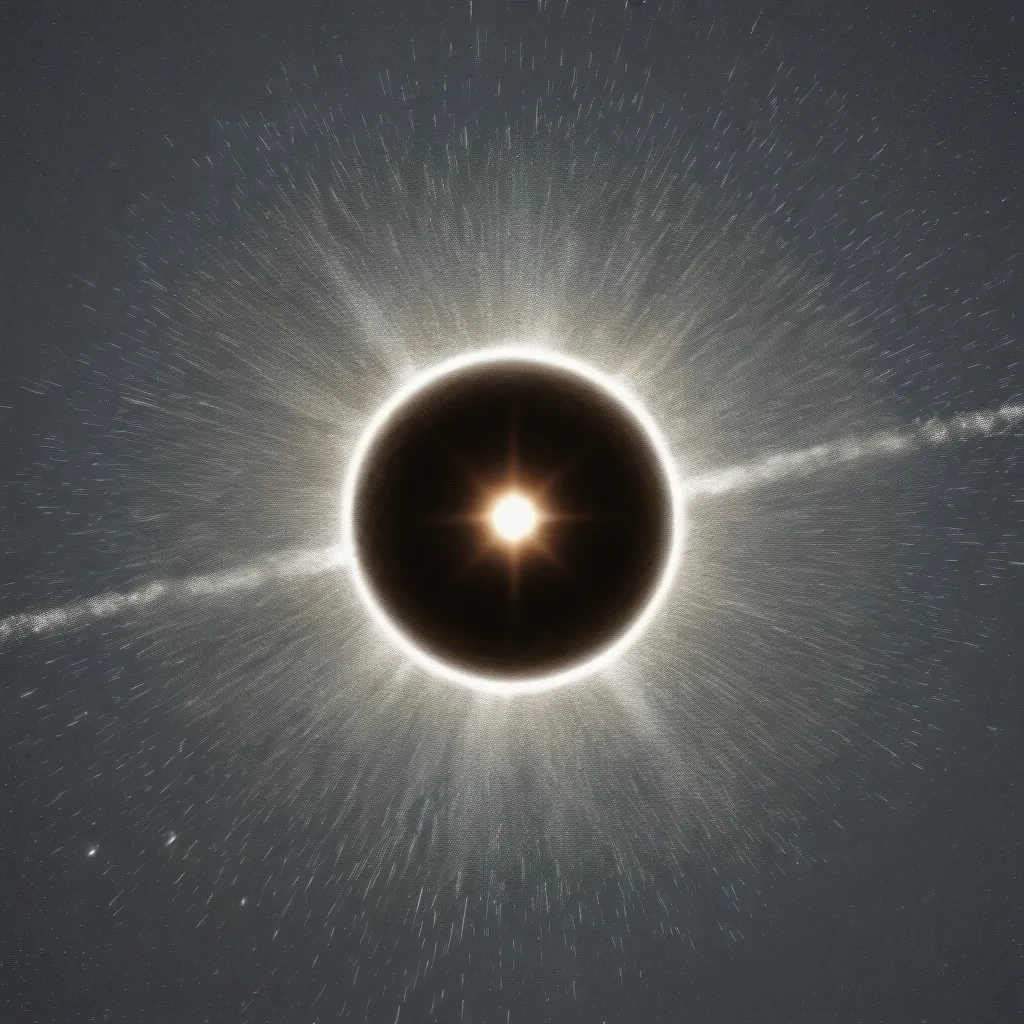
Neutron stars are like the universe’s way of showing off its extreme capabilities. These tiny, incredibly dense remnants from supernova explosions are among the most intriguing objects out there. Imagine taking a star several times more massive than our Sun, blowing it up spectacularly, and then smooshing what’s left into a sphere so dense it’s primarily made of neutrons. That’s the magic of a neutron star. Picture something with the Sun’s mass but only about 25 kilometers across—that’s crazy dense!
The formation of neutron stars is, quite literally, explosive. Massive stars, those tipping the scale at anywhere from 10 to 25 times the Sun’s mass, live fast and die spectacularly. Their death comes in the form of a supernova explosion that sends their outer layers cascading into space. What’s left behind is a core so tightly packed with neutrons that it’s like the universe’s ultimate compress—a neutron star.
These stellar remnants have to deal with enormous gravitational forces, which begs the question: why don’t they just collapse into black holes? Enter the concept of neutron degeneracy pressure. This is a fancy way of saying that the neutrons, obeying the laws of quantum mechanics, are resisting this squeeze of gravity. The Pauli exclusion principle says you can’t have too many neutrons in the same place doing the same thing; this creates a kind of pressure that balances against gravitational collapse, at least to a point.
This brings us to a kind of celestial line in the sand known as the Oppenheimer limit. If a neutron star’s mass exceeds about 2.25 times that of the Sun’s, then not even neutron degeneracy pressure can keep the star from collapsing into a black hole. This is determined with remarkable precision by combining observational data from telescopes and gravitational wave detectors like LIGO and VIRGO.
Still curious about how this all translates into what we can observe and model? Scientists use these gravitational wave detectors along with data from missions like NICER, which scrutinizes neutron stars up-close. They look at everything from how these stars shake space-time itself to the X-ray emissions they release. All of this detective work helps to piece together the puzzle of how these stars manage to hold themselves together and where exactly the line is when they can’t anymore.
There’s a whole cosmic detective story wrapped into understanding the so-called “mass gap” phenomenon. This refers to a deficit of objects with masses in the range of roughly 2 to 5 times our Sun’s mass—an intriguing category that we’re only just starting to fill in with discoveries. The hunt is on for these elusive objects to determine if they are neutron stars or the lightest of black holes.
Central to all of this is a scientific concept known as the equation of state (EoS) for the matter inside neutron stars. Picture it as the rulebook for how the star’s matter behaves under different pressures and temperatures. There have been many hypotheses over the years on what this EoS might look like, but current research is beginning to zero in on a clearer picture. A moderately stiff EoS is favored, which supports the notion of the 2.25 solar mass limit as the ceiling for neutron star masses.
Understanding neutron stars doesn’t just tickle the curiosity of astrophysicists. It has ripple effects for our greater understanding of the universe, tipping us off to the conditions under which more exotic states of matter might form and survive. It also gives insight into the aftermath of binary star mergers, offering clues about whether these cosmic collisions will result in neutron stars or black holes.
Tools and technologies are the brushes and canvases of this cosmic art. NICER, with its keen eye on the X-ray light emitted by neutron stars, helps scientists measure their size and mass. Meanwhile, gravitational wave detectors catch the cosmic ripples produced when these compact objects crash into each other. These collisions paint a vibrant picture of mass, pressure, and the fundamental forces involved.
Imagine the cosmic ballet of stars being born and dying in a continuous cycle. Neutron stars are the prima ballerinas of this grand performance, embodying the duality of incredible density and delicate balance. Understanding their limits is a step in unraveling the universe’s intricacies—a peek into a world ruled by quantum mechanics and general relativity.
The future of neutron star research lies in the realm of possibility. As technology advances, so too will our understanding of these fascinating cosmic relics. With every piece of data and every new model, we edge closer to grasping the full picture. These stars are not merely objects of curiosity; they are keys to understanding the universe’s extreme conditions and fundamental laws.
In essence, neutron stars are the universe’s way of pushing the boundaries of what’s possible. They exist on the brink of transformation, defying gravitational death spirals through the awesome force of quantum rules. With each discovery about these celestial marvels, we take one step closer to unlocking new cosmic mysteries. Here’s to the cosmic dance and our own journey to uncover its hidden steps.