Unveiling the Mind's Mysteries: 7 Bizarre Neurological Phenomena Explained
Explore fascinating neurological phenomena like synesthesia and foreign accent syndrome. Discover how these conditions challenge our understanding of the human brain. Learn more about the mind's mysteries.
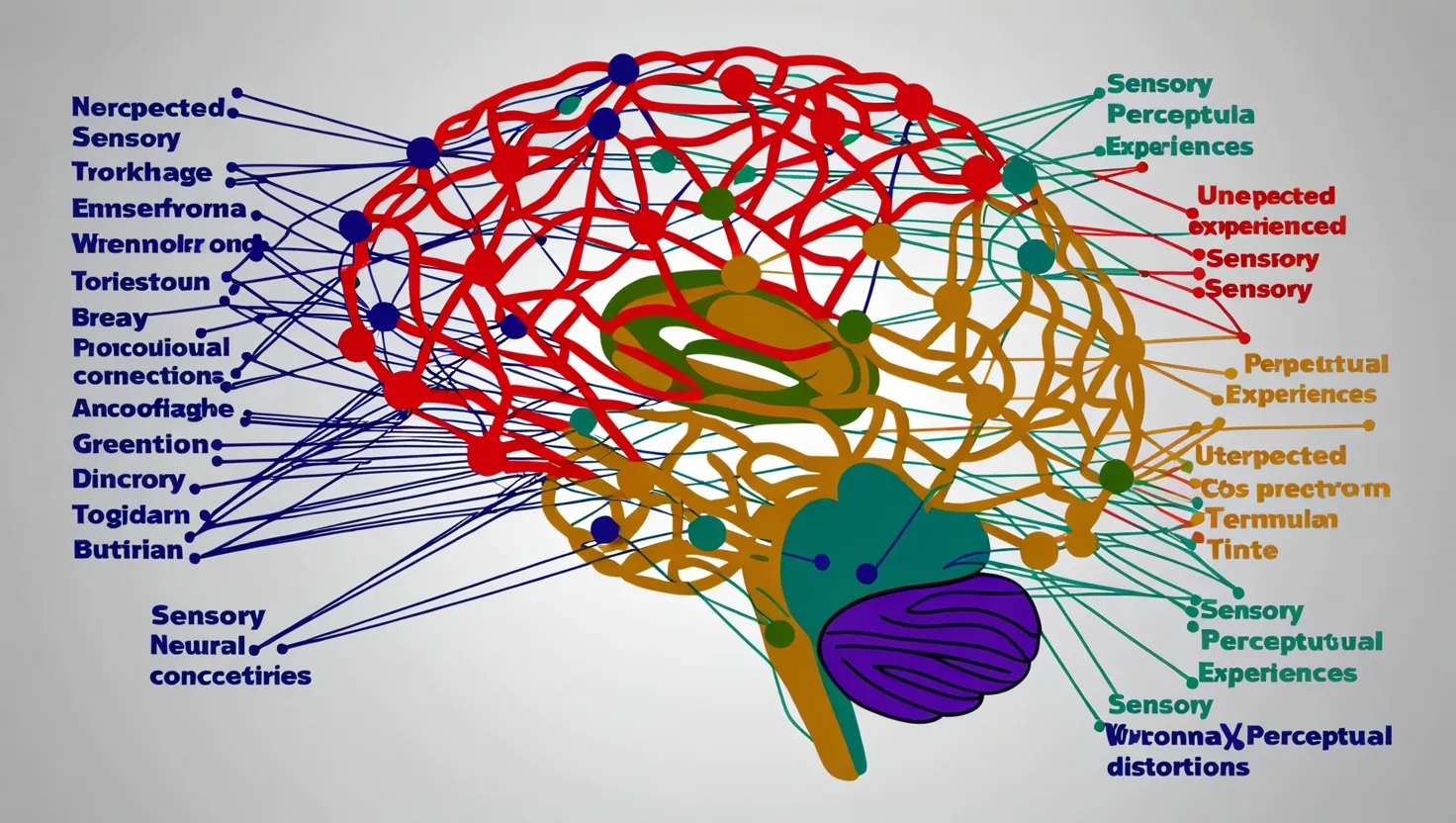
When we think about the human brain, we often marvel at its complexity and the myriad ways it can process information. However, there are certain neurological phenomena that push the boundaries of our understanding, leaving scientists and the general public alike in a state of fascination and bewilderment.
Let’s start with one of the most intriguing conditions: synesthesia. Imagine hearing a melody and seeing a cascade of colors, or tasting a flavor when you read a word. This is the world of synesthetes, individuals whose brains blend sensory experiences in unexpected ways. For them, the stimulation of one sensory pathway can trigger an involuntary experience in another. For instance, a synesthete might see the number 7 as a vibrant red or taste the sweetness of happiness when they hear a particular song.
As I ponder this, I am reminded of the words of neurologist Vilayanur Ramachandran, who once said, “Synesthesia is a window into the neural basis of consciousness and the hard problem of consciousness.” It’s a condition that challenges our traditional understanding of how the brain processes sensory information.
Research suggests that synesthesia may be due to increased cross-talk between different brain regions. For example, the area responsible for recognizing graphemes (letters and numbers) might be more closely linked to the area responsible for color perception in synesthetes. This hyperconnectivity allows for the simultaneous activation of multiple sensory pathways, creating these unique blended experiences.
But synesthesia is just the tip of the iceberg. Another phenomenon that has garnered significant attention is foreign accent syndrome. Imagine waking up one morning to find that your voice has changed, and you’re now speaking with a foreign accent. This rare condition can occur after a head injury, stroke, or even without any apparent cause. It’s as if the brain’s language centers have been rewired overnight.
One famous case is that of Sarah Colwill, a British woman who woke up from a migraine headache speaking with a Chinese accent. Her story raises questions about the plasticity of the brain and how quickly it can adapt or change. It’s a stark reminder that our identities, including our voices, are not as fixed as we might think.
Moving on, there’s the Capgras delusion, a condition where individuals believe that a familiar person, often a family member or close friend, has been replaced by an identical imposter. This delusion can be incredibly distressing, as it challenges the very fabric of personal relationships. It’s a phenomenon that highlights the complex interplay between perception, memory, and emotional processing in the brain.
Imagine looking at your mother and feeling an overwhelming sense of certainty that she is not who she claims to be. This is the reality for those suffering from Capgras delusion. It’s a condition that forces us to question how our brains construct reality and how easily this construction can be disrupted.
Another fascinating condition is Alice in Wonderland syndrome, named after the classic Lewis Carroll tale. Here, individuals experience distorted perceptions of size and shape, often feeling as though their body parts are changing in size or that objects around them are shrinking or growing. This can be a disorienting and frightening experience, as the usual rules of reality no longer apply.
As we delve deeper into these phenomena, we come across the alien hand syndrome, where a person’s limb acts independently of their will. Imagine trying to perform a simple task like tying your shoes, only to find that your hand is working against you. This condition is a stark example of the brain’s motor control systems gone awry.
Prosopagnosia, or face blindness, is another intriguing condition. People with this disorder have difficulty recognizing faces, even those of close family members or friends. It’s not about memory; it’s about the brain’s inability to process facial features in a meaningful way. This highlights the specialized nature of facial recognition and how critical it is to our social interactions.
Finally, there’s Cotard’s syndrome, a condition where individuals believe they are dead or do not exist. This is perhaps one of the most bizarre and unsettling phenomena, as it challenges our fundamental sense of self and existence. It raises profound questions about the nature of consciousness and how our brains construct our sense of being alive.
As we explore these neurological phenomena, we are reminded of the vast and uncharted territories of the human brain. Each condition offers a unique window into the complexities of neural functioning and the intricate ways in which our brains interpret the world.
In the words of neuroscientist David Eagleman, “The brain is a universe, and the universe is in the brain.” These phenomena are not just anomalies; they are gateways to understanding the deeper workings of our minds and the incredible flexibility and resilience of the human brain.
So, what can we learn from these conditions? First and foremost, they underscore the brain’s incredible complexity and the many ways in which it can malfunction or behave in unexpected ways. They also highlight the importance of ongoing research in neuroscience, as each new discovery brings us closer to understanding the mysteries of the mind.
As we continue to explore these phenomena, we are left with more questions than answers. What triggers these conditions? How can we treat them? And what do they tell us about the fundamental nature of human consciousness?
The journey into the world of neurological phenomena is a fascinating one, full of twists and turns that challenge our understanding and inspire our curiosity. It’s a reminder that the human brain is a frontier that is still largely unexplored, and every new discovery is a step into the unknown.