What Can the Panamanian Jungle Teach Us About Evolution and Biodiversity?
The Jungle's Hidden Symphony: Evolution and the Diversity of Panama's Wilderness
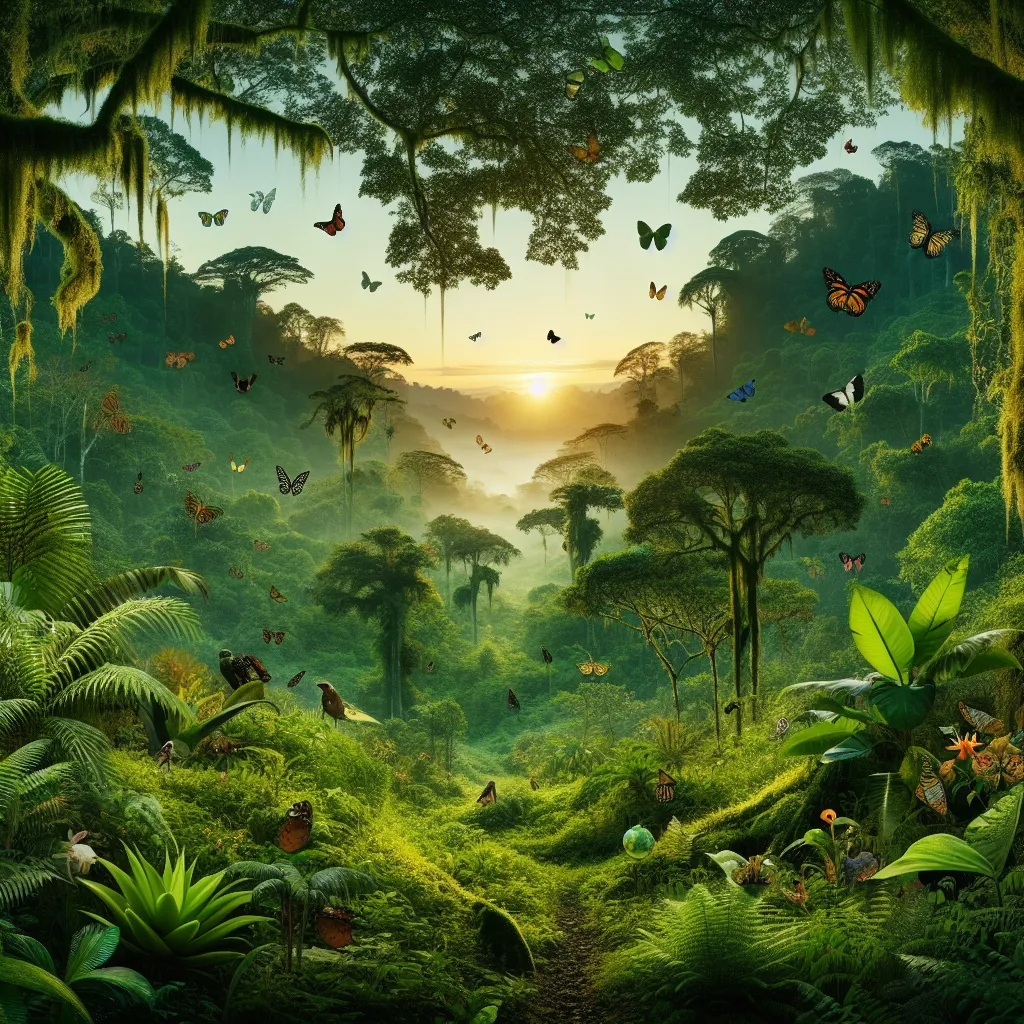
As dawn breaks over the lush forests of Panama, the jungle awakens, teeming with life. This vibrant environment, one of the richest on Earth, showcases an incredible diversity of species. Biologist David Rubik from the Smithsonian Tropical Research Institute has dedicated 30 years to exploring this dynamic ecosystem, yet the variety of life here still astonishes him. Imagine standing within an acre of this tropical paradise and discovering nearly 500 different species of butterflies.
When you delve deeper, the statistics become even more mind-boggling: 240 species of plants, over 4,000 types of insects, and almost 50 mammalian species, all found in just a small swath of jungle. The life forms packed into this space are continually being cataloged, each discovery adding to our understanding of this ecological treasure trove.
But what is behind this incredible biodiversity? Some propose it’s the hand of a divine creator, while Charles Darwin offered a different explanation through his groundbreaking theory of natural selection. This theory, one of the most revolutionary in science, suggests that life evolves through a process where the fittest individuals survive and pass on their advantageous traits to the next generation.
Nature is indeed brutal. Most creatures never reach reproductive age, falling prey to predators or environmental challenges. But Darwin saw beauty arising from this harsh reality. Those individuals with traits that offer a survival edge – whether it’s sharper vision or faster limbs – are more likely to thrive and reproduce. Over many generations, these small variations accumulate, leading to significant changes and the emergence of new species.
How does this lead to the rich diversity we see today? Imagine a population of brown bears migrating northward into the Arctic. In this icy environment, bears with lighter fur would have a hunting advantage, blending in better with the snow. Over time, these light-colored bears reproduce more, and the bear population gradually shifts from brown to white, eventually giving rise to polar bears. This is how one species can branch into two, evolving distinct characteristics suited to their environments.
Darwin’s theory, however, has faced skepticism, especially regarding complex anatomical features like the eye. Critics argue that half-formed eyes would be useless, yet studies have shown that even simple light-sensitive patches can incrementally evolve into fully functioning eyes. At Lund University, researchers like Dan-Eric Nilsson have demonstrated through models how natural selection can refine simple eyes into complex organs, each evolutionary step offering a survival advantage.
Nilsson’s work involves simulating the evolutionary stages of eye development. Starting from a flat patch of light-sensitive cells, small changes over generations can create a depression, then an eye socket. Each modification enhances light direction detection, aiding survival. Eventually, natural selection facilitates the development of a lens, focusing light more sharply and producing clear images.
This gradual improvement, each step beneficial, shows how complex eyes and other organs could evolve through natural selection. Fossils and genetic studies support this theory, indicating that even sophisticated organs like wings and hearts developed through similar incremental advancements.
In essence, Darwin’s big idea is both theoretically plausible and evidence-backed. Throughout history, the relentless drive to survive and reproduce has propelled life’s diversification, crafting the intricate web of species we see today. Evolution by natural selection, though a simple concept, underpins the vast complexity and diversity of life on Earth.