What's the Mystery Behind the Glowing Ball on an Eastern Airlines Flight?
Tales of Mysterious Fiery Spheres and Their Elusive Secrets
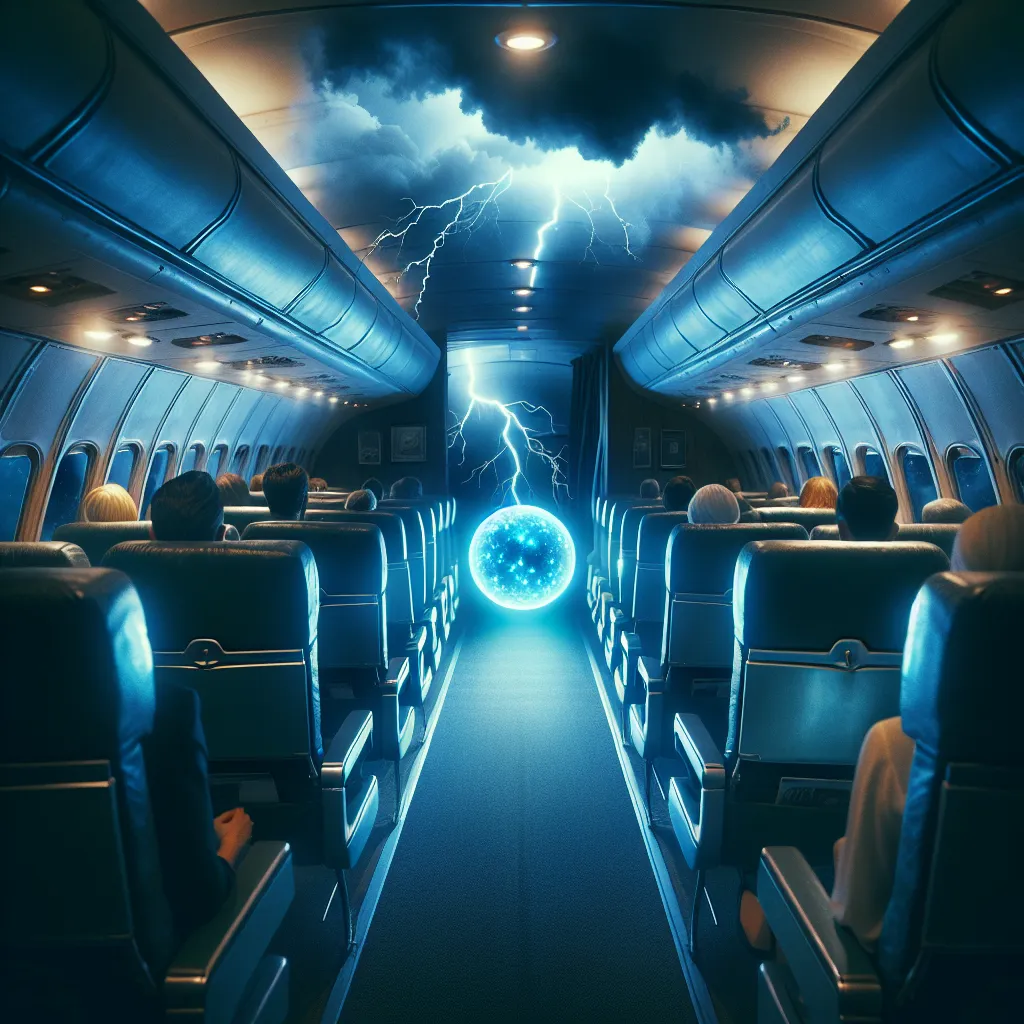
On a stormy night in March 1963, an Eastern Airlines flight from New York to Washington encountered an extraordinary event. Just five minutes past midnight, the sky flashed bright, followed by a loud bang. Then, astonishingly, a glowing, blue-white ball emerged from the pilot’s cabin and floated down the aisle, disappearing at the plane’s rear. Yet, the plane remained unaffected.
This isn’t just a tale from a sci-fi novel; it’s a real account, and not the only one. During World War II, pilots often reported seeing mysterious balls of light, dubbed “Foo Fighters,” following their aircraft. For centuries, people have witnessed fiery spheres, attributing them to ghosts, gods, or UFOs. But the Eastern Airlines incident stands out because the witness was a scientist from a prestigious British university.
Ball lightning, as this phenomenon is called, captivated scientists’ interest, including Dr. Graham Hubler, a nuclear physicist who also experienced it firsthand. Hubler recounts a night in Upstate New York when he and his date saw a glowing ball of light during a storm. Fearful, they watched as it approached, passed their feet with a sound like a freshly struck match, then exited the bandstand before disappearing without a noise. This left Hubler with an enduring fascination for ball lightning.
He collected thousands of accounts describing ball lightning as exploding, hissing, spinning, hovering, and even passing through solid objects without leaving a trace. Yet, no single theory explains all its peculiar features. Physicist Mark Stenhoff points out that while there are numerous theories, the common consensus is that ball lightning might be plasma—a state of matter found in the sun, fire, and space.
Creating plasma is easy; just run a current through gas, and it will emit light. But explaining how ball lightning forms and lasts minutes, unlike split-second lightning beads, remains elusive. Some scientists suggest ball lightning could result from bead lightning, where lightning bolts break into smaller beads. However, these beads don’t last long enough to explain sightings of ball lightning that persist for minutes.
Could it be a product of lightning? When lightning strikes sandy soil, it fuses the ground into a glassy tube called fulgurite. Dust pushed up into the atmosphere during this process could hold a clue. Experiments show dust balls can ignite and hold their shape in an electrical charge. This might explain Hubler’s experience, but not the one on the Eastern Airlines flight.
So, ball lightning continues to be a scientific mystery. However, unraveling its secrets could potentially lead to new energy sources. The energy it takes just to glow hints at untapped potential. If we could harness it, the future could hold unimaginable possibilities.