science

Where Will You Be When the Sun Vanishes?

Celestial Drama: The Sun's Disappearing Act Across the Northern Skies

Where Will You Be When the Sun Vanishes?

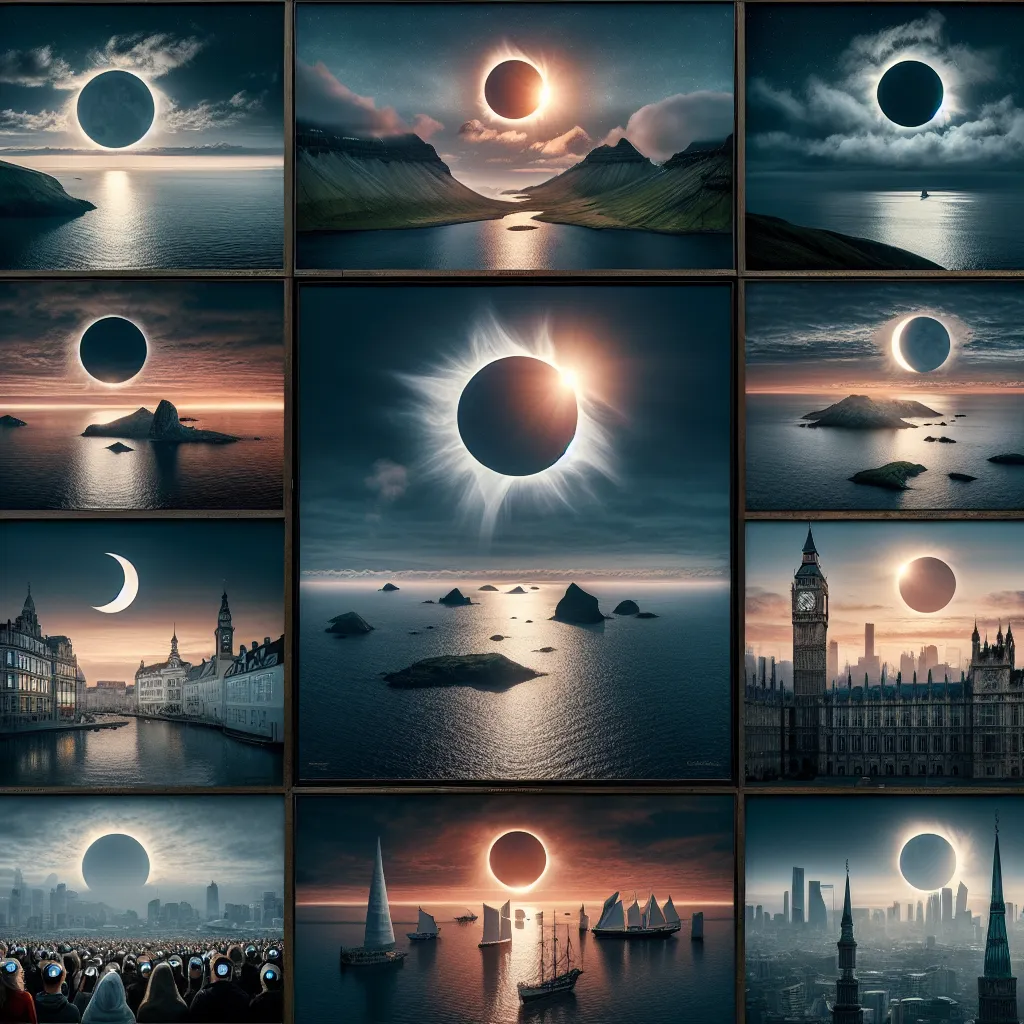
On the 20th, something extraordinary will happen in the sky: the Sun will disappear from view. Depending on where you are in the world, you might witness a spectacular partial eclipse or even a total eclipse if you’re in the Faroe Islands. For many, this event will be marked by a supermoon moving in front of the Sun and blocking it from view.

The lucky folks in the Faroe Islands will see the Sun vanish from the sky at 9:41 AM. This total eclipse will also be visible from Svalbard, just a bit later in the morning. Even if you’re on a ship in the North Atlantic, you’ll catch this amazing phenomenon.

Most of us in Europe, North Africa, and western Asia will get to see a vast partial eclipse. To give you some timings: in Greenland, the peak of the eclipse will be at 6:30 AM. In Algiers, it will be around 10:11 AM. If you’re in Istanbul, look up just before midday, and in Moscow, the peak will be at 1:20 PM in the afternoon.

I’ll be enjoying the eclipse from my home in the UK at around 9:30 AM with my special eclipse glasses to ensure I watch it safely without damaging my eyes. It’s crucial never to look directly at the Sun without proper protection. I hope you’ll join me in witnessing this fantastic celestial event!


Similar Posts
Blog Image
Unlocking Cosmic Mysteries: The Incredible Dance of Neutron Stars

Neutron stars, remnants of supernovae, are densely fascinating objects defying gravity with quantum mechanics, offering insights into cosmic mysteries and fundamental universal laws.

Blog Image
Are We Ready for a Battlefield Dominated by Intelligent Machines?

The Battlefields of Tomorrow: Where Cyber Warriors and Robotic Soldiers Reign

Blog Image
Fungal Forests: The Hidden Internet Beneath Your Feet Revealed

Mycorrhizal networks connect trees and plants through fungal threads, enabling resource sharing and communication. This woodwide web allows older trees to support younger ones, and fungi to exchange nutrients with trees. Recent research suggests these networks exhibit electrical activity similar to neural networks, potentially serving as natural computing systems. This underground ecosystem challenges our understanding of plant intelligence and interconnectedness in nature.

Blog Image
What If a Single Cosmic Event Changed Everything We Know About Life on Earth?

Life's Fragile Dance: Catastrophic Turns That Set the Stage for Human Existence

Blog Image
Glowing Waters: Nature's Magical Light Show Unveiled in Bioluminescent Bays

Bioluminescent bays are natural wonders where microorganisms create a glowing spectacle in the water. The phenomenon is caused by dinoflagellates emitting light when disturbed. These bays, found in places like Puerto Rico and California, offer a unique glimpse into marine biology and ecology. They're fragile ecosystems that require conservation efforts to preserve their magic.

Blog Image
The Fermi Paradox Explained: 5 Mind-Bending Theories About Why We Haven't Found Aliens Yet

Explore the Fermi Paradox: Why haven't we found aliens despite billions of stars? Discover Great Filter, Zoo Hypothesis, and other theories explaining cosmic silence.