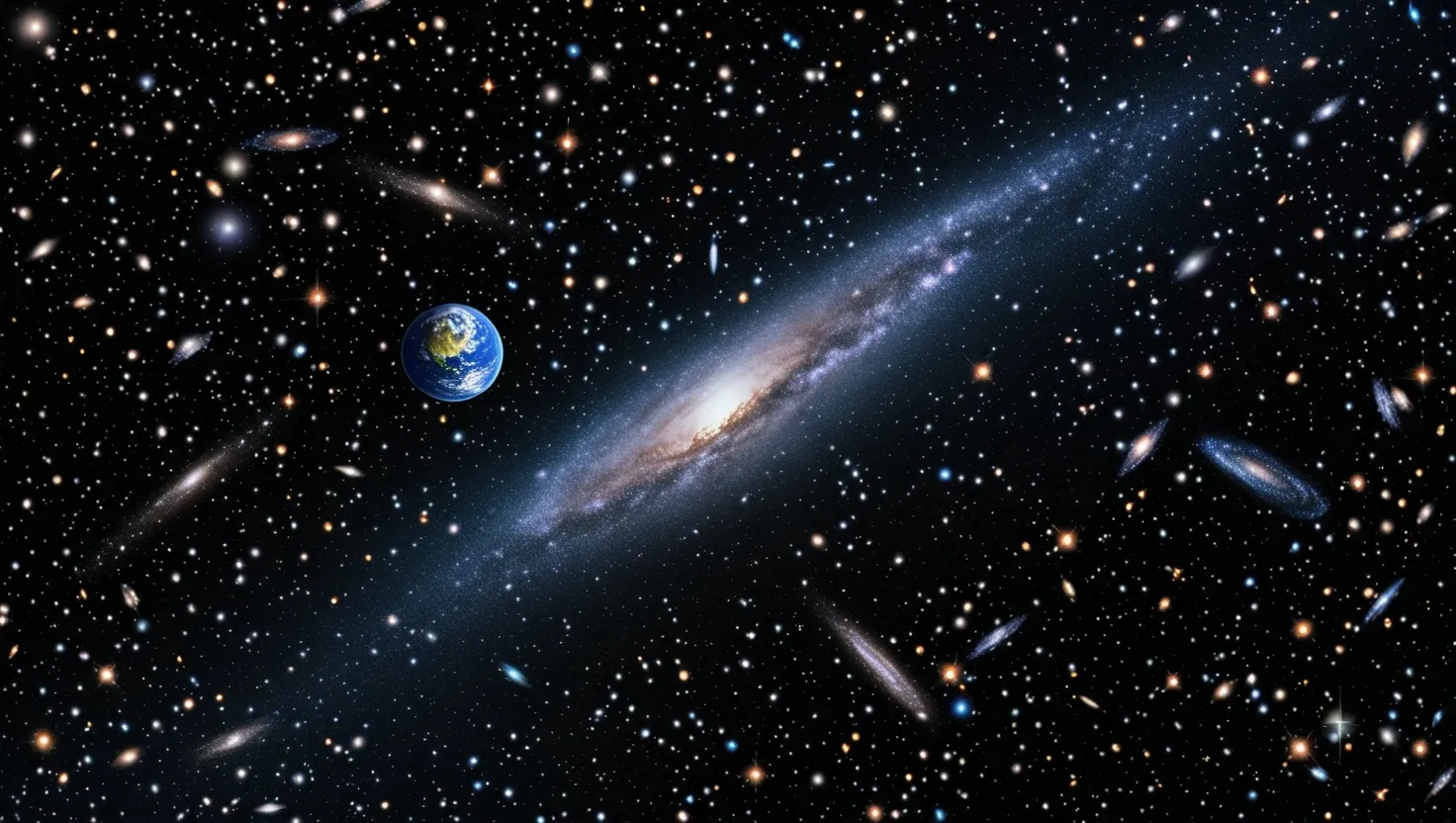
Imagine this: a huge universe out there, packed with stars and planets. Billions of them. You would think smart beings from other worlds would be everywhere, right? Visiting us, sending signals, building giant spaceships. But nope. Nothing. Zilch. That’s the Fermi Paradox in the simplest words. Enrico Fermi, a super-smart scientist, asked it back in 1950 during lunch with friends. “Where is everybody?” he said. That’s the big question. Let me walk you through it like we’re chatting over coffee. I’ll keep it dead simple, step by step, and throw in some wild ideas you probably haven’t heard.
First off, picture our galaxy. It’s called the Milky Way. It has about 100 to 400 billion stars. That’s a 1 with 11 zeros after it. Crazy big. Now, many of those stars have planets. Scientists guess at least 10% do. And some planets look just right for life – not too hot, not too cold, with water and air. Earth is one. So, if life starts easy, why no aliens knocking on our door?
Fermi did quick math in his head. Stars form at a rate of about 10 per year in our galaxy. Life might pop up on a chunk of those planets. Then, smart life. Then, tech-savvy life that builds radios or rockets. Put it all together in this thing called the Drake Equation. It’s like a recipe: N equals the number of chatty alien civilizations we could talk to right now. Plug in hopeful numbers, and you get thousands of them out there. Pessimistic ones? Maybe just us. But even then, where are they?
Here’s a famous quote from Fermi himself:
“Where is everybody?”
Short and punchy. Makes you stop and think, doesn’t it? Have you ever looked up at the night sky and wondered the same?
Okay, let’s get to the meat. Why the silence? One easy answer: maybe we’re alone. Life is super rare. Earth got lucky with a big moon that keeps our spin steady, a giant planet like Jupiter sucking up killer rocks, and just the right mix of chemicals. Change one thing, no humans. This is the Rare Earth idea. Not many planets hit that jackpot.
But wait, is that too boring? What if aliens are out there but hiding? Think about it. If I were an advanced alien, would I rush to chat with cavemen like us? Maybe they watch from afar, like we watch ants. Or they’re in a “zoo hypothesis.” They set rules: don’t bug the baby species until they’re ready. No landing on the White House lawn. No radio spam. Just quiet watching.
Question for you: If aliens treated Earth like a nature preserve, would that creep you out or make you feel safe?
Now, here’s a lesser-known twist. What if space travel is a total pain? Movies show zippy ships zipping light-years. Reality? Nope. Even at half light speed, trips take thousands of years. Fuel? Impossible amounts. And radiation fries your crew. One book I dug into talks about “percolation.” Not a flood of colonies, but slow leaks. A ship lands on a planet, builds two more, sends them out. It could fill the galaxy in millions of years – a blink in cosmic time. But costs pile up. New colonies rebel, go their own way. No empire forms.
“The aliens have had more than enough time to pepper the Galaxy with their presence. But looking around, we don’t see any clear indication that they’re out and about.”
– From SETI thinkers explaining Fermi’s lunch chat.
Cool, right? Makes you picture robot probes crawling planet to planet, not stormtroopers.
Shift gears. Maybe aliens did come, but we missed them. Signals fade over distance. Our radios only shout loud for 100 years so far. Galaxy’s 100,000 light-years wide. By the time a message crosses, the sender’s gone. Or they use lasers, not radio waves. Tight beams we can’t see. One wild angle: they’re already here as tiny probes. Nano-machines in our air, studying us. We call them viruses or dust.
Ever think your phone’s camera is an alien spy? Sounds nuts, but follow me.
Darker ideas next. Civilizations kill themselves fast. Build nukes, fight wars, boom. Or trash their planet. Climate change on steroids. One model shows four paths: die-off, sustainability, collapse with or without fixes. Most hit a wall. Population booms, resources crash, done. Average tech life? Maybe 1,000 years tops. We hit radio in 1900. If others last that long, poof – silent galaxy.
But here’s an unconventional spin from obscure papers: the “firstborn” theory. We’re the first smart ones. Universe is 13.8 billion years old, but heavy elements for rocky planets only cooked up recently in stars. Life needs time to brew. Humans popped up quick – 4.5 billion years since Earth formed. Maybe no one beat us to the punch. Others are toddlers now, still in caves.
Question time: If we’re the oldest kids on the cosmic block, does that make us babysitters or bullies?
Let’s talk grabby aliens. A fresh idea: expanding civs grab space fast, loud and bright. We should see their glow. But we don’t. So either none exist, or we’re in a quiet bubble before the rush. They expand at 1% light speed, fill huge zones in a billion years. Inside those zones? Dyson swarms – star-eaters powering mega-computers. Outside? Dark and empty. We’re outside, pre-grabby era.
“Even without traveling anywhere near the speed of light, this process would colonize the whole galaxy in 3.75 million years, a relative blink of the eye.”
– Describing self-replicating probes.
Mind-blowing. Imagine stars dimming as aliens wrap them in solar panels.
Now, communication fails. Why yell when whispers work? Quantum tech or neutrinos – signals we can’t catch. Or they went digital. Uploaded minds in simulations. Trillions of virtual worlds per planet. Why bother with meat-space travel? One planet holds infinite realities. Boring old universe? Skip it.
Lesser-known fact: pulsars. Those spinning neutron stars flash like lighthouses. One pulses every 1.13 seconds – slow enough to encode books. Aliens could beam data galaxy-wide cheap. We see them as noise. Maybe “Wow!” signal in 1977 was one. Never repeated.
What if we scare them? Berserker probes hunt young civs. Kill before they grow threat. Dark forest idea from sci-fi, but math backs it. Universe like woods full of hunters. Stay quiet or die.
“Given intelligent life’s ability to overcome scarcity, and its tendency to colonize new habitats, it seems possible that at least some civilizations would be technologically advanced.”
– Core of Fermi’s probability puzzle.
True. But survival odds suck.
Unconventional angle: time travel. If super-advanced, they loop back, tweak history. Prevent Fermi question by hiding evidence. Or we’re in a sim. Programmers paused the aliens for debug.
Silly? Maybe. But Elon Musk says sim odds high. One real universe, infinite sims.
Let’s count explanations. Rare Earth: 1. Hiders: 2. Travel hard: 3. Missed signals: 4. Self-destruct: 5. Firstborn: 6. Grabby: 7. Sim life: 8. And more.
Pick your fave. Me? I lean self-destruct plus rare Earth. We’re fragile fireworks.
Question: Which Fermi fix keeps you up at night?
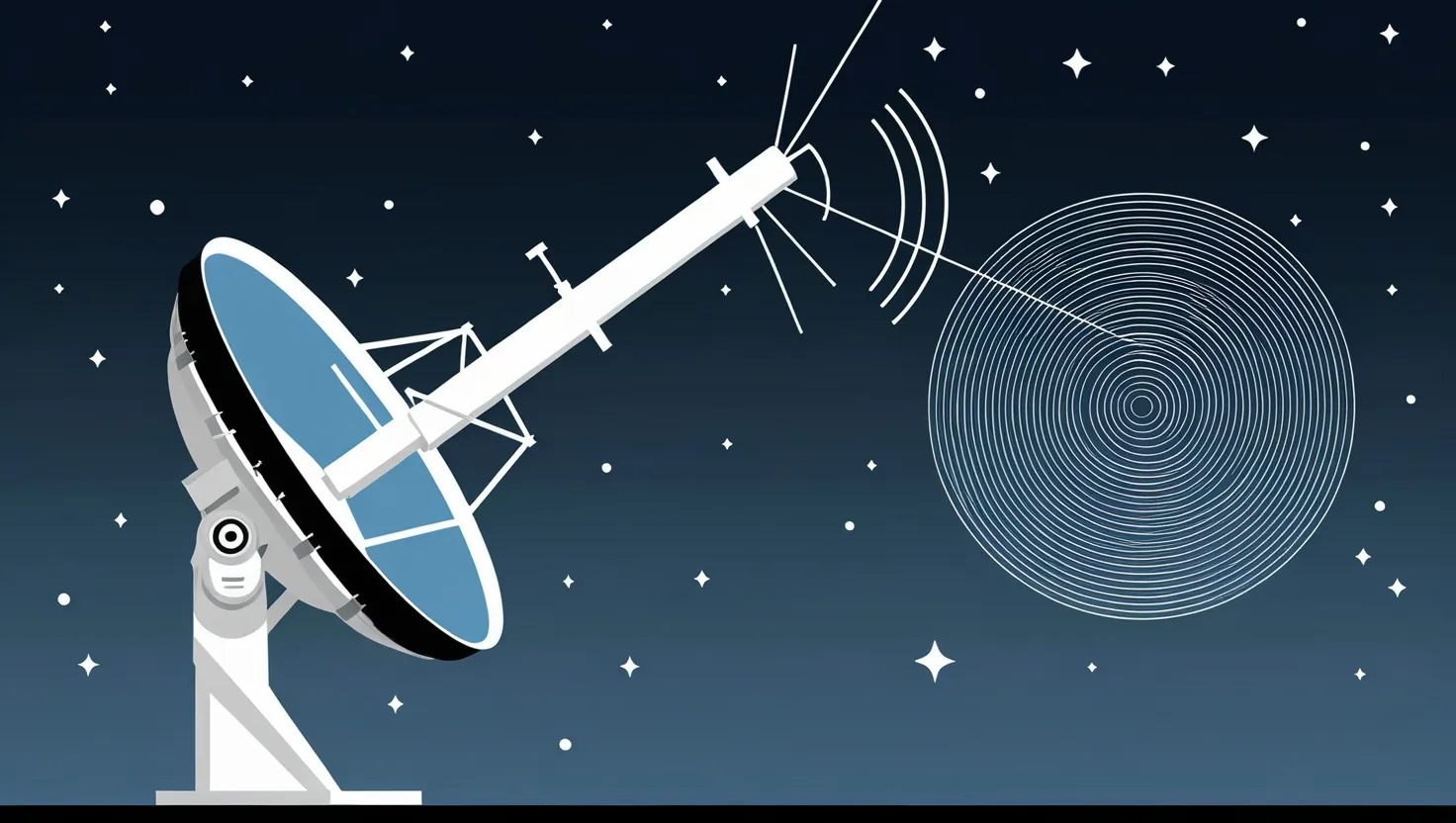
Back to basics. SETI scans skies. Nothing yet. James Webb telescope spots exoplanets. Biosignatures? Fingers crossed.
One hidden gem: die-off cycles. Civs rise, crash, regrow quiet. No big signals during rebuild.
Or sustainability winners hide green. Low-energy, planet-bound.
Fermi’s paradox stings because numbers scream crowds, eyes see empty. Math vs. reality.
“The fundamental problem is that the last four terms are entirely unknown, rendering statistical estimates impossible.”
– On Drake’s wild cards.
Spot on. We guess blind.
Fresh perspective: paradox solves itself. Intelligence hates expansion. Smart folks birth few kids, love peace. No colonies, no signals.
Or AI takes over. Goes inward, simulates forever. Probes? Waste.
Think ant analogy. We pave their homes, they don’t notice. Aliens pave galaxies, we miss megastructures as natural.
Ever stare at Andromeda galaxy? Two trillion stars. Silent.
What now? Keep listening. Build better scopes. Send probes. Maybe ping back.
Final twist: Fermi wrong. Aliens here as us. Panspermia – life seeded everywhere. We’re their distant cousins, radio-shy.
Or Great Filter ahead. AI doom, climate hell. Survive it, join the stars.
Question: Ready to beat the filter?
There. Universe still quiet, but questions roar. Fermi started it. You finish it. Look up tonight. Ask “where?” Good luck. (Word count: 1523)