Are We Alive or Just Organizing Chaos? Dive In to Find Out
The Cosmos Within Us: Exploring Life's Interwoven Complexity
Life and Death: A Complicated Dance
Life is a curious thing. Renowned physicist Erwin Schrödinger once explained it as the ability to avoid decay into disorder and equilibrium. Think of your download folder on your computer. It starts neat and organized but gradually becomes cluttered over time. This mirrors how living things work—they use energy to maintain order.
But what is life, really? Every living organism is made up of cells. A cell is essentially a microscopic robot made of proteins. It has many traits we associate with life: it maintains a boundary from its environment, regulates itself, eats to survive, grows, reacts to its environment, evolves, and reproduces.
However, no part of a cell is inherently “alive.” Everything in a cell involves chemical reactions, millions in fact, happening every second. Cells can build thousands of types of proteins, some simple and some incredibly complex. Imagine driving a car at 100 km/h while constantly rebuilding every part of it. That’s what cells do—yet, it’s all driven by the laws of physics and chemistry.
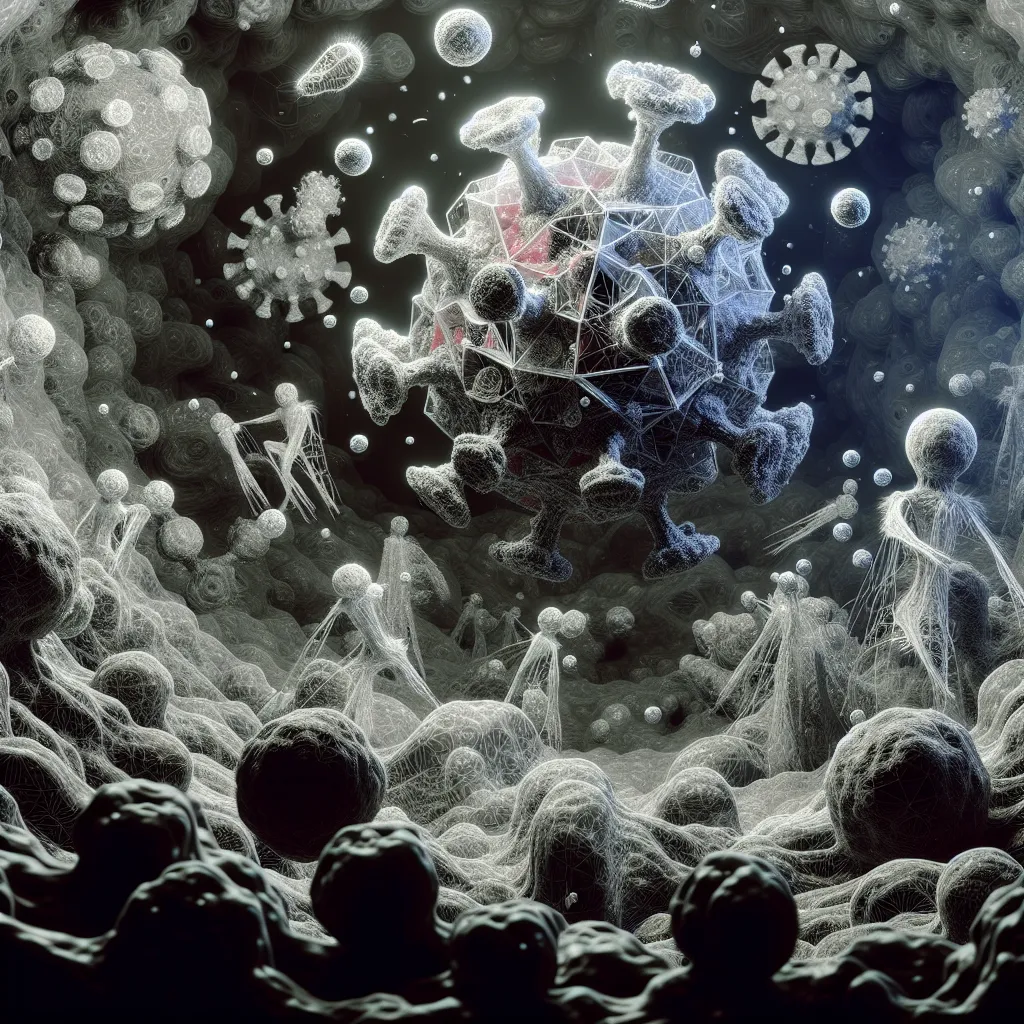
Is life then just a sum of these reactions? Living things eventually die, yet they reproduce to keep genetic information, like DNA, going. DNA itself, although complex, is just a molecule and can’t do much on its own. Viruses add another layer of confusion; they are just strings of RNA or DNA and can only function within a host cell. They blur the line between living and non-living.
Moreover, mitochondria, the powerhouses of cells, were once independent bacteria. They have their own DNA but now depend entirely on the cells they inhabit. Hence, life forms can evolve into more complex structures, sometimes appearing not “alive” in the traditional sense.
So, is life just information that persists? The rise of artificial intelligence makes this even more puzzling. We’re not far from creating machines that might meet our definitions of life. Some even say computer viruses are a form of life.
This brings us back to the question: What is life? Are we just complicated arrangements of chemicals? Maybe life isn’t so different from non-life after all. Humans, originally thought to be special, are now seen as products of evolution, just like every other creature. As our understanding of computers and AI progresses, our self-perception is challenged again.
So, is everything in the universe dead or alive? If we’re all made of the same stuff, does the difference lie only in complexity? Maybe life and death are irrelevant questions. Maybe we’re more connected to the universe than we ever realized.
In the end, we don’t have answers, only questions—questions that make us ponder and feel alive. And maybe that’s the point.