The Patomskiy Crater: A Siberian Anomaly Forged in Mystery
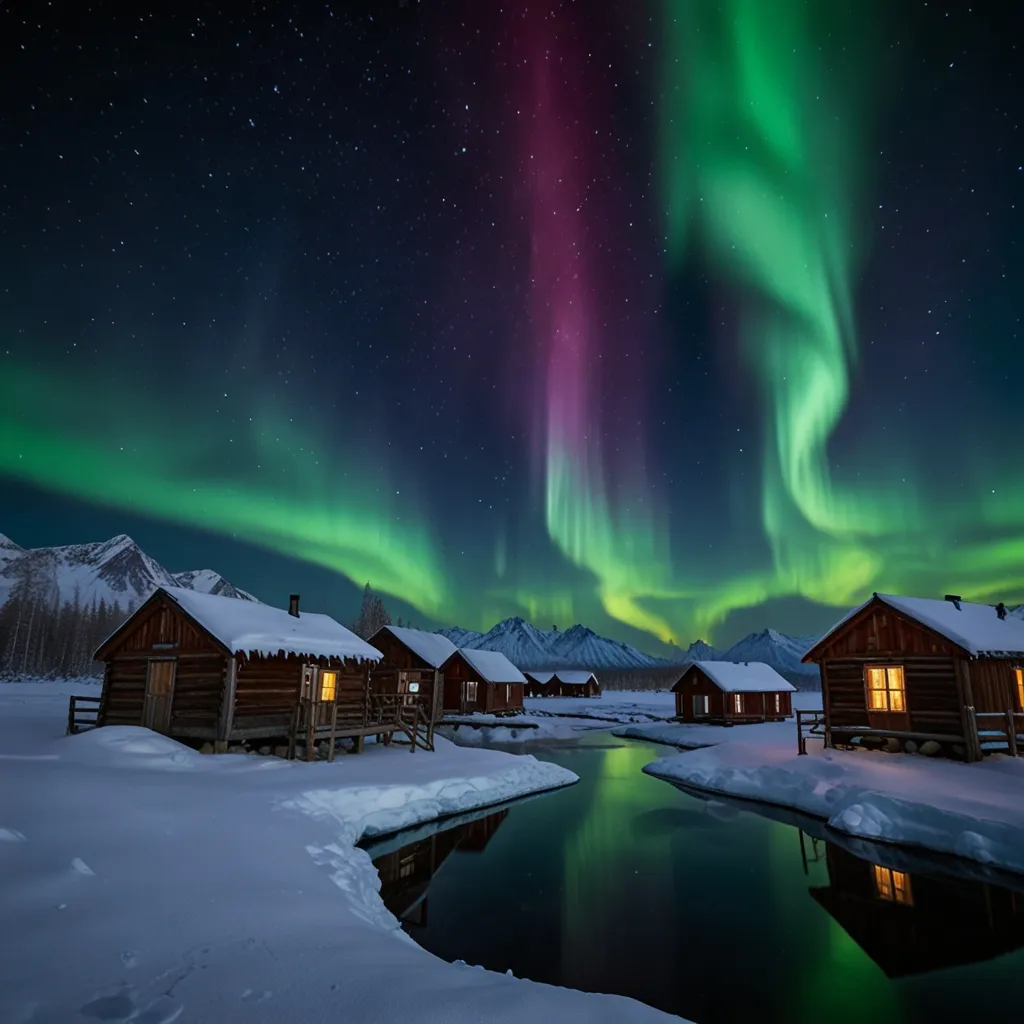
Deep in the remote forests of southeastern Siberia, about 360 kilometers from the nearest town, something strange rises from the ground. Imagine stepping into an untouched wilderness and suddenly encountering a massive cone of broken limestone, perfectly shaped like an upside-down bowl. This is the Patomskiy Crater, and it has baffled scientists for over seven decades. When I first learned about it, I was struck by how something so peculiar could exist in our modern world without a definitive answer about its origin.
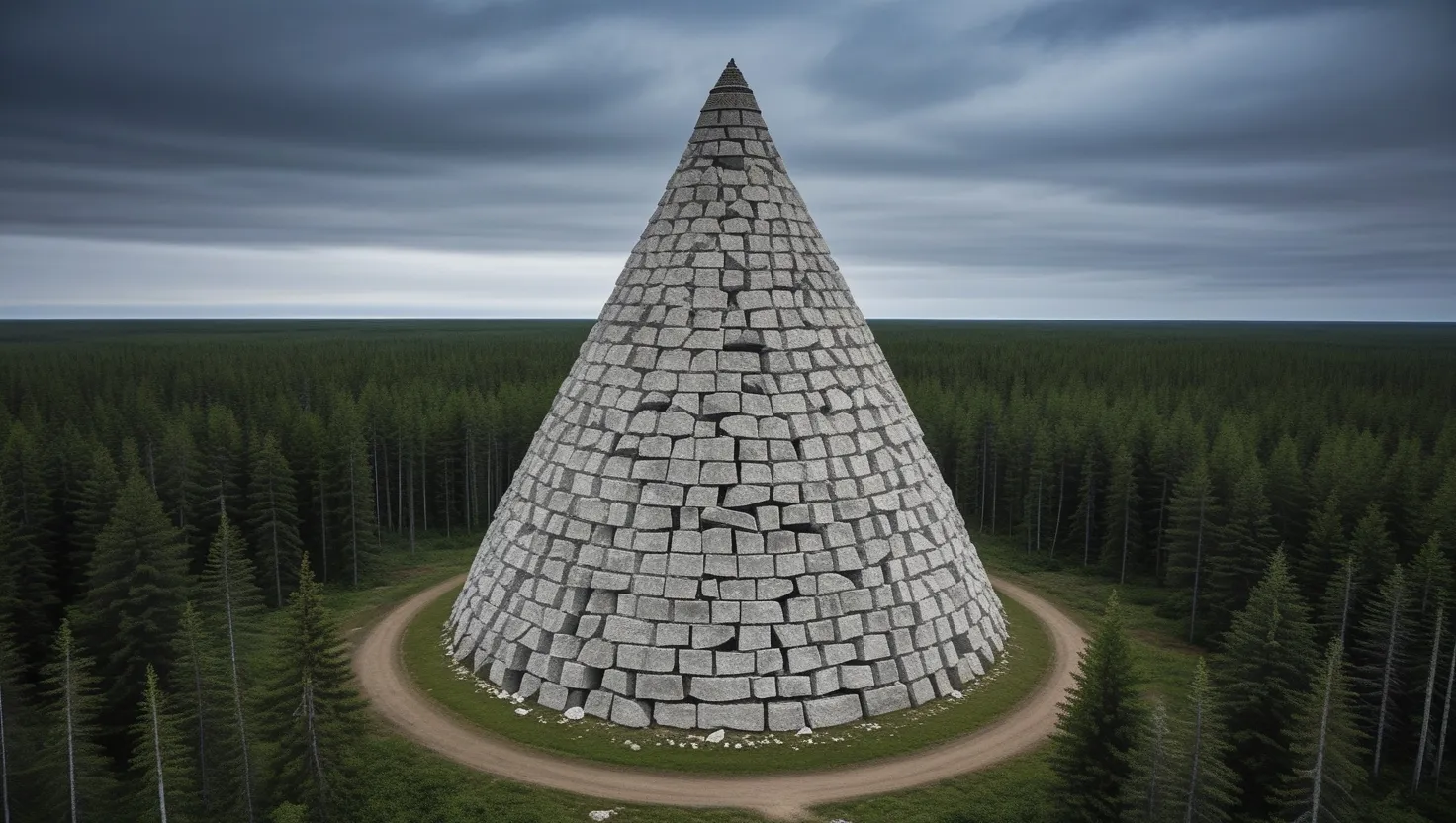
The crater sits on the slopes of the Patom Highlands in the Bodaibo District of Irkutsk Oblast, in an area so remote that dense taiga forest surrounds it completely. The structure itself is remarkable: a cone measuring approximately 40 meters in height with a base diameter of about 160 meters. Inside this ring-shaped crown sits a smaller mound, roughly 12 meters high, creating a distinctive dome structure. Scientists estimate the entire formation weighs approximately one million tons and contains between 230,000 to 250,000 cubic meters of shattered limestone blocks.
What makes this geological feature even more intriguing is how recently it appeared. Using a method called dendrochronology, which examines tree rings, researchers determined that the crater is only about 300 to 350 years old. This means it formed sometime in the 17th or early 18th century. Why does this matter? Because a geological formation this massive, this unusual, and this young should have a clear explanation. Yet it doesn’t.
A Russian geologist named Vadim Kolpakov first discovered and described the crater in 1949. When Kolpakov reached the site, he stood amazed before what he called “a perfectly shaped mount the size of a 25-story building with a chopped-off top sitting in the middle of the woods.” His initial assessment was that it might be volcanic in origin, though volcanoes had not appeared in this region for several million years. Kolpakov was so puzzled that he even wondered if it might be some sort of archaeological artifact or, more speculatively, a secret creation from Stalin’s era. The locals, however, had a simpler name for it: the Patomskiy Crater, named after the nearby Patom River.
How would you feel if you discovered something that contradicted everything you knew about geology?
The earliest and most persistent theory about the crater’s origin involved a meteorite impact. The idea was straightforward: a large meteor strikes Earth, creates a crater, and triggers some subsequent geological changes. Some scientists even speculated that it might be connected to the famous Tunguska Event, a massive explosion that occurred in Siberia in 1908. However, this theory had a fatal flaw: the Tunguska Event happened in 1908, but the crater formed at least a century earlier. Moreover, despite numerous expeditions and studies, researchers have found no meteoritic material at the site. The chemical composition and geological structure of the crater do not match what scientists would expect from a meteorite impact.
Another intriguing hypothesis involved deep pockets of natural gas. This theory suggested that pressurized gas deep beneath the Earth’s surface suddenly erupted, pushing upward with tremendous force and creating the mound-like structure. The idea had merit because it could explain the violent formation process and the peculiar shape. Yet this explanation also had limitations, as it would require very specific geological conditions that seemed unlikely in this particular region.
The theory that gained the most scientific support involves volcanic activity, but not the type we typically imagine. Scientists, particularly V. S. Antipin and A. M. Fedorov, proposed that the crater resulted from what is called a phreatic explosion. This is a volcanic event that occurs when underground water and steam interact with hot rock or magma, creating a sudden, violent eruption without necessarily producing lava. The evidence supporting this theory includes the presence of weathered breccias (fractured rock), the diameter-to-height ratio typical of volcanic cones, and the absence of chemical signatures that would indicate a meteorite origin.
According to modern research, the formation process likely involved rapid outbreaks of deep fluids, particularly carbon dioxide and water, along with gases like carbon monoxide and hydrogen. These materials rose from deep within the Earth with such intensity that they fractured and rearranged the limestone blocks, creating the distinctive cone structure we see today. Think of it like a pressure cooker releasing steam with such force that it reshapes everything in its path.
What if you couldn’t explain something you could see with your own eyes?
But here is where the mystery deepens further. The Patomskiy Crater displays several unusual characteristics that make even the volcanic explanation incomplete. Researchers have detected magnetic anomalies at the site and found low levels of radioactive strontium and uranium in the soil. Most strikingly, the trees growing on and around the crater show unusual patterns. Some trees are much larger and grow faster than vegetation in surrounding areas. Scientists discovered that certain trees, particularly those over 200 years old, displayed abnormal annual ring formations. Remarkably, many trees fell or broke around 1841 to 1842, suggesting some sort of environmental stress or event during that period. These tree anomalies add another layer of complexity to an already mysterious formation.
Some researchers have proposed a hybrid explanation: that both geological and volcanic processes worked together beneath the surface. Dmitry Demezhko from the Institute of Geophysics suggested that an underground channel forced molten rock upward, and then a constant freeze-thaw cycle, repeated many times over decades or centuries, gradually broke the rock into the fractured structure we observe today. This explanation attempts to bridge the gap between surface observations and deep geological processes.
The crater also shows evidence of continued transformation. Scientists have noted that it changes shape slightly over time, which is difficult to explain. Some parts seem to rise or fall with seasonal changes. This dynamic quality suggests that geological processes may still be occurring beneath the surface, though at a much slower pace than the initial formation event.
Local Indigenous populations knew about the crater long before Kolpakov’s arrival. They called it the “Fire Eagle’s Nest,” and many considered it a forbidden or dangerous place. This traditional knowledge, while not providing a scientific explanation, suggests that the crater’s unusual appearance has captured human attention for generations. The locals understood that something was different about this place, even if they could not explain it through modern geological science.
One perspective that deserves consideration is how the Patomskiy Crater reflects the limits of our current scientific knowledge. We live in an age of advanced technology and sophisticated scientific methods, yet this formation in remote Siberia continues to resist definitive classification. This isn’t because scientists are careless or ignorant, but because nature sometimes produces phenomena that don’t fit neatly into our existing categories. The crater exists as a reminder that the Earth still holds secrets, and that our understanding, while constantly improving, remains incomplete.
The lack of research funding has also contributed to the incomplete picture of the crater’s true nature. Scientific expeditions to the site are expensive and logistically challenging given its remote location. This means that much of what we know comes from limited field studies and the occasional research initiative. More comprehensive investigations could potentially solve the mystery, but the remote location and harsh environment present significant obstacles.
Have you ever wondered whether some mysteries might remain unsolved simply because we haven’t looked carefully enough?
The Patomskiy Crater also represents something broader about our relationship with the natural world. In an era of satellites and global positioning systems, we assume we have mapped and understood most of Earth’s significant features. Yet here stands a massive geological formation that formed relatively recently, displays unusual characteristics, and defies simple explanation. It reminds us that mystery and wonder still exist within our world, even in places we have supposedly explored thoroughly.
The crater’s isolation in the Siberian taiga adds to its mystique. Few people have visited it, and fewer still have conducted rigorous scientific investigations. This remoteness means that local Indigenous knowledge remains important, and that traditional perspectives offer insights that scientific methodology alone might miss. The combination of Western scientific approaches and traditional knowledge systems might eventually provide the complete picture.
Looking forward, the Patomskiy Crater deserves sustained scientific attention. Future expeditions employing advanced geological surveying, improved radiometric dating techniques, and deeper analysis of subsurface conditions could potentially solve the riddle that has puzzled geologists for more than 70 years. Until then, the crater stands as a powerful symbol of nature’s capacity to surprise us, to challenge our assumptions, and to remind us that the Earth is far more complex and mysterious than we often realize.
The Patomskiy Crater teaches us an important lesson: the world contains phenomena that resist easy explanation, and that’s not a weakness of science but rather an opportunity for deeper investigation and understanding. Some mysteries endure not because answers don’t exist, but because we haven’t yet asked the right questions or developed the right tools to find them. This strange formation, rising from the Siberian wilderness, continues to call out for answers, waiting for the next generation of scientists willing to venture into the remote taiga and unlock its secrets.