Crystal Skulls: Ancient Mayan Relics or Modern Hoax? The Truth Revealed
Crystal skulls, once thought to be ancient Mesoamerican artifacts, are now considered modern creations. Scientific analysis reveals they were made using contemporary tools. Despite lacking archaeological evidence, they've captured public imagination, inspiring myths about supernatural powers. The skulls highlight the tension between scientific skepticism and popular fascination with mysterious objects, serving as a reminder to approach extraordinary claims critically.
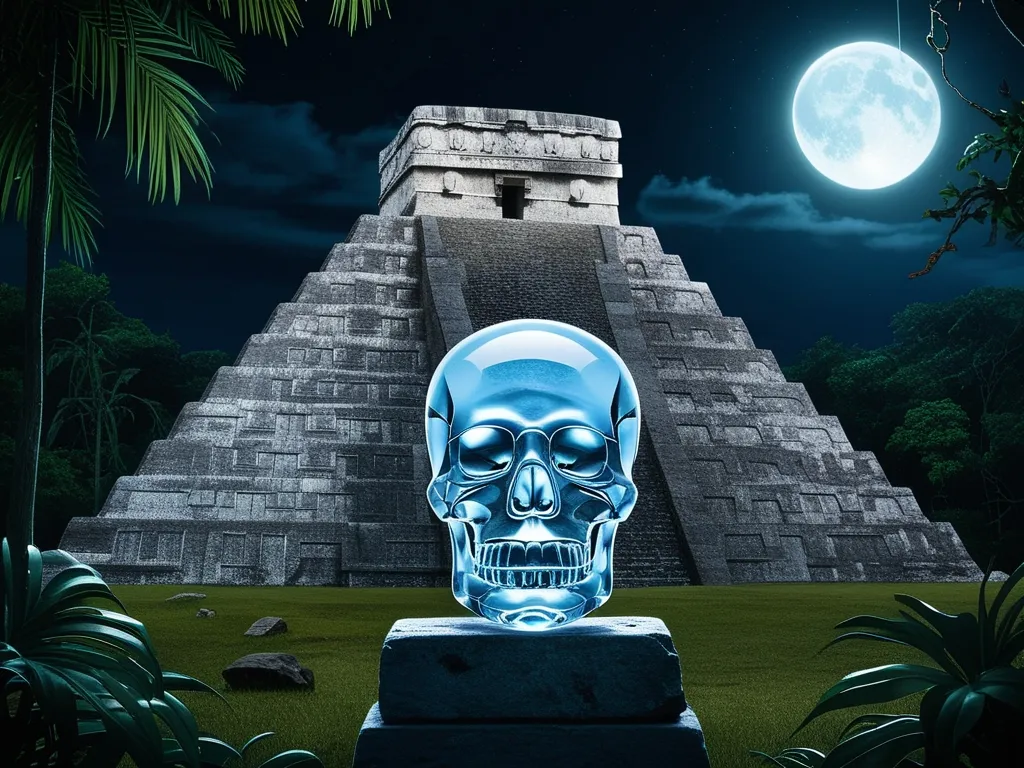
As I delve into the enigmatic world of crystal skulls, I find myself entangled in a web of mystery, intrigue, and a dash of Hollywood glamour. These intricately carved skulls, often associated with ancient Mesoamerican cultures, have captivated the imagination of people around the globe. But are they genuine relics of a lost civilization, or are they modern creations designed to deceive?
The journey begins in the 19th century, when the first crystal skulls started to appear in museum collections and private hands. One of the most intriguing aspects of these skulls is their supposed connection to the Aztecs and the Maya. However, despite their allure, not a single crystal skull has been unearthed from an archaeological excavation site. This raises a significant red flag, suggesting that these skulls might not be as ancient as they seem.
At the heart of this mystery is a man named Eugène Boban, a French antiquities dealer who lived in the late 19th century. Boban is often cited as the mastermind behind the creation and distribution of these fake crystal skulls. His involvement was uncovered by anthropologist Jane Walsh at the Smithsonian’s National Museum of Natural History. Walsh’s investigation into a 2-inch crystal skull revealed that it was created using modern jewelry-making tools and techniques, a finding that cast doubt on the authenticity of all crystal skulls in museum collections.
The story of the crystal skulls is also intertwined with the adventures of F.A. Mitchell-Hedges, an English explorer, and his adopted daughter Anna. According to their tale, Anna discovered a life-size crystal skull in 1924 or 1927 while exploring the ruins of a Mayan ceremonial center in Belize. This skull, known as the Mitchell-Hedges Skull or the Skull of Doom, is one of the most famous and controversial crystal skulls. It features a detachable jaw and is carved from a single block of clear quartz crystal, weighing around 5.19 kg.
The Mitchell-Hedges Skull has been shrouded in mystery and folklore. Mitchell-Hedges claimed that the skull was used by a Mayan high priest for magic rites involving death curses and that it took over 150 years to manufacture. However, these claims lack concrete evidence and are largely based on Mitchell-Hedges’ own accounts, which have been questioned by many. The skull’s supposed supernatural properties, including its ability to cause instant death and emit blue lights from its eyes, have only added to its enigmatic status.
Despite the captivating stories surrounding the crystal skulls, scientific scrutiny has consistently shown that they are not ancient artifacts. The use of modern tools and techniques in their creation is a clear indicator of their recent origin. For instance, the British Museum’s analysis of a crystal skull revealed tool marks consistent with modern jewelry-making methods. Similar findings have been reported by other museums, including the Smithsonian, where advanced scientific tests such as scanning electron microscopy have been used to examine the skulls.
The fascination with crystal skulls is not just about their supposed ancient origins but also about the mystical and healing powers attributed to them. During the 1960s and 1970s, the Western world saw a surge in interest in New Age spirituality, and crystal skulls became a symbol of this movement. People believed that these skulls could heal, meditate, and even predict the future. However, these claims remain in the realm of folklore and have not been scientifically proven.
The cultural significance of skulls in Mesoamerican societies is well-documented. The Aztecs and the Maya used skulls in their spiritual practices and art, often carving them into stone and depicting their gods wearing human skulls as jewelry. The discovery of a monumental Aztec tower at Templo Mayor in Mexico City, built from over 650 human skulls, underscores the importance of skulls in these cultures. However, this does not necessarily mean that crystal skulls were part of their repertoire.
In recent years, the debate around crystal skulls has continued to simmer. While some museums still display these skulls due to public interest, others have been more cautious. The British Museum, for example, presents various hypotheses about the origins of their crystal skull but stops short of calling it a fake. This ambiguity reflects the ongoing tension between the public’s fascination with these objects and the scientific community’s skepticism.
As I reflect on the crystal skulls conundrum, it becomes clear that these objects are more about modern mystification than ancient artifacts. They represent a blend of folklore, conspiracy theories, and our innate human desire for mystery and intrigue. Whether you believe in their mystical powers or see them as clever forgeries, the crystal skulls undoubtedly hold a special place in our collective imagination.
In the end, the story of the crystal skulls is a cautionary tale about the importance of scientific rigor and the dangers of romanticizing the past. While these skulls may not hold the secrets of the universe or the keys to untapped knowledge, they do offer a fascinating glimpse into human creativity, deception, and our enduring fascination with the unknown. As we continue to explore and debate the origins of these enigmatic objects, we are reminded that sometimes the most captivating stories are those that blur the lines between reality and myth.