Why Sleep Remains One of Science's Greatest Unsolved Mysteries
Discover 5 fascinating mysteries of sleep science — from dreams to brain cleaning. Explore what happens each night and why sleep still baffles researchers. Read more.
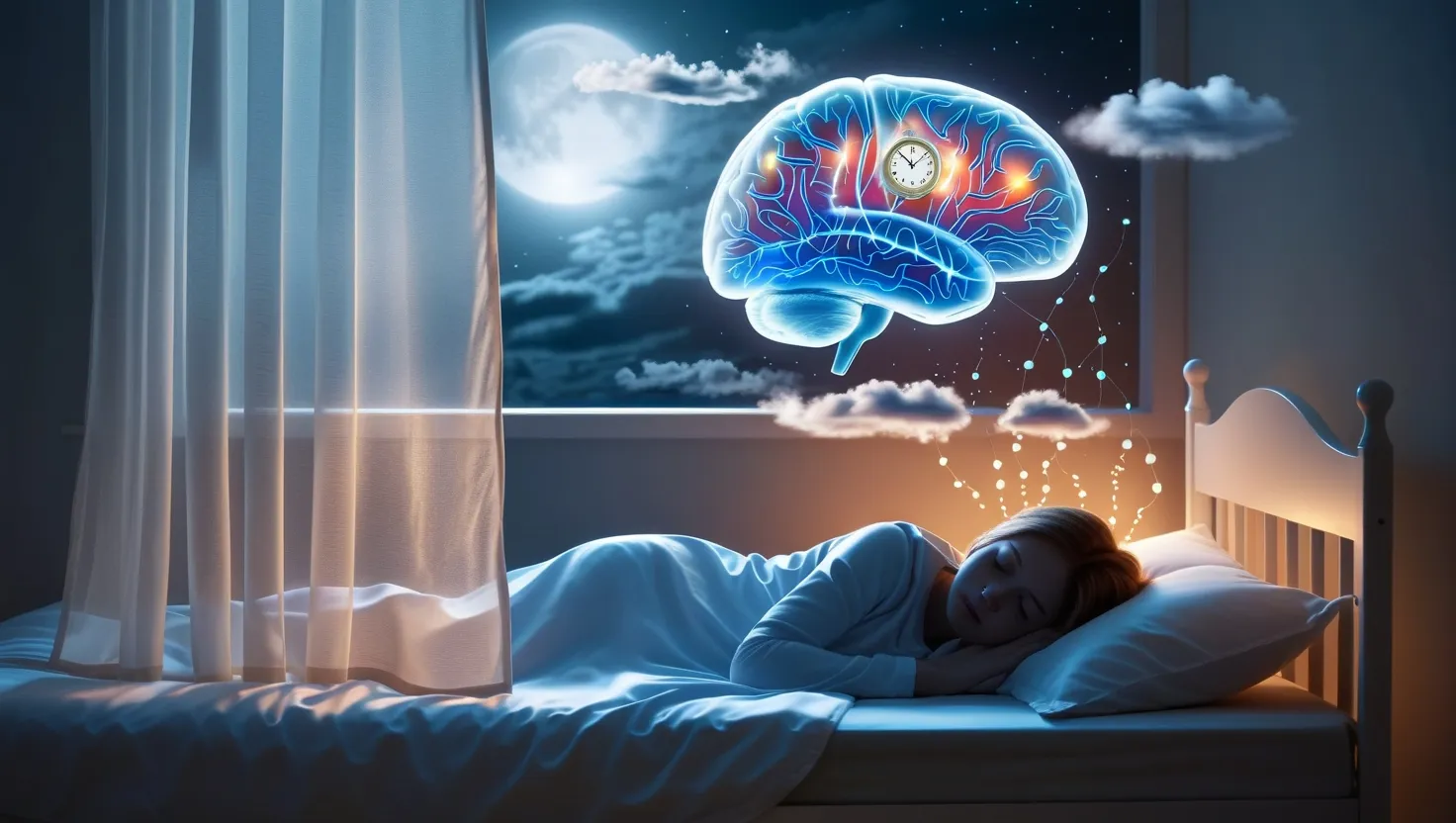
Sleep is one of the strangest things you do every day. You lie down, close your eyes, and for the next seven or eight hours, you essentially disappear from the world. You have no idea what’s happening around you. You can’t protect yourself. You’re completely at the mercy of whatever is going on. And yet, every single animal with a brain does this. Every night. Without fail.
That alone should make you stop and think.
We have mapped the ocean floor. We have sent robots to Mars. We have split atoms and decoded the human genome. But we still cannot fully explain why you need to sleep, what dreams are for, or why some people function perfectly on six hours while others need nine. For something that takes up a third of your entire life, sleep is shockingly misunderstood.
Let’s walk through five of the deepest mysteries hiding inside every night you spend asleep.
Nobody really knows what dreams are for
Every night, your brain builds an entire world from scratch. You see faces, hear voices, feel emotions, and sometimes even smell things — all without any input from the outside world. The story makes no sense. Your dead grandmother is standing in your childhood kitchen, which is also somehow your office, and you’re late for an exam you haven’t taken in twenty years.
Why does your brain do this?
Honestly, nobody knows for certain.
Some researchers believe dreams are the brain’s way of processing emotional experiences — a kind of overnight therapy session where your mind works through stress, fear, and unresolved feelings. Others believe dreams are a rehearsal for danger, a way of simulating threats so you’re better prepared to handle them in real life. There’s even a theory that dreams are just random electrical noise, and your brain tries to make a story out of it simply because that’s what brains do.
“Dreaming is an act of pure imagination, attesting in all men a creative power which, if it were available in waking, would make every man a Dante or a Shakespeare.” — H.F. Hedge
What makes this even stranger is that during your most vivid dreams — the ones happening in REM sleep — your body is physically paralyzed. Your brain sends a signal to your muscles telling them not to move. You’re watching an entire movie playing in your head, fully convinced it’s real, while your body lies completely still. The fact that this happens every single night and we still can’t agree on why is genuinely remarkable.
So here’s a question worth sitting with: if you had a dream so vivid it changed how you felt about something real in your life, was the dream less real than the waking moment? Think about that.
Sleep deprivation kills, but we don’t fully understand why
Go without food for a few weeks and your body slowly breaks down. Go without water for a few days and your organs start failing. Go without sleep for just eleven days and you die. In fact, lab rats deprived of sleep die faster than rats deprived of food. The body breaks down faster without sleep than without nutrition.
That is extraordinary. And yet we cannot fully explain the exact biological reason why.
We know sleep deprivation causes serious harm. Your immune system weakens. Your hormones go haywire. Your brain starts misfiring. Your emotional regulation collapses. After just 24 hours without sleep, your cognitive performance resembles someone who is legally drunk. After a few days, people begin hallucinating.
But the precise list of cellular repairs and biochemical processes that only happen during sleep — the specific reasons why the body cannot simply stay awake and repair itself — hasn’t been fully worked out. We know sleep is doing something vital. We just don’t have a complete picture of what that something is.
“Sleep is the best meditation.” — Dalai Lama
Evolution is ruthless. It cuts away anything that doesn’t help a species survive. So if sleep made animals vulnerable to predators for eight hours every day, it must be providing something so valuable that the benefit outweighs the risk. What is so important that virtually every animal on earth evolved to go unconscious every single day? That question doesn’t have a clean answer yet.
Your brain has a cleaning system that only runs while you sleep
Here’s something most people have never heard of, and it’s one of the more fascinating discoveries in recent neuroscience. Your brain has its own waste disposal system called the glymphatic system. While you’re awake, your brain produces metabolic waste — byproducts from all the thinking and processing you do. This waste builds up throughout the day.
When you fall into deep sleep, your brain cells actually shrink slightly, and cerebrospinal fluid starts flowing through the gaps, washing out all that accumulated waste. It’s like running a dishwasher through your skull.
What kind of waste gets cleared? Some of the same proteins — like amyloid and tau — that, when they build up, are found in the brains of people with Alzheimer’s disease. The connection between poor sleep and neurodegenerative disease suddenly doesn’t seem like a coincidence.
Ask yourself this: if sleep is literally cleaning your brain every night, what do you think happens to someone who consistently gets five hours instead of eight?
But here’s the mystery. Scientists are still mapping how sleep actually triggers this cleaning flow. Why does the glymphatic system only run during deep sleep and not during waking hours? What is the signal? What switches it on? These questions are still being answered, and the implications for understanding brain diseases could be enormous.
Your internal clock is a biological marvel — and we barely understand it
Every cell in your body has a clock. Not a metaphorical clock. An actual molecular clock, built from proteins that cycle in a precise rhythm roughly every 24 hours. These clocks are coordinated by a small region in your brain called the suprachiasmatic nucleus, which sits just above where your optic nerves cross. It’s about the size of a grain of rice, and it is the master timekeeper of your entire biology.
This clock tells your body when to be alert, when to release hormones, when to lower your core temperature, and when to prepare for sleep. And it uses light — particularly the blue wavelengths in natural sunlight — to set itself each day.
“Each night, when I go to sleep, I die. And the next morning, when I wake up, I am reborn.” — Mahatma Gandhi
Here’s where it gets complicated. The artificial lights we surround ourselves with — especially screens — emit blue light. Your brain cannot tell the difference between sunlight at noon and the light coming from your phone at 11pm. So when you scroll through your phone before bed, your master clock receives a signal that says “it is midday,” and it pushes back your sleep cycle accordingly.
The mystery isn’t that artificial light disrupts sleep. We know it does. The mystery is in the precise molecular machinery behind how light resets the clock, why some people’s clocks are more sensitive than others, and how the timing of your internal clock affects everything from cancer risk to mental health to heart disease. Circadian biology is a young field, and it has already revealed connections that nobody expected.
Why do some people need nine hours and others need six?
Some people bounce out of bed after six hours feeling completely fine. Others drag themselves through the day after nine. Both are telling the truth about how they feel. The difference between them is real, and it sits somewhere in their DNA.
There are documented genetic mutations — extremely rare ones — that allow certain people to function normally on far less sleep than average. These aren’t people who’ve trained themselves to sleep less. Their biology runs differently. They wake up early, they feel great, and they don’t accumulate the mental fog and physical decline that hits most people who try the same thing.
But these mutations only account for a tiny fraction of the variation in human sleep needs. For the vast majority of people, the genetic and environmental factors that determine how much sleep your specific body requires remain poorly understood.
Why does your neighbor thrive on six hours when you feel wrecked without eight? Why does sleep need shift so dramatically at different life stages — teenagers genuinely need more sleep than adults, and it’s not laziness, it’s biology? Why do sleep needs vary between men and women, and between people living in different climates and cultures?
“Man is a genius when he is dreaming.” — Akira Kurosawa
These aren’t small questions. Getting the wrong amount of sleep — for your particular biology — carries real health consequences. But we can’t give you a precise, personalized prescription for sleep the way a doctor can prescribe a specific dose of medication, because we don’t yet have the science to do it accurately.
Sleep is something you do every night without thinking about it. It seems so ordinary, so passive, so unremarkable. And yet inside those quiet hours, your brain is dreaming for reasons we can’t fully explain, cleaning itself through a system we only discovered recently, running on a biological clock we’re still learning to read, and doing repairs we haven’t completely catalogued — all while your body lies still and the world carries on without you.
The fact that something so common is still this mysterious should remind you that the most ordinary parts of life are often the least understood. You don’t need to be a scientist to find that worth paying attention to.